
What Do They Think About Us? Do We Think About Them At All?

When I lived in Canada, a Canadian told me he was amazed at the ignorance of Americans about their neighbor to the north.

A U.S. businessman bore this out when, in a meeting with Canadian business people, he said “I don’t make any distinction between Canada and the U.S.” It think he meant it as a compliment, but many Canadians wouldn’t see it as one. They want the world to know that they have their own distinct culture and opinions, as the businessman should have known if he hoped for a successful business in that country.

If we know so little of the nation whose border we share for over 5,500 miles (counting the Alaska/Canada border), our ignorance of the rest of the world must seem appalling.

A headline in the December 16th issue of The Week magazine caught my attention: “How they see us: The GOP makes a virtue of ignorance.” I checked one of the magazines quoted in the article, the online English version of the German magazine, Der Spiegel . It was eye-opening. Basically, the article lambasts the election debates for statements that show “stark lack of knowledge—political, economic, geographic, historical . . .”

I’m not making a political statement about the Republicans or the Democrats. Both parties often play to Americans’ unawareness of the world. After all, if we don’t care about, say, the European financial crisis (which may increase unemployment in this country), why should our politicians? It won’t help them get elected.

When Children Are Caught in the Middle

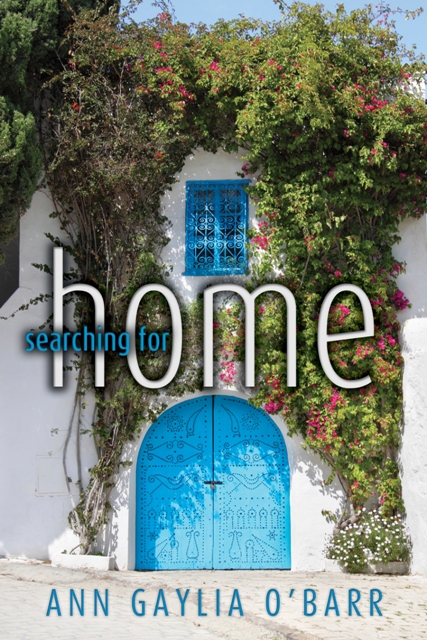
Patrick’s child is kidnaped by his former wife in my novel Searching for Home . The woman is now married to a non-U.S. citizen and flees with her husband and the child to her husband’s country. Patrick isn’t able to contact his son and doesn’t even know where he is.

Child custody cases were among the most difficult of issues in my job as a U.S. consular officer working with American citizens overseas. Custody problems occur when an American and a foreign spouse separate or divorce and cannot resolve the custody of their children.

Of course, custody disputes may arise between two American parents. However, different backgrounds in religion, law, and culture can increase confusion and bitterness. In the most tragic cases, one parent takes the child and flees to the home country. Depending on laws in the home country, the left behind parent may experience varying degrees of difficulty visiting the child or serving a custody order or sometimes even finding the child.

Children in such cases may be used simply as a means to hurt the other parent, as can happen in this country as well. However, when one or both parents are concerned about cultural values and eternal matters, reconciliation becomes more difficult.

In generations past and in many countries today, a marriage is the joining of two families. Few of us want a return to the days of arranged marriages. Our drift toward individualism and our obsession with self fulfilment, however, can obscure the need for deeper values of community and faith.

Abiya or Bikini?

When I was assigned to work in Saudi Arabia, I thought I would wear an abiya, the black robe worn by most women there. It was the custom, I figured, and I would follow it.

But once there, I decided not to wear it. It reminded me of the racial segregation that had been practiced in my own country. I dressed conservatively, long skirts and full outfits, but I didn’t generally don the abiya.

I was reminded of all this when I saw a recent cartoon of a woman in an abiya, making fun of the custom. For many in the western world, the abiyah or the burka is the symbol of male domination, of the discrimination against women, and of their lack of rights. I understand and generally agree, but I’m acquainted with another side of the story as well.

I knew a Saudi woman, educated in the U.S., who chose the old customs when she returned to her country. She indicated a disdain for much of what she had seen in the United States: the pornography, the broken homes, the casual sex. For reasons like these, some Middle Eastern and other women proudly don the abiya. For them, it is a symbol of the value they place on the family and the importance of a woman’s worth aside from her physical appearance. For them, it allows a focus on who they are and not on their worth as a sex object.

We are certainly correct to push for women’s rights, but is a woman in an abiyah any more to be pitied than a woman who chooses outfits only for their sexiness, as though her physical attributes are her only value?

Remnant Religion

Christian history fascinates: all the advances and retreats, deaths and resurrections of the church over the centuries. Such understanding allows perspective in these times of waning Christian influence in the old countries of “Christendom.”
The early Jewish church became the Gentile church (championed by the missionary, Paul). Following barbarian invasions and Muslim conquests, the church split into Byzantine and Roman. The Byzantine (eastern) church at first flourished while the Roman (western) church languished in the backwaters of a primitive Europe. The Turkish Ottoman Empire eclipsed Byzantium, then came close to conquering Europe following the disastrous Crusades.

Europe and the church survived, but movements like the Renaissance stirred new thinking and brought on the Reformation. Wars for power, sometimes cloaked in religious garb, led to pietists and puritans and to the English church’s break with Rome. The resulting Christian communities fought slavery and poverty and spawned the modern missionary movement, leading to growth in non-Christendom countries of Asia and the southern hemisphere.

Today few barriers prevent anyone in this country who desires it from becoming a church member, yet many churches are dying. As happens over and over, Christians become a remnant, even as the church grows in poorer countries and in nations where Christian commitment can be dangerous.

A Tale of Two Countries


Tahrir Square

Almost a year ago, the small nation of Tunisia began the current spate of revolts against despotic regimes in the Middle East. The country recently held its first elections since the overthrow of the country’s one-party rule. The elections appeared to be free, fair, and relatively unmarred by corruption or violence.

By contrast, violence has flared again in Egypt, where elections are held this week. The violence has included the deaths of demonstrators as well as the burning of Christian churches and the killing of Christians. Much of the protest centers on the Egyptian military, against their perceived unwillingness to relinquish power. The military partnered with the Egyptian people in the earlier revolution to rid the country of the corrupt rule of Mubarak, yet now appears unwilling to allow an unfettered civilian government to rule.

This is a recurring theme of newly freed nations. The group which plays the role in ridding the country of tyranny, itself refuses to relinquish power.

What would have happened to our own country if George Washington had followed the usual pattern? He could have used his powers as commander of the American armed forces after he successfully led them to victory over the British to seize power. Instead, he resigned his commission. Later, after two terms as president, he stepped aside, saying two terms was enough. By leaving the office voluntarily and allowing for a peaceful transfer of power, he established a valuable precedent for the country.

The decision of a popular individual to see power as a trust and a refusal to use it for selfish purposes is a rare choice.

The Abandonment of Rest

We long ago abandoned a weekly day of rest. Now we’re tossing out those few days of national rest like Thanksgiving.

Not everyone has family to be with on Thanksgiving, of course. Now they can go to the mall. One  woman I knew without family, however,  volunteered at a hospital to take the place of those who did have families. Others still work in soup kitchens or deliver Thanksgiving meals to those unable to afford them. Soup kitchens are a growth industry these days. The patrons are less likely to have resources for mall consumerism.

Of course, those with no or part-time jobs may be glad of the chance for more work. I used to say you could determine the gap between well-off Americans and those not so blessed by visiting a store open on a lesser holiday, say Columbus Day. The store workers tended to be hourly workers without benefits. The customers tended to have paid holidays and sick leave and health coverage.

We have less time now for friends or family, and anyway, the nuclear family appears to be going the way of the extended family. No time to ponder or mediate or read or take walks, either.

However, as some of us frantically shop earlier and later and longer on our paid holidays, others are forced to backtrack. Younger people stay longer with their parents, and grandparents move in to help with childcare. Those with no work or lesser hours now have the luxury of time. Perhaps we are forced into a time of rest to compensate for those days of rest we previously forfeited.

No Pain, No Love?

My stories often begin with the death of a loved one or of a relationship. Perhaps it’s a subconscious wrestling with my father’s death when I was thirteen.

Though I want my stories to give hope, I see them as a slice from the characters’ lives. They have come from hard times and easy times and will go on to more of the same. Though I like my stories to end on a note of a victory won, an understanding gained, every wrong is not righted.

Hannah, in Searching for Home, resolves grief from her fiancé’s death and finds meaning, but his death remains a tragedy. God transforms wrong; he does not wave a magic wand that obliterates it.

The question of the suffering of innocents is probably the most difficult of all for Christians. You know the question: if God is both all powerful and all good, why does he allow suffering?

I do not presume to answer this question, but I think invalid the assumption that if God is both good and powerful, then he would not allow suffering. It assumes that if you love someone, you never cause them pain.

That, it seems to me, is false.

When my children were small, I took them to a giant who stuck needles in them. No baby or even young child could possibly understand about vaccines and the antibodies that develop from the pain inflicted with the giving of the vaccine. They have no conception that it protects them from diseases that could kill them: diphtheria or whooping cough or measles.

I don’t claim this illustration answers all theological questions, or even a minute part of them, concerning the world’s pain and evil. I only wish to suggest that we don’t just allow pain, we sometimes inflict it on those we love because of that love.

I Know the Hindu Bhagavad Gita Has Merit, But Have You Tried the Bible Lately?

I attended a Bible study the other day on the Old Testament. We are examining the early, sometimes gory, history of the early Hebrews. Critics of the Bible bemoan the actions of the Hebrew tribes as they took over Palestine. Easy to jettison claims to a unique religion. God’s people acted as brutally as all the others, right?

We would do well to read further, to treat this history as it is: history, warts and all. As the Hebrews matured, prophets stormed on the scene who railed against injustice. Conflict raged between the self-centered power that characterizes all civilizations, including that of the Hebrews, and a unique and growing awareness of God’s love for the world and all its people.

Amos, the prophet, thunders against the Wall Street of his time: “For I know how many are your transgressions, and how great are your sins—you who afflict the righteous, who take a bribe and turn aside the needy in the gate.” (Amos 5:11, RSV) “Let justice roll down like waters, and righteousness like an everflowing stream.” (Amos 5:24, RSV) “Hear this, you who trample upon the needy, and bring the poor of the land to an end . . .” (Amos 8:4, RSV)

The prophet Jonah learns that he must take God’s message to the Hebrews’ enemy, Nineveh, whether he wants to or not, for God loves Nineveh, too.

As relativism increases and the belief takes root that one religion is as good as any other, are we Christians even aware of the unique messages of our Bible?

The Novocaine Effect

 Few of us look forward to dental visits. Nevertheless, dental work today is less dreaded because of modern analgesics which numb the gum and allow repairs to be done in relative painlessness, compared to a generation or so ago. Indeed we become so used to the miracles of modern medical science that we tend to think all our physical ills should be resolved with a shot or a pill.

Perhaps scientific breakthroughs carry over into our expectations for all our human ills. We will elect the right political party, the right president, the right governor, and viola, our problems vanish in the space of an election. Supporters of a winning candidate cheer, happy days are here again, throw the rascals out.

Unfortunately, reality overtakes the happy visions. No political fix will solve our problems; no magician will wave a wand and destroy the demons. The black swans appear. The Great Recession or 9/ll or natural calamities destroy our assumptions that life is one big party.

In truth, no political winner can undo what we, the people, have done to ourselves over decades. We were the binge consumers, the pleasure seekers who did not count the cost, who lived only for today.

Relief will come only slowly, gradually, as we wake from the party, sobered by our hangover, hopefully to exercise responsibility for the lives we live as individuals. We can make the hard moral choices, we can build up our families and neighborhoods and faith communities, or we can continue waiting for the perfect political fix which will never come.

Seeds of Hate, Seeds of Forgiveness

I’ve just finished reading Left to Tell, Discovering God Amidst the Rwandan Holocaust by Immaculée Ilibagiza,  survivor of the horrendous massacres in Rwanda in the 1990’s. Ethnic groups in that country, some calling themselves Christians, allowed themselves to be filled with unreasoning hatred that led them to commit these atrocities.

Much of the book deals with the author’s journey into forgiveness after hiding in unspeakable conditions during the massacre, then discovering that her parents, two brothers, and numerous friends and relatives had been brutally slain.

So-called Christians are not the only ones who commit atrocities, nor are wrongs committed only in the name of religion. We marvel, however, when countries with a Christian witness allow the Holocaust or bombings of Catholics and Protestants or the lynching of black Americans.

Jesus himself was killed because the religious leaders of his day sent him to die.

Yet a remnant may chose a different path, like Joseph of Arimathea, who dared disagree with those leaders. Dietrich Bonhoeffer in Germany worked against the Nazis until they killed him. Some brave Rwandans defied their neighbors and hid members of the despised ethnicity.

What it says to us is that Christianity may be only skin deep, the seed thrown out in Jesus’ parable that seems to produce fruit at first but then is overcome with the desire for wealth or the fear of persecution. Yet some endure, make the hard choices, and produce the fruit of life and forgiveness.

Winning the Peace

Tunis Street

Carthage

The small North African country of Tunisia recently held its first free election since leading the Arab world earlier this year in a revolution against regional dictators. My husband and I lived in this progressive Arab country from 1997 until 2000.Nahda, described as a mildly Islamist party, won over forty percent of the vote. Tunisia has a large, educated middle class, some of whom worry that a government controlled by Nahda might weaken the country’s laws dealing with women’s rights. The party’s leaders so far have indicated a willingness to work with the more secular parties and to safeguard Tunisian freedoms.

Nahda was banned during the corrupt, one-party rule of the now deposed Ben Ali. Members risked imprisonment and torture. No wonder they are reveling in the new freedom to compete in an election. They appear to have played by the rules and won their votes fairly. The results of this election will be scrutinized for indications of how the Arab world will shift as other nations take steps toward democracy, including participation by Islamist parties.

Winning the peace can be more difficult than winning the war. In American history, we glorify heroes of our Revolution, but the period after the United States gained its independence was a greater challenge, a time of debilitating partisan struggle. Nation building requires the difficult virtues of servanthood, of putting the country’s welfare above individual or party ambitions.

Perhaps we might reflect on these virtues for our own country in our coming election.

Lessons, Formal and Informal

Like all college reunions, this one provoked nostalgia, but it tied my student years to events of the present day, too

As we shared past experiences, I developed a new appreciation for my professors in that southern Christian college. The place was, I now realize, an island of growth in a sea of a less than Christian time and place. We could ask questions, express doubts, and be stimulated by a faculty remarkable for a combination of intellectual toughness and Christian transformation.

If our professors exemplified the best of Christian scholarship, the college’s administration taught me another lesson. We southern young people, brought up to be polite and courteous, rebelled against the food served in the cafeteria. Rather humorous in the light of the social ills we could have chosen to rebel against.

Nevertheless, I learned what happens when two sides of an issue face each other, especially when one occupies an inferior position, as we students did. The college administration insisted on meeting us with cold logic, irritated that unformed students could question their assertion that the food was acceptable according to institutional norms.

The deeper issue was not the food but our desire to be taken seriously, to be listened to.

I think about that time when I study the youthful (and not so youthful) protestors of today. I am not much of a protestor. I’d rather dialog with those with whom I disagree. Protests tend to encourage a them/us atmosphere, even lead to violence. Nevertheless, those protested against, usually the stronger side, can seize it as a chance to dialog, not yielding to the temptation to name call or label or dismiss the protestors as the worthless ignorant. Better if both groups learn respect for the other, even journey toward a bridge that both may cross, a bridge formed by two opposing views coming together in a new and stronger joining.

Vespers

The setting for much of my novel Quiet Deception is a college campus. The campus is fictional, as is the story, but my own college experiences cast the mood.

Those experiences, and others barely remembered, surfaced when my husband and I visited my college for an alumni reunion, my first visit since my graduation. Old friends jogged memories. A stroll past my former dorm room whispered of bonds shaped during midnight talk sessions. Bitter sweetness, too, as we passed students, their decisions yet to be made, possibilities before them, as they once were for me.

The college vesper service knit these disparate musings into a small epiphany, the kind that bless us from time to time. The symbols of my religion, rock solid, touched centuries of Christian faith through times of growth, decline, and resurrection.

Vespers, the service of transition from the day’s activities to a time of rest, spoke of God’s presence in all of life’s transitions.

Day is done, but love unfailing dwells ever here;

Shadows fall, but hope, prevailing, calms every fear.

God our Maker, none forsaking, take our hearts, of Love’s own making,

Watch our sleeping, guard us waking, be always near.

(“Day is Done,” James Quinn)

Loss and Growth as Fictional Themes

I read a beautiful story when I was growing up, The Chestry Oak, by Kate Seredy. A child of an old, eastern European nobility, loses his parents during World War II and eventually comes to America. I felt the boy’s loss for his past and the pain of his adjustment in the new. He lost not only his family but an entire way of life.

I wonder how that book and a few others have influenced what I write today. Perhaps my father’s death when I was thirteen emphasized the theme of loss and adjustment. Many of my stories begin with loss and trace the journey of the protagonists as the loss forces the characters into new patterns.

Many historical novels occur in times of great change: the Reformation, the American expansion westward, World War II.  When a new era begins, grows, then takes over, what have we lost? What have we gained? The Victorian age included horrible ills: child labor, rigid rules for women, exploitation of undeveloped nations, among others. However, something about the era leads us to stories of that time. Despite the wrongs, what draws us?

Perhaps something of a more ordered age, of civility, of courage during hardship, even of witty understatement draws us, attributes that seem in short supply today. Duty, courage, and grace under fire appeal to us in an age of instant gratification.

So, I suppose my stories, written as entertainment, attempt to find this connection between discovering what is good in the past with the jettisoning of old injustices.

The Unwired World and Victor Hugo

My husband and I accidentally became part of the unwired world. On a recent trip to my college reunion in Birmingham, Alabama, we discovered that we had left behind not only our laptop but our iPad. We gazed in horror at ten days ahead with no internet connection other than what we could snatch from those hotel lobby communal computers.

No access to instant maps, weather, and the news. And what about my blog posts? Overseeing a contest I was involved in?

Well, I wrote the blog hurriedly, but the Hampton Inn computer sufficed. I learned to dart through my email. No dawdling when another hotel visitor paces on the other side of the glass door waiting his turn.

But how would we exist without our internet fix? None of that early morning time shaping my latest work in progress, either.

My husband contented himself with the only print novel we had brought along. I jealously guarded my Kindle, on which I had recently downloaded our next book club selection, Les Miserables, by Victor Hugo. I had thought its old-fashioned prose would turn me off, suitable only for releiving bordom on the cramped airplane ride. Instead, as I took the time to savor it, I relished the beginning chapters that set the atmosphere with its naration of the old Bishop’s care for the vulnerable ones. When Jean Valjean finally appeared on the scene, I eagerly turned the electronic page to savor the Bishop’s handling of Valjean when he was caught with the Bishop’s silver service.

I lost myself in the story when the Bishop told the authorities that not only had he given the silver to Valjean, but that he had meant to give him some silver candlesticks (which the thief had missed in his hurried departure from the Bishop’s residence) and handed these over as well. I’ve never seen a piece of fiction illustrate Jesus’ instructions to give to those who take from you. It exemplified the Christian ethic: giving instead of hoarding, forgiving instead of retribution, loving instead of despising those who have broken society’s rules.

I may have grasped the story reading it hurriedly between my time on the computer, but not with the delight that this leisurely read allowed me.


The Past as Character in Quiet Deception


“We can only control our own actions and choices. After that, control passes from our hands. We have to live with the results.” So says an older woman to the young woman protagonist in my story Quiet Deception, my second novel.

The characters, from the young woman, Kim, all the way up to her professors, her supposed role models, make choices and live with the results. They live with sorrow, joy, fear, regret, forgiveness, familial love between husband and wife and father and son, friendship (sometimes when other love is absent), a growing knowledge of God’s love, and ultimate victory, though a bittersweet victory for some.

The time period, from the end of World War II through the 1970’s, is, in a sense, a character also, mirroring the choices of the protagonists. Americans made choices during that time that we live with today.

Doomed to Forever Repeat?

Notably absent so far from the 2012 presidential campaign (which seems to have started the day after the last state was tallied in the 2008 election) is a discussion of foreign policy. American soldiers still face death in combat in south central Asia. The Euro crisis in Europe seethes with potential for world-wide catastrophe, but most Americans seem oblivious to anything beyond domestic concerns.

Obviously the fact that millions are un or under employed is part of the reason. However, Americans have never been overly interested either in other countries or in understanding the history of today’s problems. Our pattern is to meet some sudden disaster (i.e, 9/ll) with heroic effort and, usually, lots of money, then forget it. We’re not interested in the past, in why the crisis appeared in the first place, to guide us in the avoidance of future crises.

We should be. One of my high school history teachers began our study of the First World War (which led to the Second World War) with the religious wars of the 1600’s that devastated Germany.

A retired U.S. ambassador, David Newsom, made the point in an article (Foreign Service Journal, February, 2005). He called for the understanding of our past actions and how they influence today’s present crises (like Afghanistan). “That understanding can . . . demonstrate how difficult it is, under the pressures of immediate action, to foresee the longer-term consequences of that action.”

Freedom of Religion and the Religious

Sectarian violence flared this week in Egypt. Coptic Christians, who comprise about ten percent of the Egyptian population, wonder if the overthrow of Hosni Mubarak’s corrupt but secular regime will help or hurt minority religions like Christianity. Will a more religiously oriented state lead to less freedom of religion for non-Muslims?

The Muslim Brotherhood, with Islamist leanings, may win greater political power in Egyptian parliamentary elections scheduled later this year. Members of the Brotherhood suffered under Mubarak. Such suffering, some analysts say, has produced a more committed membership, organized to campaign more effectively than other groups, including secular ones.

Must one be secular to practice tolerance?

As Christians in this country become increasingly aware of hostility and the decline of their influence, the temptation grows to seek political power. I not only lived as a minority Christian in several countries, but I’m a descendant of Baptists who struggled for religious freedom.  I do hope we American Christians do not follow the path some are suggesting for the Muslim Brotherhood.

Two Images of Christianity in The Help


If you want to know one reason why Christianity has waned in this country and is even treated with scorn, watch the movie, The Help, based on Kathryn Stockett’s book of the same name. I read the book, then saw the movie. In both I was struck by how supposedly good Christians couldn’t see the harm in the racism they were exhibiting. (Chuck Colson has a good review of the movie in The Christian Post.)  The past record of many who call themselves Christians has created bad vibes.

Of course, some Christians did oppose racism before and during the civil rights movement. Indeed, church leaders practically birthed it, ministers like Martin Luther King, Jr, for example.

The Help actually shows Christianity in a favorable light—from the viewpoint of the black population in the movie. Biblical teachings give courage to one black maid to tell what she knows and feels to the white woman who interviews her.

Christianity which values the vulnerable has been with us since Jesus sat with the despised Samaritan prostitute at the well. We, whether Christian, atheist, or other, sometimes forget that.

Not Your Grandmother’s Oil Industry


The United States government soon will decide whether to authorize or reject an oil pipeline to bring oil from the oil sands of western Canada across the middle of the U.S. to Texas refineries.

Proponents say the pipeline will create jobs, so needed in a down economy, as well as mitigate prices at the gas pump. Opponents, some of whom live along the pipeline’s path, point to last year’s Gulf oil spill and voice concerns of possible danger to the pollution of the aquifer from which many draw their drinking and irrigation water. Als0, what about degradation caused by the process itself in Canada?

When I lived in the oil rich regions of Saudi Arabia around Dhahran, the original well that started oil production in that country in the 1930’s still pumped. In the section of the U.S. consulate where I worked, old pictures hung on the walls of the men who began developing that early oil industry. Oil production in Saudi Arabia was begun by American companies, but control long ago passed to the Saudi government.

Today analysts debate whether the world has reached peak oil, the time when the highest production of oil is reached, after which production gradually declines until the finite resource is gone. Regardless, oil use is growing because the middle class is growing in nations like India and China. Their citizens are buying more automobiles and more machines as they enter the consumer age.

These countries compete with North America and Europe for oil and have money from growing economies to influence nations from the Middle East to Africa and South America. The fact that some of the nations they deal with practice human rights abuses seems to be less of a problem for them than it (occasionally) has been with us.

Something for Christians to mull over as we make our individual choices of what we will buy and how we will live.