

A Kind of Conversion

Kate, an American woman in my novel, Singing in Babylon, teaches English in Saudi Arabia. She helps a teenage maid escape an abusive employer and return to her native Ethiopia. For Kate, the maid puts a face on the desperate millions in undeveloped countries who seek a better life. Her view of the world is forever changed.
On my first assignment with the U.S. Foreign Service, stationed in the Middle East, I faced multitudes who presented themselves at my visa interviewing window. This was my first experience overseas. Multitudes of the desperate from poverty-stricken and often corrupt countries flocked into the oil-rich states of the Middle East for jobs. They sometimes waited for hours before U.S. embassy windows, hoping for a chance to go to the American promised land.

The years I spent in the Middle East changed me as it did Kate. I now understand the importance of world events which appear of only passing interest to many Americans. Ripples from the abuse of Iraqi prisoners by American guards in Abu Ghraib, for example, echo in the Muslim world long after we have forgotten about them in this country. I understand how our morality, or lack of it, follows every soldier and every diplomat who serves in a foreign country.

A mind set that focuses only on domestic issues now disturbs me.

The Strength of Tension

As an American Christian living in Saudi Arabia, I found clues to my own people.

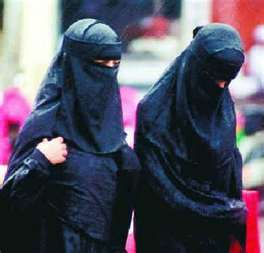
When we Western expatriates hiked in the desert, we met groups of Bedouin Arabs who welcomed us, women as well men. Often the women did not even cover their heads. In the cities, however, Saudi women not only wore black abiyah robes and head coverings, but often veiled their faces and wore gloves. They appeared to be more isolated than their rural counterparts. Apparently, modern city lifestyles challenged tradition. The more conservative practices indicated a reaction to such challenge.

In times of change, Christians, like everyone else, cling to what we have always known. When our beliefs are questioned, we become like ethnic immigrant communities. We draw in together for protection against a larger society that follows a different set of rules.

Yet we Christians need both those with new ideas and those who would teach us the wisdom found in our core beliefs. Conservatives need liberals to remind them of larger issues, of the need for Christians to clamor for social justice and of the awful price which rampant consumerism exacts. Liberals need conservatives to remind them that Christianity without a crucified and resurrected Christ may become little more than a political party or a social club.

It is the tension of opposite forces coming together, we are told, that gives the arch its strength.

The Serious And The Cultural

Conversation from Searching for Home between Hannah and Patrick as they explore the Mediterranean island of Cyprus:


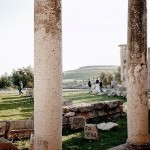
They strolled among the rubble-strewn ruins of the forum where the apostle Paul was reputed to have preached.

Hannah said, “I used to tell secular friends that my family is seriously Christian.”

“Which begs the question, ‘What’s a non-serious Christian?’”

“Somebody who’s Christian only as long as the culture is.”

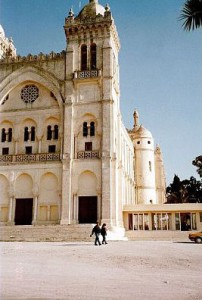
Patrick glanced at the ruins around them, mighty and glorious at one time. “Did you know that my house is in Carthage?”

“I thought you lived in Tunis.”

“Carthage is a suburb of Tunis. A lot of the embassy people live there and commute to the downtown.”

“You mean the Carthage that the Romans destroyed after the Punic Wars? Where Augustine lived?”

“Same one. It’s been Muslim for well over a millennia now. Perhaps the people weren’t seriously Christian enough. Most of them converted within a few centuries of the Muslim conquest.”


The late Lesslie Newbigin, in his book, Foolishness to the Greeks; The Gospel and Western Culture, suggested that Western Christians approach their society with the realization that it is as pagan as the one surrounding first century Christians. Indeed, he said, this current paganism is more resistant to Christianity than a mere secular society. It is born out of the rejection of Christianity.

So do we convert to paganism or are we serious Christians?

The Accidental Journalist


When Johann Gutenberg pulled the first printed Bible from his printing press in the mid 1400’s, the act forecast the end of those beautiful Biblical manuscripts, painstakingly illustrated through centuries by hand. In addition, the opportunity to influence through writing now opened to multitudes more. The age of the accidental journalist had begun.

Today, anyone who has a computer and access to the Internet can become a writer, a journalist, a blogger. To earn a full-time living from writing may be difficult, but increasing numbers write part-time. They write, not to be paid, but because they have ideas to express.

What will happen if fewer journalists are paid to be gatekeepers, to develop expertise, to know what is of value to report and what isn’t? What does that mean to our society? Good or ill?

What did the Gutenberg invention mean to society? Good or ill? The answer: both. The loss of hand-crafted beauty. The gain of more freedom to suggest ideas and change. The risk that freedom and change would be used unwisely. Which they were at times.

Because of the printing press, we were given classics like The Pilgrim’s Progress, written by a working class minister, and inexpensive versions of the Bible in everyday language. We were given trashy novels, too, and pamphlets that incited readers to war and hatred. With the Internet, one must sift among competing words and rants to find the gems. It does allow, however, for more gems.

No Religious Preference

The fastest growing religious preference today is “no preference.” Those opting out of organized religion are not necessarily antagonistic atheists. They simply view the church as irrelevant.

In some ways the church is a victim of its own success.

During Europe’s Middle Ages, alleviation of human suffering and ignorance was the responsibility of the Church. No one else was concerned with the vast majority of human society: the poor (most of the population), the sick, the abused. Kings and nobles concerned themselves with land and power. When high church officials became like their secular counterparts, monastic and other movements called a remnant back to the path of service.

Gradually, as modern states arose, the Christian conscience infiltrated the greater society. Great Britain abolished the slave trade. Governments set up schools, hospitals, orphanages, and insane asylums. Religious groups still carry on this work in less developed countries, but secular organizations, like Doctors Without Borders, have joined them.

Today, birth, marriage, and death registration are performed by the state. Only the very devout mark the births of their children in religious ceremonies. Fewer and fewer couples bother to marry, even when they have children.

Yet the needs remain, the needs that spawned the growth of Christianity centuries ago. In a rootless, alienated, angst-ridden society, Christians offer the antidotes of commitment, community, and hope. The ancient agape love of the early Christians is as much an answer to postmodern society as it was to that of the Roman Empire.

Christianity cannot be sustained by laws. It never could, and Christians put their faith in peril whenever they ally with Caesar.

Christians now must practice religion the old-fashioned way: through intentional communities of faith to carry out callings of love, discipleship, and ministry.

The Bible and Wolf Hall

I finished reading Hilary Mantel’s Wolf Hall the same day I was in a discussion where someone asked, “Why is the Bible so important? Why do Christians study it, spend so much time on it?”

Wolf Hall is set in the England of Tudor times. The main protagonist is Thomas Cromwell, the man who served Henry the Eighth and directed England’s departure from Roman Catholicism. It happens mostly in the head of Cromwell, and I am in awe of how Mantel keeps us there, anticipating the next move in this political drama that changed all of Europe. In a historical novel, we often know the main plot. Yet, it’s the character of Cromwell that so intrigues us. He is set against Thomas More, the hero in A Man For All Seasons, which presents More as a martyr for choosing death rather than bow his conscience to the will of a sovereign king. Not surprisingly, More is a less admirable character in Mantel’s book.

Weaving in and out of the story is the stirring caused by forbidden translations of the Bible into English, the language of the common citizen. People are tortured and killed in ways that sicken us for possessing an English translation.

The story, with its awful renditions of burnings at the stake and other cruelties, is the sort that causes critics of religion to decry religion, to scream that we’d all be better off without it. However, it’s not religion, but power that is the sin here. One shudders at Henry the Eighth’s megalomanic view of himself. Religion was simply a handy club he picked up to beat people who threatened him. History is crowded with tyrants who used other clubs.

It’s the human condition, the propensity to crave power and wealth, to hoard rather than share, the fear of powerlessness, that tempts all of us to the weapons of fear and hatred.

Which brings us to the other theme. The Bible in the hands of everyone who desired it was perceived by Henry as a threat to his power.

The Bible, after all, is for Christians the story of God as love, God who suffered rather than use power to work his will.

A Religious Disconnect

One reason for the 9/11 tragedy is the disconnect between religiously oriented societies and secular societies. This religious disconnect appeared years ago. An unforseen consequence of the collapse of the Soviet Union in the early 1990’s was the loosening of ties between the United States and countries in the Middle East. We no longer shared a common atheist enemy.

The disconnect appeared even earlier, in the 1970’s, with the takeover of the U.S. embassy in Iran. The young Iranians who took the Americans hostage objected to U.S. support for the Shah. They wanted a theocratic rule by the Islamist ayatollah, Khomeini. At that time we tended to see the world as divided between the secular Soviet Union and the secular United States and it allies. This tendency blinded us to another force: religion’s importance in the Middle East and the increasing dissatisfaction with the West’s consumer-oriented lifestyle.

In his book, All Fall Down, about the takeover, Gary Sick writes “We are all prisoners of our own cultural assumptions, more than we care to admit. Those of us who are products of Western cultural tradition … share certain assumptions … .The notion of a theocratic state seemed so unlikely as to be absurd” (pp. 192-3.) Thus we were unprepared for the Iranian revolution which put in place their theocratic state.

What about the recent toppling of other secular governments in the Middle East? How important will religion be to these new regimes?

Reactions, Just and Unjust

Debates have raged about just and unjust wars. We now tend to label conflicts over territory and power as unjust. Wars to protect our families, our country, and our way of life we may label as just. But is war always the proper response, even to a genuine threat? The issue is not the existence of threats but our response to them.

Todd, a character in my novel, Quiet Deception, fought in Viet Nam because he grew up with stories of his namesake. The first Todd died on a Normandy beach in the conflict against the Nazis in World War II. Americans growing up in the shadow of that war understood that evils arise in the world and must be confronted.

Americans had barely celebrated victory in World War II, when Soviet communism rolled over eastern Europe and threatened western Europe. In Asia, China fell to other communist forces. A “first” world of generally democratic nations pitted itself against a “second” world of authoritarian regimes that denied cherished freedoms like the freedom to vote, express opinions in a newspaper, or worship.

The conflict was a “cold” war, because the two groups never fought each other directly. Instead, they used proxies, “third” world countries in Africa, South America, and Asia, often with disastrous consequences to some of these nations.

The threat from authoritarian regimes was genuine. The question was whether war in a small nation in Asia formerly ruled by France was a wise choice. Many Americans today, in hindsight, would judge it unfortunate that we committed lives and treasure to fight in Viet Nam. Todd was, in a sense, a victim of his country’s learning curve. (See comments after the previous blog.)

That al-Qaeda’s attacks on September 11, 2001, were attacks against America, few deny. Certainly a government must respond to protect its citizens. But are two long ground wars in nations far removed from us in culture the proper response?

We might also consider the wisdom of conflict prevention that uproots seeds of conflict before they sprout. This, of course, requires a knowledge of subjects like history and geography and the study of other cultures. A teacher in my high school world history course led us all the way back to the religious wars of the 1600’s to find roots for the First World War and its conclusion, the Second World War.

Writing in Foreign Affairs, Melvyn P. Leffler states: “The bitterness that has poisoned American public discourse in the wake of the 9/11 attacks and the wars they triggered should be turned into sorrowful reflection about how fear, guilt, hubris, and power can do so much harm in the quest to do good.”

(Melvyn P. Leffler, “9/ll in Retrospect: George W. Bush’s Grand Strategy, Reconsidered,” Foreign Affairs, September/October 2011, p. 44.)

How Much Do We Believe In Democracy?

Secretary of State Hilary Clinton recently traveled to Paris to discuss with allies how to boost democracy in newly-liberated Libya.

The United States successfully championed democracy in Europe following World War II and in eastern Europe following the Soviet collapse of the 1990’s. Less so in Iraq and Afghanistan.

How are Christians to view democracy? Do we encourage our fellow Christians in the Middle East to support democratic movements, perhaps at cost to themselves?

Democracy is a relatively new issue. Christianity was born in a theocracy within an imperial empire, both at times hostile to the new religion. It endured barbarian invasions, feudalism, the rise of a cultural Christianity within that feudalism, and the rise of the modern European states.

In the late 1700’s, a secular state arose without a state religion, the new United States. However, most of the people within that state were at least nominal Christians, and Christians exercised great influence.

Christians came to think of the United States as a “Christian” nation. Nevertheless, it was a republic, with freedom of religion and  democratic institutions. What happens if a clear majority of Americans no longer follow Christian teachings?

Does the Christian minority have a right to try to impose their beliefs by law? If so, how are Christians different from other groups who want to impose beliefs through the state? Some Shia Muslims or Indian Hindus, for example—or Islamists in Libya?

Our kingdom is not of this world. Else, Jesus said, his followers would fight as the world’s kingdoms fight. But the first followers didn’t. Christianity advanced in those first centuries through witness, preaching, and above all forming communities of love and purpose.

A Deception As Quiet As The Snow That Fell That Night

What really happened the night Dr. Byron White disappeared?

Quiet Deception, my recently published mystery/romance, answers that question but delves into deeper questions as well. I wrote the first storyline with the vanished professor as the villain. As I developed the characters around that beginning idea, Byron White told me his true story. The other characters, suspects some of them,  in his disappearance, also shared.

Each character, it turns out, is a story within Byron’s story. Then I understood that all were villains at some point and all were heroes/heroines. Perhaps they mirror most of us.

Mixed into the story is an ancient legend from my Tennessee childhood, a few tangled relationships, scraps from an old document, and stolen research.

How Safe Are Religious Minorities In The Arab Spring?

How will countries newly liberated in the ‘Arab spring’ treat minorities? What will be their policies toward human rights? Practitioners of minority religions from Christianity to the Baha’i  faith are apprehensive about their treatment in the new order.

A meeting of countries active in encouraging the recent movement of Libyans to unseat the Qadhafi regime (the Libya Contact Group) is exploring ways to “win the peace” and prevent bloodshed from competing factions in that country. The United States stated its position that the new Libyan government should respect all Libyans, from whatever tribe, region, or minority.

Unfortunately, Christians have not always been as tolerant in the past as they now call for nations with Christian minorities to be. They sometimes used secular authority as a force for their own religion.  When Christianity became popular in the latter days of the Roman Empire, for example, it began to dominate. This led eventually to the medieval, all-encompassing church that sanctioned charges of heresy against all who disagreed and eventually to such atrocities as the Inquisition and wars in the name of religion.

If we are confident of our religious experience, we allow Christianity to compete in the global market place, as the apostle Paul did. Any religion that seeks to dominate by force results in nonbelievers suggesting that the world is better off without religion—Christianity or otherwise.

Living Serendipitously In Harm’s Way

Our ambassador at the U.S. embassy in Tunis, Tunisia, summoned the American staff on August 7, 1998, to tell us that terrorists had bombed two U.S. embassies in east Africa. Over 200 people were killed and thousands injured in attacks in Nairobi, Kenya, and Dar es Salaam, Tanzania. As we sat, stunned, we had no way of knowing that these tragedies, carried out by an early al-Qaeda, were a prelude to the even more horrible attacks of 9/11 in New York City.

The daughter of U.S. diplomats serving in Kenya in 1998 recently wrote of her experience on that day. Only five, she was in the embassy with her mother when the attack occurred. She and her family escaped physical harm, but imprinted in her mind is the memory of a Kenyan man, crimson red on his ebony skin, “mouth wide open in agony . . . I understood then that I shared with that man an experience of terrible, hateful, unfair violence.”

She speaks of later interactions with scarred survivors, families now without spouses and parents, other men and women left handicapped, and of their amazing resilience. “Together, we built a memorial park; we prosecuted the guilty; we moved forward; we learned to dance again. . . . Together, we live serendipitously.”

Read her article in Foreign Service Journal.


The Four Horsemen of the Apocalypse Visit Somalia Again

I worked at the U.S. consulate in Jeddah, Saudi Arabia, in 1991, as the first Gulf conflict loomed. Iraq had invaded Kuwait, and we struggled with the extra tasks that came with the approaching war. Word came that the American embassy in Mogadishu, Somalia (not that far from Saudi Arabia) was under siege by insurgents. The U.S. military diverted equipment from wartime preparations to evacuate embassy staff, even as the insurgents threatened to literally come over the walls. As Somalia descended into chaos, the country faded into a footnote when the U.S. and other countries pushed Saddam Hussein’s forces out of Kuwait.

The next year, famine gripped Somalia. An international force including the United States attempted to bring order and avert mass starvation. Aid alleviated the famine, but at great cost in American lives, culminating in the Black Hawk Down incident in which eighteen American servicemen were killed.

Today famine again grips Somalia and nearby nations. Starvation threatens more than eleven million people, according to World Vision, a Christian aid organization. It is the worst dry spell in fifty years. This time tragedy is multiplied by the presence of al-Shabab, a terrorist group which refuses Western aid. Masses of men, women, and children attempt escape to refugee settlements in Kenya, risking death from the terrorists. Families, some carrying dead children, swell the already overcrowded camps.

In my novel, Singing in Babylon, which takes place in Saudi Arabia, Kate, the protagonist, helps an abused Ethiopian maid, a Christian, escape to her home country. This fictional episode has roots in the understanding that Christians are exiles and refugees in this world.

Sending in an army in this present Somalian tragedy is not an option, but we can support aid groups like World Vision who minister as they are able in the crowded camps. We might remember Jesus, a refugee baby carried by his parents as they fled to Egypt from Herod’s wrath.


Hints of 9/ll

An older Arab gentleman appeared at my visa interview window one morning to apply for a visa for his daughter to study in the States. I was a newly minted Foreign Service officer at the U.S. consulate in Jeddah, Saudi Arabia in 1991. Sometimes I dealt with hundreds of applicants a day who wanted to enter the United States and needed a visa to do so.

The man’s eyes twinkled as I asked what his daughter wished to study in the U.S. “Something to do with photo journalism,” he said. “I don’t understand it, but it’s what she wants.” I warmed to this father, reflecting indulgent fathers everywhere who love their daughters.

Unfortunately, not all those applying for visas to the U.S. had such benign motives. As we approach the tenth anniversary of the attacks of September 11, 2001, I reflect on the collision between our secular culture and the religious culture of the Middle East.

Americans found oil in Saudi Arabia in the 1930’s and over the years sent large numbers of technicians to that religiously conservative country to develop the oil industry and insure a supply for American industries.

Friendly relations were the norm between citizens of both countries, but the large number of expatriates, American and otherwise, necessary to service the growing business interests, created resentment by some conservative religious elements in Saudi Arabia. They felt their culture and even their religion under siege  by foreigners with little respect for their way of life.  See ‘A Divide Not Between Religions but Religion and the Lack Of It’  While the West became more secular, many Muslim countries became more religious.

These tensions were present long before the atrocities of September 11, 2001.

Why Clog Up The Blogosphere With More Words?


The opening of a new blog (revamped, actually) requires me to justify this addition to our word-crowded electronic space. A glance at the categories along the side suggest the flavors to be served. Why did I choose these?

I hope to fill a particular niche. Working several years in Muslim-majority countries gave me insights about Americans and especially my fellow American Christians. During those years, I practiced Christianity as a minority religion, for the first time in my life. Now returned to the U.S., I sympathize with Philip Yancey writing in Soul Survivor (p. 5): “Sometimes I feel like the most liberal person among conservatives, and sometimes like the most conservative among liberals.”

I gain purpose from worshiping with fellow Jesus believers and sense the spirit of God. Sometimes, though, a perceived attention only to narrow domestic concerns seems to block out an understanding of Christ’s call to a world mission, not just one to this country.

I can talk with “liberal” types and be understood. They are aware of world trends and issues. Yet, when among them, I sense a loss of connection to God’s power and purpose.

The apostle Paul spoke often of reconciliation, both between God and the world and between fellow Christians. I have this unreasonable hope that Christians with differing gifts, perceptions, and ideas (even of politics!) would discover a place for civil discussion of our faith in a world that changes at warp speed. Perhaps a few seekers or discouraged Christians searching for a reason to stay in the Christian fold might stop by.

(See ‘Not Your Grandmother’s Church’)


Where’s Jeddah?

When the U.S. State Department assigned me to Jeddah, Saudi Arabia, in the summer of 1990, my mother asked, “Where’s that?” About a month later, Saddam Hussein and the Iraqis invaded Kuwait to begin the first Gulf War. After that, all America knew where Saudi Arabia was, though many Americans have since forgotten that first war. Most of us do remember the second Gulf conflict, the one we fought in Iraq after the terrorist attacks of 9/11. I watched that one from a second posting in Saudi Arabia.

Algeria, Tunisia, Egypt, Libya? Many Americans couldn’t find these countries on a map. Yet the unrest earlier this year across North Africa (where these countries are located) and the Middle East led to an immediate rise in the prices we pay at the pump for gas.

How many Americans are aware that India and other emerging economies have fared better than the United States in the current economic recession?

If Western Christians hope for continued influence, we must develop awareness of the rest of the world. The phrase ‘the West and the rest’ was a phrase used by Samuel P. Huntington, a Harvard University professor, in his book The Clash of Civilizations and the Remaking of World Order. Today “the rest” is emerging from the shadows to demand their place at the table. Too many of us are ignorant of this coming force. (Them and Us.)


Treasures to Keep and Trash to Toss

The route of the pioneers heading westward was strewn with tossed possessions to lighten loads. Items valued by them in the beginning of their journeys proved burdensome as they progressed. To survive, they learned new ways of doing things as well. They built sod houses instead of log, for example, because timber was scarce, not like where they had come from.

On the other hand, certain skills learned in the past continued to serve them: hard work, honesty, and a willingness to listen to new ideas.

How well do we adapt to change? Do we recognize the need for change when it comes? Can we jettison outmoded mind sets without losing core values?

For example, employment patterns have changed drastically in the U.S. as rapidly developing countries like India and China prove their ability to produce quality goods and services once reserved for developed economies.

http://www.foreignaffairs.com/articles/67874/michael-spence/globalization-and-unemployment

In order to retain our ability to compete, we must, we are told, develop a more educated work force. Thus, we must spend more resources on education and training and less on personal consumption like houses and cars and entertainment. This requires an emphasis on the ago-old virtue of giving up present pleasure for future gain.


Chaos Or Comfort?

News stories about the horrible killings in Norway this past week now refer to the accused killer as a “right wing extremist” rather than the earlier “Christian extremist.” What a shame, that any designation related to Christ’s name would be associated, even briefly, with one guilty of such wanton taking of life.

Surely this man should never be connected with the Jesus who rebuked a disciple for taking up a sword in his defense. (Bible, book of Matthew, chapter 26.) The disciple, Peter, had the wrong idea, as certainly as did the killer in Norway or those who cause grief by protesting at funerals of dead soldiers.

We Christians continue to bear the burden of living lives of reconciliation so that all may see the difference between us and ones who, while calling themselves Christians, sow chaos and hatred.

News stories on the same day as this tragedy spoke of others: ten wounded at a Northwest car show in a shooting rampage; teenage girls sexually exploited by pimps; a British singer known for songs focusing on drugs, drinking, and infidelity found dead at the age of twenty-seven. We are a world in search of a reason for living.

Mourners in Norway gathered outside the Oslo Cathedral. Apparently, hope remains that the Christian faith brings comfort, forgiveness, and reconciliation. Let us not disappoint.


Desperate Scholars

A U.S. government program, Youth and Exchange Study, brought Afghan high school students to the United States for temporary study. Its purpose was to educate Afghan youth and awaken a desire to return with fresh ideas for their own country, but the program was terminated. More than half the students fled to Canada for asylum rather than return to Afghanistan when their schooling ended. (Canada has an asylum program for minor children.)

http://blog.sojo.net/2011/07/21/afghan-exchange-students-flee-to-canada/?continue

Surely the temptation for young people not to go back to trouble-haunted Afghanistan is tremendous. What if I were a young woman facing a return to a part of Afghanistan where I had to cover even my face before I went out? Where marriages are arranged and women risk death or disfigurement for the slightest whisper of misconduct?

For several years, I served as a visa officer with the U.S. government in countries with large numbers of citizens from poverty-stricken countries, often suffering from brutal conflicts. Citizens of those countries regularly applied for any kind of temporary visa, including student visas, as a chance to go to the U.S., hoping to stay, if they could find a way, or flee to Canada to apply for asylum. I hated turning down people I felt sorry for but who were obviously unsuited for those visas.

Even if such programs like the Youth and Exchange Study are not feasible at this time, we Christians can at least pray for the day when the situation is not so dire. In the meantime, we can use the tools of the Internet to learn about other countries and possibly connect with others who share our interests in growing our knowledge. The much-touted social media often centers around self, but it is available for deeper pursuits as well.


Buying Time

Normally we swap time for money in this country. Given the choice between working more hours for a higher salary or taking more time off with less pay, we are likely to choose longer working hours. Americans are famous for hard work and an entrepreneurial spirit. We average shorter vacations and a higher age at retirement than most developed countries.

Once gender barriers to jobs were unhooked, women, married or not, with or without children, entered the work force in large numbers. This shift allowed many women the chance for career fulfilment that they couldn’t enjoy previously. For others, it simply meant more money.

As paid work for all adults became the norm, the media probed unintended consequences.

http://www.economist.com/node/15174418?story_id=15174418

Articles chronicled worker dissatisfaction with the lack of time for families. Other casualties included those who wanted time to pursue creative or civic or charitable activities but lacked the time for it because of their jobs.

Some corporations and government entities experiment with programs that allow workers more time to pursue other interests. Changes include greater leave time, working at home, and staggered job hours. Ultimately, however, we ourselves must choose the role that careers, and especially money, will play in our lives.

http://scribblingsfromexile.blogspot.com/2011/03/career-and-choice-no-one-size-fits-all.html

Perhaps as the country deals with necessary changes after the end of past high flying years, less money (but stable employment and benefits) and more time off might be a good bargain. We could begin to live within our means, scale down credit buying, and spend time with people other than our office colleagues.