Brush Your Teeth, Eat Your Vegetables, and Other Quaint Sayings


No cavities, Mom, I wanted to shout as I rose from the dentist chair after my six-month checkup. In raising me, my parents stressed the old admonitions: brush your teeth, eat your vegetables, look both ways before crossing the street, share with others, and so on. Only now do I realize how much I owe them for my current health and happiness.

I realized how fortunate I was when I read a New York Times article with the new statistic: More than half of babies born to women younger than thirty now are born to unmarried parents. In many cases, to two young people who don’t even plan to be married, at least to each other. Are these parents dedicated to raising their children as mine were, or are the children simply an afterthought? (See a previous blog, The Parent Divide.)

Some of the unmarried parents express disillusionment with their own parents’ marriages, but it appears marriage, perfect or not, gives a child advantages. The article states: “Researchers have consistently found that children born outside marriage face elevated risks of falling into poverty, failing in school or suffering emotional and behavioral problems.”

Children are a nation’s most precious resource. No country can succeed if it wastes the lives of its children.


Boxing Up Our Alleluias

Many in the Christian faith begin the observance of Lent this week. Lent commemorates the forty days leading up to Jesus’ crucifixion. Lent was not part of my childhood church tradition, so I’m still learning about it. This past Sunday, during the children’s time in the worship service, we “boxed up” our alleluias. In our church we will not sing any songs with that praise word in it until the glorious Easter morning.

I thought about the periods of “boxing up” that have occurred in the Christian faith from the time of the first Easter. The influence of Christians in the world has waxed and waned throughout the centuries, depending on how well those who called themselves by Christ’s name lived up to his teachings. At the present time, in the countries that made up the old Christendom, we are in a period of retreat. We have lost influence. Our alleluias are boxed up for a time.

How long will it be until we can let our alleluias out of the box again?  That depends on how Christlike we choose to be in this present time.


Man: The Measure of ALL Things?


If man is the measure of all things, as the Greek philosopher Protagoras said, we may be measuring “things” by a very small measure, something like using a yardstick to measure the distance from Chicago to Moscow.

Take our brains. Neuroscientists study the activities of the brain and the nervous system. Studies have focused on the functioning of the parts of the brain, such as how they interact and specialize. Some studies have looked at the reactions of the human brain to other humans. These social activities appear to occur on another level, a more complex one. It includes the parts of the brain, but is more than the sum of the parts, this interaction between two humans.

We can prove that humans exist in the scientific sense, but God cannot be seen or studied the way a human brain can. So what of the claims of those of us who are Christian that we can interact with God? We might look at this idea as one that leads us to yet another level, beyond human interaction, one that faith opens to us.

Social interaction moves a person’s focus from self to another. Faith changes the perspective even further, from examining the inhabitants of a thin atmosphere on a small planet to—what? Perhaps to a spiritual level that cannot be quantified but can be experienced.

The Joys of How and Why

A washing machine cleans clothes by the actions of the soap, water, agitator, spin, and other mechanical features. (The how.) An engineer wishing to invent a better machine or a householder looking for a newer model may profitably study these features. The ultimate reason that the machine cleans clothes, however, is because someone wants clean clothes, loads dirty clothes and soap into the machine, and turns it on. (The why.)

A computer math course taught me that we can have other number systems than the one based on ten. Computer systems, at least when I was studying them, are based on the binary system, the on/off properties of two. You go on up to four, eight, sixteen, thirty-two, sixty-four, and so on. Presumably you can have a system based on threes or thirteens or three thousand and sevens, if you want to. In other words, the possibilities are endless.

A previous blog discussed systems that we, as yet, have no way to predict. The usual example given is the weather, which we still can’t accurately predict beyond two or three days.(In the Puget Sound region, even the prediction of a few hours can be in error.) The author theorized that these systems we can’t predict aren’t really chaotic, but we lack the knowledge to unlock them. And when we answer one question, we find a thousand more waiting.

The universe amazes us with its complexity. Humankind is equally marvelous. The study of both leaves us in awe and provides useful knowledge, but the ultimate why for these marvelous works is beyond science. That journey begins with faith that sends us in another direction.

The Rest of the Story

Critics of Christianity often criticize its followers for their failings: the Crusades, the Inquisition, the religious wars of the 1600’s and so on. What often is missed is the rest of the story, that is, what happens to the Christians when they fail so tragically to live the Christ way.

Before the spread of Islam, most Egyptians were Christians. Today, only about ten percent of the population call themselves Christians. Why did so many leave the Christian faith when Islam appeared? No doubt many reasons underlay the change. Some historians point to the Christian schisms that afflicted that part of the world before the Muslim conquest. Christianity lost its good name. The new religion may have struck many as more genuine than the old one.

The shoving aside of religion to the sidelines that began in the 1700’s was caused partly by the appalling religious conflicts of the century before. Pure reason seemed a better way, perhaps, than religious passion, than the killing and torturing of those who disagreed with you.

And for those of us today who call ourselves Christians? If we fail to live up to Christ’s teachings, should we expect any different judgement on us?

The Undisciplined Life

A fiery crash in which three young men were killed grieved our small community. Alcohol appeared to be a factor. A couple of years ago, an alcohol-related crash killed two other young people. In still another tragedy, a drunken driver took the life of a young mother of two children.

How can we curb our suicidal march toward the undisciplined life that allows immediate desire to overcome our God-given ability to reason? Even our politics seem driven by “unreasoning” hatred.

Our young people imitate their elders who over-eat, over-drink, over-shop, and over-entertain themselves without any thought given to deeper purposes. The consequences can suddenly horrify as in automobile fatalities caused by drunken driving. They may surface over longer periods, as in routine gluttony or a country’s slow decline following decades of self-gratification.

We need a purpose that encourages a longer view than a news sound byte or the next election or what we buy on Black Friday. What are our goals? With whom can we share our blessings? Our talents?

A generation or so ago, parents wanted their children to “amount to something.” Now we prefer them be “happy,” but isn’t happiness a byproduct rather than a goal?

On Looking Into Jane Austen’s World

I just finished reading Death Comes to Pemberly by P.D. James. It’s something of a sequel to Jane Austen’s Pride and Prejudice. The book’s protagonists are a long way from Adam Dalgliesh, the investigator in James’ detective series. Yet the characters still engage in brooding inner dialog, in this case about honor and family loyalty.

Like many, I find enjoyment in Jane Austen’s novels, as well in the movies and Masterpiece Theater remakes. What is it about life portrayed in the Austen stories that accounts for the revival of interest in her work? Few of us would want to live in those days of rigid social systems, poor sanitation and medical practices, and lack of modern conveniences. Why, then, the appeal?

Perhaps we yearn for the order and civility that we lack in our lives today. Even more, the sense of family and of family loyalty, of honor and common values, appeals to us, I think.

Those times were brutal to the poor and vulnerable and stifling to others, such as women forced into limited roles. We have greater equality today and more enlightened views about women and class. We enjoy freedom of religion and are not forced by community expectations to sit through boring sermons in established churches, already calcifying even in those days.

Yet we have lost something, too, a sense of community and of belonging. We have lost standards of decency and behavior. Those in Austen’s day frequently fell from the standards they professed, but at least they had standards.


Taking Atheists Seriously


When what we cherish is threatened, we often react with anger and hatred. Yet God commands us to love even our enemies. Surely, then, our love extends to those atheists who have caught the recent attention of established Christianity.

After the death of Christopher Hitchens, a well-known atheist, some Christians celebrated his passing like others did the death of Osama bin Laden. Such an attitude not only is counter to the teachings of Jesus but appears to spring from insecurity in their own beliefs.

Some unbelievers profess honest difficulty with Christian claims. Do we want them to pretend to believe what they cannot? Perhaps God is less troubled by an honest nonbeliever than by one who claims he is a believer and denies Christ by his actions. In fact, one reason for unbelief is the hatred expressed by some who call themselves Christians.

Jesus welcomed the questioning Nicodemus to his lodging for a discussion. Jesus answered his questions frankly, but he did not belittle Nicodemus or his questions.

Those Christians among us must realize that religious wars, intolerance, and vituperative comments serve to distance unbelievers from any true understanding of Jesus. Do our attitudes spring from a fear that we will be led down that dark alley of unbelief? Perhaps we should admit our fears to God and trust him for enlightenment and help in the resolution of our insecurity, rather than react in hateful attacks on unbelievers.

A thoughtful column ponders Hitchens from a more Christian perspective.

Here’s another, written by Peter Hitchens, Christopher’s brother, a Christian.


The Wired World: Pressure Versus Promise

In the not so distant past, when a writer finished a book, fiction or nonfiction, and it was accepted for publication, the process was simple. The author might make bookstore appearances for signing copies of her book and perform a few other tasks to promote the book, but basically, she spent working hours or spare time in writing.

Today an author is encouraged to create a web site, post regular blogs, maintain a presence on Facebook and perhaps on one or two other sites, prepare book trailers, tweet, and join in discussions with online groups. Also, of course, he should keep up with additional sites, like Goodreads and others that deal with his writing interests.

The wired world offers myriad opportunities never before available to anyone with an Internet connection, not just writers. The problem is that we can never take advantage of all these opportunities. We can never upload all the books to our Kindle or Nook that we want/need to read, skim all the online magazines, keep up with the news downloaded to our iPad, create meaningful comments on all the relevant blogs, or appear regularly on Facebook and other social media.

When do we have time to work? Or ponder? Or worship? Or read. Or enjoy time with family and friends? Or chill out? We miss one day of checking our email, and the next day we stagger in our attempt to catch up.

I’ve found out the hard way that I must accept boundaries and make choices. I must limit my wired time, delete immediately much that appears in my inbox, and concentrate each day on only a few tasks. What doesn’t get done, I will have to leave to God. Else life becomes a frantic guilt trip.

Come to think of it, I guess our lives have always been about exercising faith by choosing certain paths.

Dorothy Sayers And The Themes Of My Novels


Dorothy Sayers subtitled her book, The Mind of the Maker, as “An examination of God the creator reflected in the artistic imagination.” (Reviewed in From My Bookshelf on this site.) In this book, she dissects her own novel, Gaudy Night, a detective novel, into three parts: 1) A puzzle to be solved (the crime); 2) A human perplexity dealing with the relationships of the protagonists; 3) A conflict of values.

At novel’s end, the first, the puzzle is solved. In the second, the protagonists develop a new relationship, with possibilities for good or evil. Finally, the collision of values, is not “solvable” but the conflicting values, from their tension, may create a new, stronger value.

I applied Sayers’ ideas to my own novels. The romance, mystery, or other plot finds resolution. New relationships (both between the protagonists and between the protagonists and God) begin a growing process, that offer hope but not completion. Finally, a background theme in many of my novels is that of the Christian’s struggle in a postmodern world of shifting values.

In Singing in Babylon, the American protagonists feel exiled by their Christian faith within a country predominantly of another religion. When they return to the U.S., however, they sense exile from their consumer-hypnotized fellow citizens.

Quiet Deception unfolds in this country during the 1970’s, a boundary between a time of generally accepted common values and the time after, when those values changed and collided with others. Kim chooses a path already becoming less favored, one, in a cultural sense, of exile.

In Searching for Home, the protagonists constantly must exchange one home for another and eventually discover that the idea of home is at best a spiritual destination. No permanent home exists in this world.

My characters operate in a world that has lost its way, one in which values, including those common to most religious faiths, are questioned. Kate and Philip, Kim and Todd, Hannah and Patrick are remnant exiles. They struggle with the worth of old values as cultures collide.


Simple Solutions Can Be Deadly

 ” . . .when a man is driven to despair he is ready to smash everything in the vague hope that a better world may arise out of the ruins.” So wrote a former German official, Erich Koch-Weser, in 1931, as the spellbinding Hitler hovered on the periphery of power. A beaten down people saw in Hitler a chance to rise again. Their misery was real, but their choices in dealing with it caused tragedy for themselves and most of the world.

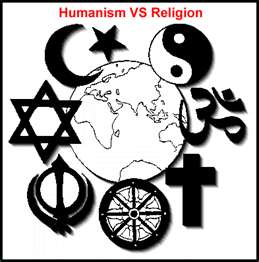
While the misery in this country has not reached the level suffered by the German people during that time, we can still note the tendency to grasp at simple solutions. They range from “down with government” to “down with Wall Street” to “down with religion.” Atheism would answer the problem of religious intolerance, for example, by simply ridding the world of religion. That solution gets rid of religious intolerance but offers no help for our intolerance of differing political views or ethnicity. Could it be that the underlying issue is not religion (or government, or Wall Street), but our sinful tendencies?

Solutions, most likely, will require difficult choices and the overcoming of our inclination to fight only for our tribe or group instead of the common good, not a magical waving of some political wand.

Those Who Don’t Know History


History for some is a boring recitation of dates. Others see history as a rich source of stories, as well as a background for today’s decisions. Why did people in the past choose as they did? What were the wise choices that bless us to this day? George Washington chose not to continue in power as the first U.S. president but to relinquish power to another elected individual, beginning a tradition of elected officials peacefully giving up office.

What were the foolish choices? Why did desire for wealth lead early settlers in America to allow slavery rather than forbid it, even though founding fathers like James Oglethorpe strongly opposed it?

We often hear the quote “History repeats itself.” The complete quotation, however, is “Those who cannot remember the past are condemned to repeat it.” It’s a quote from the book, Reason in Common Sense, by George Santayana.

The first implies that we are victims of a ceaseless cycle that we cannot control. The second implies that we can influence the future if we remember and learn from the past.

Time and setting play a role in the stories I write. Why do the characters make the choices they do within the times in which they live? How do they handle the influences of the age around them?

To Understand Each Other Instead Of Wars

When I was about eleven, I became a pen pal of a girl my age from Austria, through an acquaintance of my father. We wrote for many years, until both of us married and she moved to Germany with her husband.

I was going through old letters recently and came across one written by her, in beautiful script in English. Like so many American children, I was not conversant in any language except my own, but she wrote in English.

One year we exchanged Christmas gifts, and her family sent us a thank you note. The parents expressed hope that one day we might see each other for “it is possible in these times.” (We have never met, but my mother, on a trip to Europe, did meet and visit with her.)

One sentence of their letter, now before me, stands out: “It would be much better for the people to understand each other instead of having wars.” How little did I fathom at the time the longing in those words.

The parents had lived through World War II and the Soviet occupation of a part of their country. How poignant their wishes now, when so many since then have died and been harmed by conflicts.

Dear Lord, please bring us more understanding, more love, for those different from ourselves.

Writing and Faith

Writing is a journey of faith. You write a novel, spend months, maybe years, fleshing it out, creating characters, not knowing if it will be read by any but an editor who will reject it. Or you pour your passions into an article that may never be accepted for publication.

But isn’t that the way with all of us who give ourselves to a task? Preaching the love of God to an alienated world, working for a better environment, aiding unwed mothers, building low-income housing, relieving hunger, or giving ourselves to a million other worthwhile causes that captivate our passions and may or may not know ultimate success.

In medicine and the sciences, researchers toil for further knowledge or to relieve human suffering. Others give themselves to political causes that grip them.

The journey begins in faith and gives purpose and meaning to one’s life. Which is not to deny that a cause can be in error, as with the suicide bomber who kills not only himself but the innocent. Misguided faith can mask terrible evil.

Nevertheless, those who live only for themselves without any outside interest are to be pitied. Those who are ignorant of faith are surely little more than animal creatures who have waylaid their souls.

Beneath Diversity, A Comforting Order

Our View!


As winter began, my husband and I rented lodging on the far edge of the wild Olympic peninsula. No telephone, no television, no Internet. Out the window a few yards away, the boiling Pacific Ocean crashed onto the beach. We scanned the sculpted rocks and the writhing horizon that took away our breath with its beauty.

We stayed only a few days. To gain the full benefit, I think, one needs at least a week, preferably two or three. A couple of days passed before I accustomed myself to the rhythm of the place, before the thoughts began coming, the words forming.

I didn’t miss the telephone (not even our cells worked) or the television. The Internet was the most difficult to do without. No checking on the weather two or three times a day. No news from the outside, which, these days, is perhaps a blessing.

I think what I came away with (along with a measure of deeper peace) is the sense of God’s infinite diversity. Tides four times a day, but each different from the one before. Ceaseless waves, but each one, like a snowflake, different from any other.

This diversity operated within a dependable order. Without order, we could not check tide tables or know light and dark would succeed each other.

Within this comforting order, one is free to create infinitely and never exhaust the possibilities.

Musings After A Christmas Tragedy

Our island community grieved when a tree fell on a car driven by a family on the way to a relative’s house on Christmas Day, causing death and injury. Could God not have stopped that tragedy? Could have but wouldn’t? Would have but couldn’t?

When I was about four, I was happily walking through a field of clover when a bee stung me.  I had unknowingly stepped on the bee, and the bee reacted as bees were supposed to, but I had not wilfully done wrong, any more than the family had done wrong by driving down a road. Nursing my bee sting, I sought my mother’s comfort. Because she loved me, I could overcome a world in which bees sting small children.

Bad things happen that we cannot prevent, even by our best efforts. Such things are evidence, whatever else they are, that we need a relationship outside ourselves to whom we can go for comfort when those things happen.

The Holocaust surely is a tragedy as evil as ever envisioned. It caused some to disavow the idea of a loving God. I see it as evidence, neither of God’s impotence nor of his lack of caring, but as evidence of human failing. The Holocaust was not sent by God. It happened because we sinned, chose hatred. Directly caused by Hitler and the Nazis, yes, but it also may be traced to choices as far back as the religious wars of the 1600’s, which left Germany a devastated nation and led eventually to more wars and ethnic cleansing. The Holocaust came, not from God, but from humans. It is evidence of our choices, for which we need repentance and confession and forgiveness, the only actions that will prevent more Holocausts.

Why should we expect God to solve a problem that we ourselves have created? Nor should we expect God to change the rules of nature, the reaction of a bee to a threat or the natural fall of a tree when its time has come.

Hey, Buddy, Can You Spare A Place To Live?

Various estimates put the number of homeless citizens in America, on any given night, at over 600,000. We have different attitudes toward the homeless. Some believe the homeless deserve their situation and ignore them. Some ignore them but feel guilty. Some give something now and again toward relieving homelessness. Some work in soup kitchens.

I once saw a play given by a group of homeless individuals. The play convinced me that people are homeless for different reasons. The reasons range from a refusal to live responsible lives to poor choices to reasons beyond anyone’s control, like mental illness or medical expense or a lost job and home due to the recession.

Perhaps solutions should be as diverse as the reasons for homelessness. Some homeless are mentally ill and unable to assume responsibility for their lives. How much we assume responsibility for them can range from tough love to arbitrarily directing their lives. Others have worked hard but made poor choices and may profit from programs which teach better ways of coping and choosing. Others, such as the working poor,  may be aided by low cost housing.

I would suggest that those of us fortunate enough never to have known homelessness see each homeless person as an individual, not as part of a collective mass.

We may discover something or someone we did not expect to find. After all, Jesus and his family were homeless for a season.

Like This, Lord? Surely Not

God Surprises

If we are Christians, we hear this Bible verse often during Advent: “But when the time had fully come, God sent forth his son . . .” (Galatians 4:4, RSV) Though plans for Jesus’ birth may have begun in eternity, their fulfilment surely hit like a tsunami to those involved.

So it must have seemed to a peasant Jewish teenager named Mary. Mary marveled at what God was asking her to do—didn’t seem possible—but she obeyed.

But really, now—the Jews had prayed for the Messiah for centuries, and this is the way God answered their prayers?

Elizabeth Elliot writes in A Slow and Certain Light of the call that came to her to serve among the Auca people, members of whom had killed her husband. She writes of the call: “And when it came, it was as clear as the sunlight. What to do was all mapped out for me exactly, and I had a matter of minutes to make up my mind to do it.”

Years ago, I passed the exam for the U.S. State Department’s Foreign Service, but for over two years, nothing happened, so I chose another job, one I fell in love with.  Then, just before a weekend, a woman called from the Department and said I was eligible for entry into the Foreign Service, but I must decide immediately. I asked for the weekend to decide. That weekend I attended a stimulating conference in connection with my current job. I decided I loved that job and would not exchange it for the unknown of the Foreign Service. But I prayed that I would do God’s will. On Monday morning, I told the woman I would accept the offer for the Foreign Service. I still, to this day, cannot explain why I said yes when I planned to say no. An exciting life opened to me that I have never regretted choosing.

Perhaps the key to finding our path is to busy ourselves with what is at hand: applying for jobs, housekeeping, studying, working hard and honestly. We do well whatever comes to our hand and trust that God’s call can best find us there.

Barefoot Bandit: Justice and Mercy

Our little Island County (Washington), population 78,506, gained media attention yesterday for the sentencing of the so-called Barefoot Bandit. The Bandit, Colton Harris-Moore (now twenty), gained a cult following when he eluded authorities for two years.  He broke into houses and stores, then stole vehicles, boats and  planes to travel across the country. His final flight ended in the Bahamas.

However, his exploits caused significant financial loss to those he victimized. And, as the judge said in her sentencing, the security of normally peaceful lives in rural areas was shattered by the crimes.

The young man expressed contrition and full responsibility for his actions in a six-page letter to the judge he wrote himself, reportedly without telling his attorney what he was doing. He appears anxious that any earnings from a movie deal will go first for full restitution to his victims.

According to court records, Colton-Harris suffered in childhood from an alcoholic mother and even had to steal food to live. Judge Vickie Churchill noted that his exploits involved no physical harm to individuals. She said that in itself showed a triumph of spirit over his upbringing.

As the judge weighed her options in dealing with the young man and his crimes, I was impressed with her skillful blending of justice and mercy.