
Celebrating Celibacy on Valentine’s Day


Our culture encourages the young to find a “partner” as soon as they hit puberty. If parents try to persuade their children to practice patience, they may encourage them with the idea that they will be showered with blissful happiness in later unions if they only “wait.”

A study quoted in The Economist indicated that “waiting” may indeed bring added satisfaction in several areas of married life. However, some will never marry because they will never find what used to be called “the right one.” Others will not find in marriage all they were looking for. Some will divorce. Some will enjoy wonderful marriages, but one of the spouses will die early or suffer serious illness.

A few years ago on my mother’s death at 97, we sorted through her papers and found letters she and my father had written to each other. They blazed with passion. My mother and father, I believe, loved each other in every way it is possible for a husband and wife to love. However, at the age of 53, my father died of a heart attack. My mother lived longer as a widow than she had as a married woman. She lived those years to the fullest, enjoying friends, travel, parties, celebrations, and for much of it, a job she loved.

Perhaps we should consider a new standard: that we are called to celibacy until and unless we are called to marriage. Yes, unintended pregnancy and disease are reasons for celibacy, but not the chief reason. Young people need a solitary time to discover themselves, their callings, and their purposes in this life. And for some, celibacy is a life-long calling, a time to devote themselves whole-heartedly to a vocation they may better fulfil without a partner.

Be Fruitful and Multiply and Fill the Earth


So reads the book of Genesis. Some, pointing to resources strained by growing populations, would say we’ve already been fruitful enough. One woman apparently struck a chord when she said she’d considered and deliberately decided not to have children. Apparently, other women felt as though she’d helped them come out of the closet. They said her column liberated them to express their reasons for opting out of motherhood.

We line up on one side or the other, suggesting reasons for or against having children. It’s certainly possible to be fulfilled without motherhood—or fatherhood, for that matter.

Children the FutureThe thought struck me from out of nowhere, however, that as I grow older and understand that I’m going to die—in the next hour, the next year, thirty years from now, whenever, that I’m glad I’ve left children for the world. It has nothing to do with support or companionship in declining years. It has to do with my children as gift, with the hope that they will become useful citizens and give something to the world that makes it a better place.
We leave legacies. The legacies may or may not pan out as we wish. Career goals may be met, met partially, or not at all. The point is that, if we reach mature understanding, we live not just for ourselves, who will pass away in a short time, but to serve the greater good.

Motherhood is a career with legacies also. Perhaps our hope in raising children is that they will continue to serve this greater good when we no longer can. We want them to bring love, joy, peace, and other such fruit to a dysfunctional world. Surely we would welcome this kind of fruit and hope that it might fill the earth.


Post-Christian or Post-Christendom?


“Do you think we’re in a post-Christian age, like a lot of people say?” asked Taylor.

Patrick leaned forward. “To talk about post-Christian seems a bit chauvinistic to me—Western chauvinistic, I mean. I think I’d use the term post-Christendom. Christianity seems to be retreating in large parts of what we call the West, but it’s growing rapidly in much of the rest of the world.”

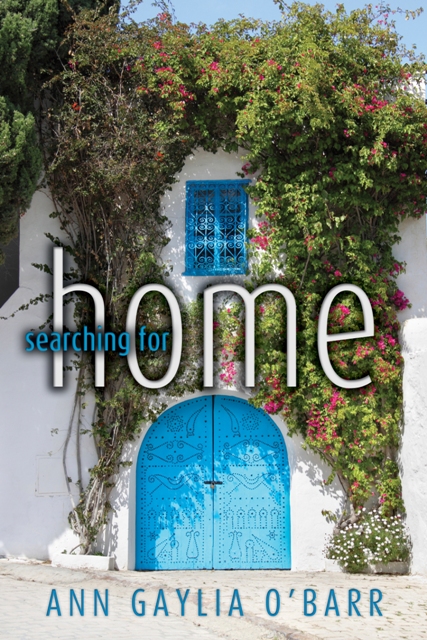
—From my novel Searching for Home

Do we live in a post-Christian era or a post-Christendom one? The difference in naming is critical. One is oriented toward previous Western dominance, the other is more inclusive.

The term Christendom denotes a time when European countries espoused a common faith. Christianity may or may not be thinning in Europe and North America. It is certainly not diminishing in Africa, Asia, and South America.

Fiction and the Believer in the Post-Christian Era


“Belief as upbringing, belief as social fact, belief as a species of American weirdness: our literary fiction has all of these things. All that is missing is the believer.”

–Paul Elie, “Has Fiction Lost Its Faith,” The New York Times, December 23, 2012.

Mr. Elie has written such books as Reinventing Bach and  The Life You Save May be Your Own: An American Pilgrimage . In its review of his writing on Bach, The Economist stated:”Mr Elie deploys considerable scholarship (the more notable since his previous book, about four modern American Catholics who made literature out of their search for God, had nothing to do with music), and he writes beautifully.”

Mr. Elie says in his article:  “. . . if any patch of our culture can be said to be post-Christian, it is literature. Half a century after Flannery O’Connor, Walker Percy, Reynolds Price and John Updike presented themselves as novelists with what O’Connor called ‘Christian convictions,’ their would-be successors are thin on the ground.”

So should this lack suggest despair?

“People of faith,” Elie states, “see decline and fall. Their detractors see a people threatening a rear-guard political action, or a people left behind.” Elie, however, seems excited by the new place Christian writers find themselves. “This development places the believer on a frontier again, at the beginning of a new adventure; . . . ”

We Christians, whether writers or not, can avoid acting as though our feelings are hurt because Christian culture no longer occupies the dominant position in our society. An old adage illustrates the times we live in: Some see crisis as danger; to others, it is an opportunity.

New Secretary of State; Thoughts on Christian Conscience and Diplomacy


John Kerry is now slated to head the Department of State, home for U.S. diplomacy.

The Cold WarAn age ago when the Cold War with the Soviet Union was at its height, a famous American diplomat made the following observations:

” . . . while Christian values often are involved in the issues of American conflict with the Soviet power, we cannot conclude that everything we want automatically reflects the purpose of God and everything the Russians want reflects the purposes of the devil. . . . We must concede the possibility that there might be some areas of conflict involved in this cold war which a Divine Power could contemplate only with a sense of pity and disgust for both parties, and others in which He might even consider us to be wrong.”

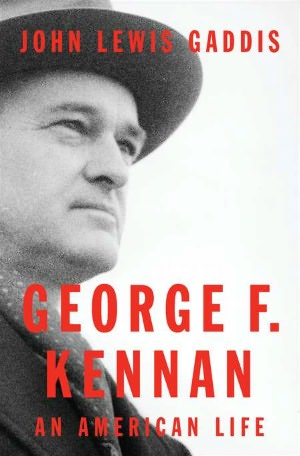
george f kennan bookThe diplomat, George F. Kennan, advocated that his beloved country take the high ground, that it develop its moral principles first and that military power only be used when absolutely necessary.

Further, he said:

“A government can pursue its purpose in a patient and conciliatory and understanding way, respecting the interests of others and infusing its behavior with a high standard of decency and honesty and humanity, or it can show itself petty, exacting, devious, and self-righteous. If it behaves badly, even the most worthy of its purposes will be apt to be polluted, whereas sheer good manners will bring some measure of redemption to even the most disastrous undertaking.”

These quotations are taken from “Foreign Policy and Christian Conscience” which The Atlantic Monthly published in May, 1959.

The U.S. never fought the Soviet Union directly in a war that may well have involved nuclear weapons. Kennan’s influence in no small part led the country to wait patiently. Eventually the Soviet Union caved from its own weaknesses, as Kennan had predicted.

Religion’s Major Role in the New World Order


In the late 1970’s, Iranian students, inspired by Islamic leaders, seized the United States embassy in Tehran.

444 DaysThumbing their noses at international law, they held U.S. diplomats hostage for 444 days. Religion entered as a major actor on the world stage. Over three decades later, the murder of American diplomats in Benghazi, Libya, by religious terrorists indicates that the religious script is still in play.

What happened? Though at the time of the Iranian revolution, the Soviet Union would not tumble for a few more years, the Cold War was thawing. The United States and the Soviet Union signed agreements limiting nuclear weapons. Egypt and Israel endorsed the Camp David accords. Optimists saw glimpses of an upward march to worldwide peace, individual freedom, and economic advancement.

Not all were buying in. The money from Iran’s oil industry allowed Western-style consumerism that seemed empty to many Iranians.

Iran hostage crisesThe student revolt was nationalistic, an attempt to root out foreign influence and government brutality, but it included yearnings for a less secular culture. Now recent revolts in Tunisia and Egypt have dethroned secular governments and elected Islamists.

How can the United States, which prizes freedom of religion for all its citizens, deal with states whose laws favor one specific religion?

In recognition of the need for more understanding, the U.S. State Department created the position of an Ambassador for International Religious Freedom in 1998. Its mission is to promote religious freedom as a core objective of U.S. foreign policy. The report for religious freedom in 2011 is now public.


Time as Character


In my novel Quiet Deception, one of the “characters” is the time in which it is set. The period is the era between 1944 and 1977.

World War IIAt the beginning of this era, the United States led her allies to defeat the Axis powers, Germany and Japan. Wars dramatically change the social fabric, and World War II, so immense and terrible, was bound to spawn changes that reverberate today.

Most other countries were either exhausted by the conflict or undeveloped. The United States entered the world stage as the premier nation, following other civilizations that previously knew a period of glory.

We Americans reached a material level unparalleled in history. We became the strongest economically and militarily. Dishwashers and the pill, microwaves and woman’s liberation, suburbs and open marriage changed our society. Christians didn’t realize it at the time, but their influence hit a high point before entering a time of great challenge.

Quiet DeceptionIt is this period which becomes one of the characters of Quiet Deception.

The main protagonists, a college professor and one of his students, stake out new territory. Along with their friends and colleagues, they cross the margin from the older world to the one we know today.

Within the framework of an unsolved mystery, the characters reach decisions about the paths they will take from the many that the times offer. What will they retain from the older world? Though they interact with each other, they interact also with those times of change.

Algeria In the News Again


Following is a quote from my novel, A SENSE OF MISSION. The heroine, Kaitlin Sadler, is working at the U.S. Embassy in Algiers, Algeria, in 1993:

Bruce came in one morning while I was scanning the morning’s French and Arab newspapers . . .  He showed me the piece of paper, printed in Arabic. “Gabir brought this in. Seems the FIS is circulating it throughout Algiers.”

I read it. “They want all foreigners out of Algeria within 30 days or they’re vowing to—the word is exterminate, I believe—exterminate the foreigners, I mean.”

I handed it back. “I presume they’re particularly interested in the oil company workers.”

“They’d like to shut down the oil industry here. Oil is the main revenue source for the government they hope to topple.”

“And set up an Islamist government on the model of Iran, I suppose.”

The story is fictitious. However, the events mirror the Algeria where I worked in the latter part of 1993. The words hint of today’s headlines about the taking of oil workers as hostages, including Americans, by extremists.

Kaitlin is introduced to Algiers through her sponsor, Adele, when she first arrives. Her observations suggest one reason for the growth of the insurgent groups that began terrorizing Algeria in the 1990’s, when I was there, and continue today.

“They’re called ‘wall-holders,’” Adele said as we crawled through the neighborhoods of Algiers in her car. I had remarked on the young men who stood around, seemingly with nothing to do.

“I knew the unemployment rate was high,” I said, “but I guess I didn’t know it had affected the youth that much.”

“The official unemployment rate is about 20 percent, but we think it’s more like half the population of those between eighteen and twenty-five.”

And on an official trip through the countryside, Kaitlin observes:

We met with American workers at an oil-processing facility close to Oran. They gave us hard hats to walk around the plant and told us they felt safe enough, that they trusted the Algerians to guard them from the beginnings of terrorism. After all, the Algerians had to have the oil. . . oil was Algeria’s main source of revenue. The country had neglected its agriculture for decades in pursuit of the black gold the world so craved.

For more on Algeria, see the country page on this site.


Palestinian Christians in the Middle East


As the first Gulf War (early 1990’s) against Saddam Hussein threatened, I worked at the U.S. Consulate in Jeddah, Saudi Arabia. One of our tasks was aiding Americans who lived and worked in Saudi Arabia but who now wanted to leave before the war began.

Our consular unit included three U.S. Foreign Service officers and six locally hired employees. Two were Palestinians. Both had served at the Consulate many years, using their long term contact with Saudi Arabian officialdom to help us in our tasks. Without them, our work would have been more difficult: checking on Americans in prison, for example, or setting up visits with foreign parents of American children involved in custody cases.

One of the American women we helped to evacuate expressed unease at riding to the airport with one of the Palestinians, despite the fact that he was aiding her in getting home to the U.S. Perhaps she thought all Palestinians were terrorists, a laughable view considering the dedication of our hardworking employees.

I thought of this incident recently when I listened to Elias Chacour, Archbishop of Galilee in Israel for the Melkite Greek Catholic Church. Melkite Christians trace their origins back to Syrian Christians in the early days of Christianity. They have endured centuries of conquests, persecutions, and minority status in the tumultuous Middle East. Archbishop Chacour was born in Palestine in 1939 in a Christian village. He is an Israeli citizen, a Palestinian, and a Christian.

In the 1980’s, he began a school which today is one of the top schools in Israel. Its students include Christians, Muslims, and Jews. Archbishop Chacour is a committed Christian who works for peace in a conflicted land.

He tells his story in several books, including Blood Brothers: The Dramatic Story of a Palestinian Christian Working for Peace in Israel. It is available online in digital and print editions.

Perhaps his story and that of others like him will give us a more balanced view of the inhabitants of that stretch of the Middle East known to Christians as the Holy Land.

Syria: Do We or Don’t We?


Bachar-al-AssadThe war in Syria is a conundrum, a problem that appears to have no favorable resolution. The opposition, assaulted by a brutal dictator, plead for weapons to unseat Bashar al-Assad. Clinging to power appears to be Assad’s main goal in life, even if he must slaughter civilians to do it. The poorly-armed opposition asks for weapons to equalize the conflict.

Few Americans seriously entertain sending American troops into the Syrian maelstrom, but many question our lack of support for other nations to arm the opposition with weapons to shoot down Assad’s planes that sow such carnage.

The reason for our reluctance is the presence in the opposition of terrorist elements, perhaps a small minority, but we don’t know the extent. We fear that weapons will end up in the hands of the terrorist element. We fear, if they gain the upper hand, that they will replace Assad, not with a republic offering equal protection for all religious and ethnic groups, but with an Islamist republic akin to the theocracy in Iran. In a shooting war which changes daily, picking the good guys from the bad ones is difficult. The mixed results of other Middle Eastern countries who have thrown off dictators give us pause. Minorities in Egypt, for example, fear that the new constitution there may take away their rights.

Sometimes the happy ending, so beloved by Americans, is not possible in the short run. We make adult decisions, some would say moral ones, knowing the risks we take.

From China: One View of the United States


Eric X. Li, writing in Foreign Affairs (“The Life of the Party; The Post-Democratic Future Begins in China,” Foreign Affairs, January/February, 2013) states:

“While China’s might grows, the West’s ills multiply: since winning the Cold War, the United States has, in one generation, allowed its middle class to disintegrate. Its infrastructure languishes in disrepair, and its politics, both electoral and legislative, have fallen captive to money and special interests.”

We may question Eric X. Li’s belief that China’s example of governance is ultimately good for humankind, but we surely understand that events in the United States in recent years have demonstrated a less than sterling example of democracy for the rest of the world.

For several decades, American soldiers and diplomats have risked lives to bring democracy to countries that seem not to know what to do with it. We berate them for disintegrating into warring tribes.

Perhaps we should examine our own warring tribes. Democracy works only when a people evidence humility as regards their own opinions and show respect for those with whom they disagree. Hatred poisons democracy. We may be deeply saddened at certain trends, but we self-destruct if our response is to allow this poison to infect us.

None of us will obtain all we wish. We live in an imperfect world. Respect and compromise grease the wheels of democracy so that it works.


America’s Virtual Embassy in Iran: An End Run Around Big Brother


The United States hasn’t had a functioning embassy in Tehran, the capital of Iran, since it was overrun in 1979 by Iranian student radicals. Afterwards, 52 Americans endured 444 days of captivity before being released.

Through social media, however, the U.S. State Department recently celebrated the one year presence in Iran of its Virtual Embassy Tehran.

According to a State Department spokesperson, the digital embassy allows communication between the United States and the Iranian people. It aims to make an end run around the efforts of the Iranian government to censure information for its citizens.

The agenda ranges widely, from programs about U.S. visas and study opportunities for Iranians in the U.S. to a Virtual Music Ambassador series and a Poet’s Corner celebrating the American poet Walt Whitman. Fans of an affiliated Facebook page number over 81,000. The Embassy also utilizes Twitter, Google, and YouTube. Digital media especially appeals to young people, a growing segment of the Iranian population.

Following in the tradition of the early programs on Radio Free Europe during the Soviet occupation, innovative use of media has again breached the barrier of information control.

Best Blogs for 2012


In celebration of 2013, I’ve picked ten of my blogs that I’ve chosen to define 2012.

Plus, I am giving away three copies of my latest book, A Sense of Mission. See details below.

The ten are:

Advent and Arc Lines

Nones and the Rest

Our Right To Say Outrageous Things

An Extreme Makeover of Christendom

To Appreciate Our Right To Vote, Live In A Country That Doesn’t Have It

“Even the Good Parts of It.”

Clock Time and the Other Time

When Religion Is A Pawn

Protests or Bridges?

From Bach to Hitler


Which blog do you like best? Send an email to islandfiction@hotmail.com with your choice of the best blog and your reasons why.

After two weeks (January 16), I’ll enter all email addresses in a drawing. I’ll email the first three that I draw for an address to send a copy of my newest book, A Sense of Mission.

No names, addresses, or email addresses will be made public or used in any other way. I would like to use your thoughts only in future blogs.


Religion’s Dilemma: What To Do When It Works


“I do not see how it is possible, in the nature of things, for any renewal of true religion to continue long. For religion must necessarily produce both industry and frugality, and these cannot but produce riches. But as riches increase, so will pride, anger, and the love of the world . . . .”

–John Wesley

Christians who take seriously the teachings of Jesus are less likely to abuse alcohol and other drugs. They are more likely to marry and to remain faithful. They are more likely to devote time to the rearing of their children. They are more likely to search for careers with meaning and to work harder in those careers when they find them. They are more likely to give money to causes outside of themselves and to be careful with the rest of their money.

Such habits encourage productive lives and often result in greater financial rewards. Then, according to Wesley, founder of the movement that began the Methodist denomination, the cycle kicks in again. Serious religion and its disciplines languish, he suggested. Christians become more interested in the fruits of their labor than in the labor itself or the life altering decisions that guided them. They fail to curb self-seeking tendencies.

Is it possible to avert this cycle? No doubt, but surely it takes a conscious decision not to yield to the goals that so consume us when our material lives improve. One must continue to grow spiritually, to choose intentionally rather than drift, and to remember the less fortunate after one is no longer one of them.

Will The Last Child Please Turn Off The Night Light?


A fragment of the Christmas story states that the announced messenger of the Lord, before Messiah’s coming, will “turn the hearts of parents to their children.” (Luke 1:17 NRSV)

The angel could be talking to us today: to rescue the family back from obsolescence.

The New York Times columnist David Brooks suggests we’ve become a society in which we don’t want children because they close off our options. We want maximum personal freedom throughout adulthood. Following such a policy to the extreme eventually threatens our existence.

We no longer need children for economic reasons. In fact, children now cost a great deal, in terms of care, schooling, and time. Not all of us are called to be parents. Better that we not return to the days when parenting defined a person’s, especially a woman’s, only purpose. Better perhaps that we look to children as belonging to more than the immediate family. They are the future of our communities. Our care for children may relate to our understanding of our need for community, whether we are parents or not.

Community at Christmas


This year, the electricity stayed on. The forecast remains stuck in rain mode rather than snow. A few years ago, it snowed, and the power was off for days before our advent concert. We came anyway and huddled together in our winter coats and blankets, listening to a program powered by a generator. Regardless, the blessings are the same, the songs are heard and absorbed. The old story, is as precious as ever in a still-dark world, where innocents cannot be protected.

Our end of the island, about an hour north of Seattle by ferry, is home to around 15,000 citizens. Older islanders have been here for generations, farming, logging, and fishing. Newcomers join, desiring a slower pace. The island ambience attracts artists, who stay full-time or part-time between work in other places. Writers, sculptors, painters, dancers, musicians, dramatists, and others ply their craft.

The holiday season calls on much of this artistic talent, creating so many gatherings and performances that one has difficulty attending all of them. For our church’s advent concert this year, we knew to come early, for seats filled up quickly with islanders, not all from the church. We hardly breathed during the performance of musicians and readers. Where did all this talent come from? How blessed we are.

We know we are blessed. We have our computers, iPhones, iPads, Kindles, and Nooks, but they work only as long as we have electricity. We marvel at another blessing that our country struggles to keep—that of community.

Advent and Arc Lines


A novel or a movie contains what are called arcs: stories within stories, if you like. Each character follows an individual arc, a story line within a story, as he or she reacts to the events that make up the plot.

A separate arc may trace a relationship between two of the characters, as in a love story. Still another arc follows the story’s main “problem.” It can be a mystery or perhaps a secret which the story uncovers or a moral choice or a resolution toward which the story works as it progresses.

Seldom are all the arcs revealed at the same time. One may influence the other, but each has its own life: beginning, middle, end. Characters never know all the arcs in the story that they inhabit.

I think of real life like that, too. Some process begins, perhaps known to only a few people, until it bursts on the scene, influencing millions. The awful tragedy in Connecticut was the culmination of arc lines from many stories, some of which we will never know. Some witnesses to the tragedy will change the paths they were intending to go and live different stories than they planned before the tragedy unfolded. We can choose to change our arcs.

We ponder the evil in the world, the innocents who suffer. Events tempt us to despair. Yet, we don’t know all the arcs in the story. Advent is a symbol of waiting, waiting for all arcs to end, finally, for the conquest of darkness with light. We wait with faith for the arc to play out that began with a baby born in Palestine two millennia ago.

Weeping For Our Children


“Evil visited this community today.”

–Dan Malloy, Governor of Connecticut, after the murder of twenty-six people, twenty of them children, in a school in Newtown, Connecticut.


“When Herod saw that he had been tricked by the wise men, he was infuriated, and he sent and killed all the children in and around Bethlehem who were two years old or under, according to the time that he had learned from the wise men. Then was fulfilled what had been spoken through the prophet Jeremiah:

‘A voice was heard in Ramah, wailing and loud lamentation, Rachel weeping for her children; she refused to be consoled, because they are no more.’”

–Matthew 2:16-18, (NRSV)


“Then Simeon blessed them and said to his mother Mary, ‘This child is destined for the falling and the rising of many in Israel, and to be a sign that will be opposed so that the inner thoughts of many will be revealed—and a sword will pierce your own soul too.’”

–Luke 2:34-35. (NRSV)


Choosing Leisure in a Frantic World


Religious orders in the Middle Ages developed efficient methods of work in order to toil less and enjoy more leisure for prayers and other religious activities. As Europe entered the modern era, people began taking their surplus in goods rather than leisure. (Man, Energy, Society by Earl Cook.)

In prior generations, survival taught its own lessons: work efficiently, be frugal, or starve. After World War II, Americans found themselves in a golden age of plenty. One wage earner could support four or more people with a forty-hour work week. One could survive even though working less than ever before.

Americans, knowingly or not, faced a choice. We could work less and allow more time for other pursuits: family, religious activity, creative pursuits, community work, more education. Fathers could spend more time with their families, allowing mothers to explore outside career interests if they chose. Singles could work part time and obtain more education or pursue creative work that didn’t pay as well, if their talents led them there. Twenty-hour per week jobs might become the norm.

Or Americans could continue to work as they had and buy more and more things. Once “things” became the goal of work, however, the desire for more and more material goods required greater commitment to job and career.

To overcome consumerism, Dr. Martin Luther King Jr. believed that “we must rapidly begin to shift from a thing-oriented society to a person-oriented society.” By living “deliberately”—as Henry David Thoreau understood—we spend less, work less and enjoy life more.

We now are rich in things (or were before the Great Recession) and poor toward God, friends, families, communities, and our inner lives. To choose a Biblical metaphor, we worked the fields seven days a week, skipping our Sabbath days of rest. Now we find an enforced rest in unemployment and under employment.


Syria’s Chemical Weapons


While Christians in this country celebrate Jesus’ birth, we recoil at the horrors unfolding in the region where he was born. Will Syria’s Bashar al-Assad use chemical weapons on his own people? Perhaps creating a tragedy as happened when Iraq’s Saddam Hussein used chemical weapons on his Kurdish citizens in 1988, killing and maiming thousands? (We ignored this atrocity at the time because Saddam was our ally against Iran.)

Why does Assad not step down? He could find sanctuary. Russia has supported him. Supposedly, he has friends in South America. Why does he insist on this war of brutality against his own people?

Perhaps he fears retribution against his ethnic sect, the Alawites. The Alawites, a minority in Syria that has ruled the Sunni Muslim majority for decades, fear his downfall, sure of a war of revenge against them if he goes.

The use of chemical weapons is “a red line,” so we are told. What then is our response? What are our plans? We are weary of war. Chemical weapons apparently is the one step Assad could take which would bring retribution on him. But will we be able to act effectively?

What will happen to Damascus, one of the oldest continuously inhabited cities in the world? The apostle Paul was headed there when he experienced a spiritual turnaround so dramatic that the phrase “Damascus Road experience” has become the code for a life altering conversion. We are in need of such today.