
Unbalanced Lives


Our work force is not the one of our parents. It now includes not only many mothers, but also fathers with a realization that they, too, want to share in their children’s lives. It includes singles who crave a life beyond work. It includes care givers with family members in need of attention. It includes those with a desire to take time off for a temporary stint with a non-profit or to gain more education or to experiment with new career directions.

Employers will profit by understanding that employees cannot always be only employees. Workers will shift goals when a new child is born or a parent needs extra care or a spouse suffers grave medical problems or one’s goals change. If the norm is for most adults to concern themselves with a career from the time they leave school until they retire, we need new patterns to balance our lives.

Long leaves should be expected from time to time. This doesn’t mean employers should be on the hook for long periods of salary payments when the employee isn’t working. It does mean an acceptance of the fact that workers will at times need extended periods of leave, even perhaps several years. The promise of reinstatement when the employee is ready to reenter the work force, within limits, as well as the continuation of medical benefits are items of consideration. Flex time or part-time work or work from home are possibilities in some careers.

The employees, too, must make choices. They cannot expect continued salary for long periods if they leave the work force for an extended time. The American habits of high consumption and low savings need drastic revision. Americans should expect not to work at certain periods in their lives and plan accordingly.

We need a rethinking of career. Taking time off from career for other needs should be the new normal, a normal of choice.


Bring Me Your Tired, Your Poor, Your Huddled Masses . .


Regardless of which political party won which offices in the recent election, immigration issues will no doubt be a part of congressional consideration in the next few years.

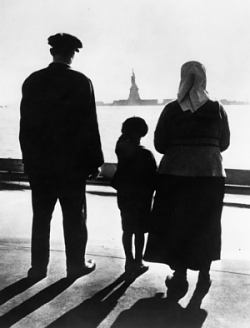
As a consular officer working for the U.S. State Department, I interviewed foreign nationals for both temporary visas and visas for permanent residence in the United States. Interviews for legal immigration were rewarding, often dealing with those who were elated at reaching their dream of living in the United States. These immigrants often had family who had immigrated to the United States before them. Others had earned their visas because their job skills were needed by an American employer.
In contrast, my interviews of those applying for temporary visits to the States exhausted me and the other U.S. visa officers. We knew that a significant percentage of the applicants hoped to use the temporary process to gain entry to the U.S. and then remain there, legally or illegally. We sometimes had to interview hundreds of applicants each day. The vast numbers required us to decide within minutes what were the intentions of the person before us. No wonder we were exhausted.

I found visa work to be not only exhausting but depressing. I disliked having the power to destroy people’s dreams, people who wanted nothing more than to escape often oppressive and/or poverty-stricken situations. These feelings found their way into the lives of two visa interviewers in my novels, Kaitlin in A Sense of Mission and Hannah in Searching for Home.

No immigration law will be perfect. More people still want to live in the United States than we can possibly accommodate. Web sites can aid us in making rational decisions about our immigration policies. You might begin with the Department of Homeland Security.


Peace in Jerusalem


One Christmas season years ago, I cut an article from a newspaper. The article bemoaned the lack of peace in Bethlehem, the place where the Prince of Peace was born, whose birthday we Christians celebrate during this season of advent.

Today, peace in Bethlehem and Jerusalem and Gaza and Hebron appears as elusive as ever. Only the very old can remember a time when Israelis and Palestinians were not at odds. A recent truce between Israel and Hamas in Gaza brought yet another lull in a long series of halts that never seem to last. Hopelessness tempts us. Two ancient peoples trace roots to the same bit of land. Each can point to atrocities committed against them.

Diplomacy may bring halts to the violence, not a small thing. Diplomacy seeks a negotiated settlement, not a small thing, either, but in this land, all the wrongs can never be righted.

Christians, of all people, should practice hope, especially at this season, because this season brings the answer. The answer is forgiveness.

Pray for the peace of Jerusalem and pray for forgiveness that can erase the hurts between two peoples and cause them to live together in harmony.


Confucius and the Holidays


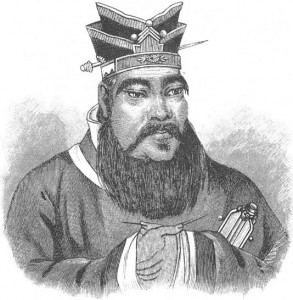
Confucius, the oft-quoted Chinese teacher and philosopher said, “To put the world in order, we must first put the nation in order; to put the nation in order, we must first put the family in order; to put the family in order; we must cultivate our personal life; we must first set our hearts right.”

What a quaint expression—”to set our hearts right,” to order our hearts. It echoes the one for whom Christians celebrate the season, the one who said “seek first the kingdom of God and his righteousness.” Is it possible to seek the kingdom, to put our hearts in order despite the business? Probably not without the requirement for other worthy pursuits, that of self-discipline.

Can we leave our shopping, our texting, our twittering, and our Facebooking for a few minutes a day during this season? Practice the quiet “to set our hearts right”?

Black Friday Meditation


We are told that the only way we can come out of the recession is for Americans to spend the greater part of their salaries on goods and services, even go into debt. Especially on Black Friday, retailers count on the greatest spending spree by Americans of the entire year. If accounts don’t reach into the black on that day, retailers foresee trouble.

Most Americans reached a level of affluence, a luxury level compared to past generations, by the 1960’s or so. Yet we continued to build larger houses for smaller families while we deserted the six ounce soft drink for the jumbo sizes.

“How much Is enough?” asks the title of a book by Robert Skidelsky and Edward Skidelsky, How Much Is Enough? Money and the Good Life. This book and another, What Money Can’t Buy: The Moral Limits of Markets, by Michael Sandel, were reviewed  by The Economist in their July 12, 2012 issue.

“Even if . . .the West could do with more . . , the pursuit of wealth for its own sake is folly,” states the reviewer of the two books. Perhaps these books should find a place under our Christmas trees this season.

Lost Generation


The New York Times columnist, David Brooks, wrote a piece titled “The Widening Opportunity Gap.” It dealt with the gulf that separates children who grow up to function successfully and those who don’t. Brooks discussed several reasons for this divide between children, but he pointed out that the amount of time parents spend with their children is a major factor in their success.

This gap between the parented and the unparented has increased since the famous baby boom following World War II. The boom gave way to other generations, born from the mid-1960’s onward. These groups are variously called Generation X, Generation Y (also known as the Millennials), and Generation Z. Until the economic recession that began around 2008, these children were born during an era of unprecedented economic growth, of the two-career family, of the housing boom.

Yet the good times knew a darker side: The high divorce rate of baby boom parents led to the fashion of their children forswearing marriage.  Why bother with marriage at all, since it so often ends in acrimonious breakups? they asked. Casual relationships developed a mainstream following. Babies born of them often appeared an afterthought.

Our emphasis on self fulfilment rather than on responsible membership in society, including parenting children instead of merely birthing them, may stunt an entire generation.

What’s a Sister? Or a Brother? Or a Cousin?


George Weigel (author of The Cube and The Cathedral, which describes the death of Christianity in Europe) was interviewed for Response magazine several years ago: He stated: ” . . . by 2050, on present trends, 60 percent of Italians will not know from personal experience what a brother, a sister, an aunt, an uncle or a cousin is.” This is, Weigel says, what happens when parents mostly have only one child, and only children marry only children.

Even couples in countries with traditionally large families, like Mexico, are choosing to have smaller families. If present trends continue, cheap labor from these countries may be a thing of the past, for good or ill.

What is happening is not a dastardly plot to kill families but has developed gradually. Birth control, the economic necessity of a paid career for all adults, and education that delays marriage and family all contribute.

Parenthood is not suitable for every adult. It’s good that we have a choice. However, many couples want to have children, but economic needs and the demands of career discourage parenting.

We are told that several jobs over the lifetime of an individual is the new normal. Perhaps we should consider new patterns that include parenting as one of those jobs for those who desire it.


Murdered, A Foreigner Working for the United States


Qassim Aklan, local employee of the U.S. embassy in Sana’a, Yemen, was recently murdered. Aklan, an employee of the embassy for eleven years, aided his American colleagues in investigations that the embassy carried out.

About 53,000 local employees help staff U.S. embassies and consulates  abroad. The mere fact that they work for the United States sometimes puts them in danger. Over the years, hundreds have been killed because of their employment.

Every American who has worked in a U.S. embassy or consulate and earned any accolades knows how much of the praise is due to the local staff who made their work possible. I especially remember the three Foreign Service Nationals (as we called them then) who shepherded me through my exhausting first tour. No way could I have survived that tour without them.

Perhaps in tribute, two of my novels feature locally hired staff who work in U.S. embassies where the American protagonists are assigned. Lavali, Farid, and Ramelon are the fictitious national employees from A Sense of Mission. They support newbie U.S. Foreign Service Officer Kaitlin Sadler. She depends on the trio as she struggles to master the interviews of a never ending line of applicants for U.S. visas, endures a Middle Eastern war, and falls in love.

Hatem Lakhdar, at another Middle Eastern embassy, provides Patrick Holtzman, ambitious U.S. political officer in Searching for Home, with the names of valuable contacts. One contact becomes a special friend. Later Hatem offers sympathy to Patrick when the contact is murdered.

The American officers come and go when their tours end. When posts become too dangerous, they are evacuated. The Foreign Service Nationals remain, sometimes with tragic consequences.


Attention, Mr. President!


Parade ran an article “Attention Mr. President!” in its November 4. 2012 news supplement. The article included suggestions from citizens involved with various organizations in the United States.

Suggestions included: reform the way Congress works; enact tough fiscal measures seen as fair to all segments of American society; build on proven ways to educate all American children; reform immigration laws to insure a pipeline of hard working, talented immigrants; reign in healthcare costs with more efficient billing methods; adopt measures to achieve energy independence; create training and jobs for veterans; strengthen infrastructure. (Examine the details here.)

We Americans have had a reputation as a practical people, able to seek the middle ground and  hammer out innovative solutions to problems. The point of the article was a wake up call to our leaders to conquer our present tendency toward paralyzing polarization.

Elections, Laws, and Lives


“There are not enough jails, not enough policemen, not enough law courts, to enforce a law not supported by the people.” So said Hubert Humphrey, one time candidate for the U.S. presidency.

Such was the case with the Eighteenth Amendment to the U.S. Constitution. Ratified in 1919, it prohibited intoxicating beverages. A backlash against it, however, led to its repeal in 1933. Too many people made “bathtub” gin or bought bootleg liquor (leading to an increase in organized crime) for the amendment to work.

Elections are important, but more for incremental change than sweeping mandates. The direction of a nation changes dramatically only if a broad consensus of citizens wants to go in that direction. We may suppose that an election will perform miracles, but it rarely does.

The day-to-day lives that we lead, the persuasion we bring to bear in civil discussions, and the proofs we are able to offer that one way is better than another count more than any election. Our nation is, after all, a republic. Before lasting change comes, not just the hoopla of an election, a significant percentage of the citizens must be committed to it.

Nones and the Rest


Recent polls cite the growing “nones” in American society, those who profess to have no religious preference. Judging by the declining numbers in established churches in much of Europe, religion appears less and less important in all Western countries. At the same time, recent revolutions in the Middle East have led to religiously affiliated governments. In some sense, the “nones’ of the West are balanced against the “rest” in a new array.

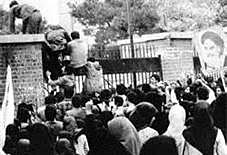
The current movie Argo pinpoints a beginning to this sea change. The movie is set in 1979 during the Iranian revolution. The revolution removed power from Iran’s secular leaders, including the Shah, and bestowed it on religious ones. The United States had supported the Shah and allowed him into the United States for medical treatment. In protest, Iranian students stormed the U.S. Embassy and took hostages.

Few at that time took seriously the notion of a revolution propelled by religion. Gary Sick, in his detailed book about that time, All Fall Down, includes a section on “Religion and Revolution.” He states: “We are all prisoners of our own cultural assumptions, more than we care to admit . . . the notion of a theocratic state seemed so unlikely as to be absurd.”

Since that time, religious movements have expanded in Africa and South America. They have increased in Asia, even in Communist China. In Russia, straddling the divide between Europe and Asia, the Orthodox Church realizes growing influence . The fiery conflicts in the Middle East, so prevalent in news reports, are part of this worldwide rethinking of secular and religious.

We are not seeing a clash so often between religions in the world today (though that certainly happens) as much as we are seeing a clash between the religious and the not religious, the rest and the nones.

When Losers Become Prophets


I had forgotten about former Senator George McGovern until his death was announced last week at the age of 90.

My memory of his brief appearance in American history as the candidate against Richard Nixon mostly concerned  his stunning defeat. McGovern took the electoral votes only of Massachusetts and the District of Columbia.

Now I wish I had known more of him. He was the son of a Methodist minister and briefly considered the ministry for himself. According to reports, he remained a deeply committed Christian all of his life.

Many thought of him as a radical, joined in their minds with hippies who burned the American flag. Though McGovern fared poorly because of his opposition to the Vietnam conflict, he was not a pacifist. Like George H.W. Bush, he was a decorated veteran of World War II.

Richard Nixon became the president remembered for his resignation because of the Watergate scandal. McGovern, the loser, had spoken out against our military involvement in a small nation in Asia because he did not believe the country threatened us. Only later did so many others agree with him that Vietnam became a code word for failure.

Today, it is spoken when questions are raised about a proposed American military entry into a foreign country. Will it become another Vietnam? we ask. Perhaps that is George McGovern’s legacy.


Risk


Linked to the end of this blog is a short story, “Risk,” that I wrote several years ago and never published. The part that risk-taking plays in faith intrigues me, especially during times of change.

Stories in the Bible touch on risk as a first step of faith: the Hebrews had to step into the Jordan River before the waters stopped flowing so they could cross. Jesus told the man with the withered hand to stretch out that hand to begin the healing process. Four unnamed men took the risk of bringing their friend to Christ for healing. Why is faith involved?

As a society becomes less religious, we tend to leave religion behind, almost without realizing it, or only give it lip service. To choose a faith as the polestar of our lives during such a time requires a definite commitment, a taking of a risk.

I used “Risk” to explore these ideas.

Unfortunate Choices and Their Consequences


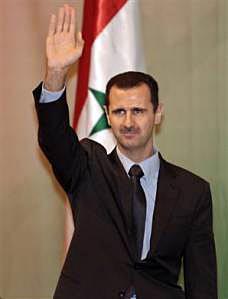
Past choices bring consequences, for individuals and for nations. Our past choices, for example, limit us in the help we can offer the uprising against the Syrian dictator Bashar al-Assad. Thousands of men, women, and children have died in brutal circumstances. Tens of thousands more have fled and become refugees.

The issue of chemical weapons hovers over the conflict. Bashar al-Assad has chemical weapons and has threatened to use them. No one doubts the brutality of the al-Assad famly. The father of Bashar massacred and obliterated the village of Hama in 1982 because of its opposition to his rule.

We can choose to send weapons to the Syrian opposition, but the opposition is fractured. It includes extremists like al-Qaeda. How can we be sure who is receiving the weapons? The opposition is fluid: groups frequently change alliances.

Our entry into Afghanistan and then Iraq after 9/11 wearied us and taught us the limitations and the costs of military involvement. Our actions in Iraq lost us good will among the Arab nations when no weapons of mass destruction were found there, which we gave as our reason for entry to that country. Whether true or not, other nations now assume that any move we make in the area is because we want the oil and has nothing to do with compassion for the Syrians or anyone else.

Our support for dictators in the Middle East haunts us. We supported them because they kept a lid on Islamist regimes, at the same time becoming both corrupt and brutal to their own people. Now that dictators in Tunisia and Egypt have been overthrown, the new government leaders remember our support for the dictators who sometimes tortured them.

Decades ago, in 1973, oil producing nations began an oil embargo against the United States because of our support for Israel. Gas prices soared. U.S. President Richard Nixon led the nation in measures to reduce our oil consumption. We talked glibly of loosening our dependence on oil in the Middle East. Once the crisis passed, we chose to return to business as usual, willing to pay a higher price at the pump. Eventually we paid on 9/ll and in Afghanistan and in Iraq.

Our desire for the oil of the Middle East has driven much of our foreign policy in the region since the Second World War. We are reaping the results of those policies.

Avoid Flaming Up


Our small island recently was invaded by a hate group, inflaming passions. Like the infamous Westboro Baptist Church, several people attempted to pass out hate literature to the public in several of our communities.

The literature wasn’t an intelligent discussion of a point of view, but epithet hurling diatribes.

Some citizens were incensed and called the police. The police came and watched but said no laws were broken. The group operated within their rights of free speech.

Those who ignored them appeared to offer the best response, in some cases silently walking around them on the sidewalk. It seemed the best response was indeed a refusal to engage, thus depriving the group of the attention they craved.

Such episodes illustrate the necessity for  exercising wisdom in our encounters in this deeply divided country. Blessed is a discussion between two citizens of differing opinions ruled by common courtesy. Each may learn something. They may even be able to compromise on a few issues or at least retain respect for the beliefs of the other.

Brouhaha Over Benghazi


The investigation over security in Benghazi, Libya, where the U.S. ambassador and three others were tragically killed, continues within election year furor. As James Risen has written in The New York Times, however, the security of U.S. embassies and diplomats today is complex.

During the Arabian/Persian Gulf war in 1991, I began my first tour with the State Department at the U.S. consulate in Jeddah, Saudi Arabia. Once the war was over, my colleagues and I enjoyed weekend trips to ancient ruins, group runs in the desert outside Jeddah, and evenings out in the city’s restaurants. In 2004, long after my assignment ended, al-Qaeda forces attacked the consulate and killed four employees and four of the consulate’s guard force.

When I served in Algiers in 1993, I probably acted foolishly in walking to a church on the weekend down narrow streets of the city. Hints of the extremist insurgency against the Algerian government surfaced, but we hadn’t yet been forbidden to walk around, and I wanted exercise. Besides, as a diplomat, I was supposed to know the people and country where I served. A few months later, as the insurgency increased, all but essential staff were evacuated back to the U.S.

In Tunisia in the late 1990’s, the U.S. embassy where I was posted occupied an old building near the center of town. The location was ideal for a quick lunch in one of the local restaurants. I often walked to work or rode the bus. Sometimes on weekends I parked my car at the embassy, then finished the journey by foot to a church in the old souk. I passed both a Jewish synagogue and a Muslim mosque on the way. (Jews have been in Tunisia since ancient times.)

Today, the U.S. embassy has been moved to a suburban location. Mobs recently attacked and damaged it, but did not gain entry. They destroyed the American school next door.

In short, security for overseas U.S. missions is more demanding and expensive today. Congress has not always been forthcoming with money for security programs.  Diplomats also chafe, as Risen pointed out in his article, at being stuck in buildings when they want to meet ordinary people outside.

Such complex sea changes had best be dealt with away from election hyperbole. All of us knew, even in the years I served, that security and diplomacy may contradict each other. We never supposed that all danger could be avoided.


Serendipity in Marseille


A serendipity can be defined as an unexpected happiness. During a low time in my life that seemed endless, the playing of the Pachelbel Cannon on a Sunday afternoon charged my inner being with the certainty that, eventually, all would be well.

Years later on an afternoon in Marseille, France, my husband and I searched for a place to eat. We had arrived in the French coastal city to spend one night before heading out early the next day on a ferry. It would take us across the Mediterranean to the historic city of Algiers.

We wanted only to eat and collapse in bed back in our hotel. I was a newly assigned junior economic officer at the U.S. Embassy in Algiers. I wandered in the anxious space one inhabits before entering unknown territory. Could I handle this assignment? What about the threatened insurgency in Algeria? The Embassy had recently evacuated all minor dependents because of terrorist threats.

This being Europe, not many restaurants were open in the afternoon. We stumbled onto a McDonald’s that, like its prototypes everywhere, was open all day.

We went in, bought our food, and settled upstairs in the almost empty restaurant. Then we heard the sounds of classical music. The McDonald’s may have been American-franchised, but this was France. A classical pianist played below. We enjoyed our Big Macs within the pleasant atmosphere of Mozart and Beethoven.

Yes, in a couple of days we would climb the hill out of Algiers’ Casbah and follow the narrow streets into an uncertain future in that troubled land. But for the moment, the music calmed my anxieties and prepared me to cope with what lay ahead.

Our Right To Say Outrageous Things


Members of Westboro Baptist Church picket the funerals of soldiers killed in the line of duty.

Their message is offensive to those who mourn loved ones. Courts in the U.S. have judged that the picketers have the right to protest even if their actions are scorned by the majority of Americans.

Some of our election campaigns trumpet messages demeaning to various candidates. Atheists and evangelical Christians routinely trade barbs.

Our ideals of free speech, which allow for the expression of sometimes unpopular views, remain difficult for those in the non-Western world to fathom. We see this in the protests over the video trailer demeaning the Muslim prophet Mohamed. Some press for “blasphemy” laws against such acts. Christians and other minority religions in countries like Egypt and Pakistan fear these laws, which have been used to persecute them.

In our current political campaigns in this country, we have passed the level of civility. Some ads resemble pitched battles rather than a discussion of the issues between intelligent citizens. Nevertheless, our freedom of speech remains precious. I can only encourage public revulsion against that which destroys rather than enlightens. In this country, corrections to excesses are always possible.

I have found my Christian faith strengthened by listening to those who don’t believe as I do. I develop reasons for my faith that allow an honest dialog with those of differing beliefs. A faith protected by laws can become a tepid faith.

They Also Serve


Recently, after my airline flight touched down, the attendant deviated from the normal landing remarks to thank our armed forces, both active and retired, for their sacrifices in the service of our country.

Since my husband is a retired army veteran, I appreciated her remarks. However, I did wonder about our ignorance of others who serve and sacrifice for our country. The week before, one of our ambassadors and three of his colleagues were killed in an uprising in a foreign country, yet this was not mentioned. Many of our diplomats serve today in countries where mob violence breaks out against the embassies and consulates where they are stationed. They send reports to our government in Washington that aid us in our foreign relations. They provide language skills, local knowledge, and other support when U.S. officials visit foreign countries.  They serve American citizens with mundane tasks such as passport renewals but also carry out tasks like visiting Americans imprisoned in foreign jails.

Other Americans serve in less dramatic ways that we overlook: border patrol agents; scientists who test medicines to determine if they are safe to place on the market; air traffic controllers; forest rangers; customs agents who check shipments for dangerous material; clerks who check and file documents needed for evaluation of potential immigrants; those who process social security payments to senior citizens, to name a few. We forget about them, but they make our lives safer and more pleasant.

I have lived in and known countries where governments were not so sympathetic to their citizens’ needs, countries run by corrupt and sometimes dangerous leaders. Their jails are filled with prisoners who are guilty of no more than peaceful disagreement with their government. Others are imprisoned because they are of the wrong religion or ethnic group.

The freedom to complain about aspects of our government that we do not agree with is a precious gift. May we not take lightly that gift, and may we be ever thankful for those who provide the services that we depend on every day.


The Deaths of 23,000 Americans in a Single Day


September 17th  of this year marked the 150th anniversary of the date when more Americans lost their lives in a single day than ever before or since. At least 23,000 Americans were killed in the Civil War battle of Antietam, near Sharpsburg, Maryland in 1862. At the end of the day, the lines of battle were hardly changed.

Why was the Civil War fought? Why did two peoples, sharing a common heritage, end up fighting eyeball to eyeball in the sunken road at Antietam?

Otherwise reasonable people became too angry to discuss differences. Southerners cared more for their cotton economy and its slave labor than in justice. The North knew its own exploitation of immigrant labor, yet often saw itself as superior and worked from a position of  self-righteousness in dealing with the slavery issue.

Yes, slavery was abolished, but segregation took its place because war did not change people’s minds. Wars seldom do. The excesses of the gilded age in the North continued well into the twentieth century, with its exploitation of cheap immigrant labor.

Unfortunately, the angry Antietams remain with us: the world wars of the twentieth century; 9/ll; mass killings in schools, workplaces, and houses of worships in this country; the bloody riots of the last few weeks in the Middle East, and our own political attack ads.

A fitting tribute to those who died would be our dedication to civil discussion in our own communities and politics, then our support of groups who seek to bring opposing sides together in the flashpoints of the world.