Terrorism: Violence Used to Control Others


“Terrorism is violence used in order to create fear, but it is aimed at creating fear in order that the fear, in turn, will lead somebody else—not the terrorist—to embark on some quite different program of action that will accomplish whatever it is that the terrorist really desires.” So wrote David Fromkin back in 1975 in Foreign Affairs.

The terrorist desires to anger the enemy, so that the enemy acts unwisely in the emotion of the moment. The anger may be justified, but the actions may not be.

Some have suggested that our budget-busting military responses to the 9/ll terrorist attacks played into our enemies’ hands, leading us to near bankruptcy. They suggest that more terrorists were created by our actions than have been killed in military campaigns. The longer-term goal of tracking funding for terrorism may have proved more effective. This longer-term process, however, garners fewer headlines than military responses.

Be angry and sin not, the Christian apostle Paul advised, surely knowing how difficult that advice is to carry out. Injustice or the deliberate taking of innocent lives, as happened at the Boston Marathon, should anger us and encourage us to right such wrongs. The trick is to avoid “eye for an eye” retribution but rather to act “for the good of all.”

Striking for the opponent’s eye often is tempting and may accomplish short term goals. Working for the common good takes longer but wins more long term battles. Retaining the moral high ground requires discipline and patience.

Remembering Attacks on the U.S. Embassy Thirty Years Ago in Lebanon


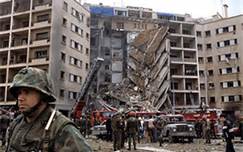
Beirut 1983On April 18, 1983, fifty-two employees died when a terrorist drove an explosive-laden truck into the U.S. embassy in Beirut, Lebanon. These included Americans and Lebanese. Other innocent civilians were killed as they visited the embassy or walked by on a beautiful spring day. More than one-hundred employees were injured.

Seventeen months later, a van drove up at high speed to a new embassy annex in Beirut and detonated explosives. Twelve people were killed and 63 injured.

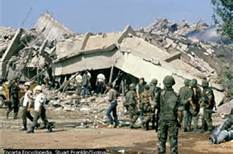
Beirut BarracksBetween those attacks, terrorists blew up a U.S. Marine Corps barracks near the Beirut airport, killing 221 Marines and other servicemen.

Three of the dead in the first bombing had ties to the U.S. embassy in Tunis, Tunisia, where I was assigned for three years. Two were a couple who had studied at the Arabic language school in Tunis before their assignment to Beirut. One was a Tunisian  employee of the embassy in Tunis on a temporary assignment to Beirut.

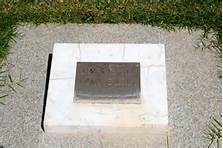
Beirut memorial in TunisTheir names were carved on a small memorial at the Tunis embassy.When terrorists attacked that embassy last year, the memorial was vandalized. This year it was rededicated on the anniversary of the Beirut attack in which they died thirty years before. When I worked in Tunis, I passed it every day, a reminder of the sacrifice of ordinary people.

Both embassies endure, still staffed by ordinary Americans, Lebanese, and Tunisians  hoping for peace  in the Middle East.

Look For The Helpers


In this era, one person with grievances, real or perceived, can wreck the lives of countless others.

But one person can help, comfort, and bring goodness, too, even out of tragedy.

The words of Fred Rogers, of the old TV children’s program, “Mister Rogers’ Neighborhood,” are being tweeted and retweeted thousands of times following the tragedy in Boston. You may have read them, but they bear repeating:

“When I was a boy and I would see scary things in the news, my mother would say to me, ‘Look for the helpers. You will always find people who are helping.’”

The words are from a book Fred Rogers wrote that was published a year before he died, intended to help parents guide their children through tragedy.

Indeed, the helpers in this tragedy, from emergency responders to hospital personnel to ordinary people who offered aid, far outnumber the perpetrators of this evil. It will take much good to overcome the evil that afflicted the men, women, and children killed, injured, and grieved by the incident in Boston, but the helpers are there.

Fred Rogers died in 2003. But his words outlive him, as good often does.

“The light shines in the darkness, and the darkness did not overcome it.” (John 1:5, NRSV)


Religious Communities: Players on the World Stage


“The success of American diplomacy in the next decade will be measured in no small part by its ability to connect with the hundreds of millions of people throughout the world whose identity is defined by religion.”

—From “Engaging Religious Communities Abroad: A New Imperative for U.S. Foreign Policy,” The Chicago Council on Global Affairs.

The United States was a multi-cultural society from its beginning. The first Jewish congregation is dated to the colonial period, in Rhode Island, in the mid 1600’s.

Maryland was founded as a colony for Catholics, while many of the New England settlements were begun by Reformed Protestants. Baptists headed to the freedom of Rhode Island. Some of the country’s founding fathers were deists and even agnostics. Later, atheists and Muslims, Hindus and Orthodox Christians and countless others joined the religious mix.

Our ancestors left behind the world of established religions, countries whose identities were bound up in a particular religion, places where one might be persecuted for different beliefs. They left behind the wars of religion which so devastated Europe in the sixteenth and seventeenth centuries. Eventually, Middle Eastern immigrants left countries where Crusaders had fought Turks and other Islamist believers, as well as Jews.

We began a nation where the First Amendment to our constitution allowed for a religious freedom unknown in the old countries.

The countries they left are still there, and many of them consider religion a part of their national identity. Rightfully, we urge them to protect minorities. However, we should refrain from a feeling of superiority. Critics suggest our tolerance risks becoming antagonism toward any religion. Tolerance differs from denigration. If we denigrate religion, we will have a hard time working in a world where the majority find comfort and guidance from it.

Peace With Justice in the Holy Land


Dr. Lloyd Johnson has a passionate interest in peace with justice in the Holy Land. He is the guest writer today to introduce his novel, “Living Stones,” which touches on this theme and will be available this summer. He writes:

“Ann Gaylia O’Barr, published author of five books and with experience in the Middle East, invited me to write as a guest.  I’m honored since we share a common interest in the Holy Land today.
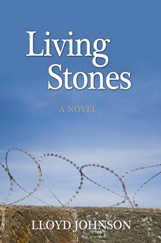
living-stones-cover-image1“Living Stones” being published by Koehler, a fiction imprint of Morgan James Publishers of New York, will be available in June as an e-book, and paperback in September 2013.  Briefly it’s the story of a beautiful graduate student Ashley Wells who is the victim of a jihadist bombing and is abducted in Jerusalem. She falls in love with a Christian Palestinian and is torn by her Zionist beliefs and her new desire to help the Palestinian cause

 She was in the wrong place at the wrong time. Nearly killed in Seattle during a jihadist bombing, Ashley recognizes the synagogue bomber and is later stalked by a hired Muslim hit man in Israel. There she visits the home of Najid, the Christian Palestinian scholar she had left behind at the University of Washington. She falls in love with him, putting her at odds with her Zionist pro-Israeli convictions.


 On the run, Ashley sees the beautiful rock churches and shrines. But the living stones, the people of the Holy Land intrigue her. She meets Jews and Palestinians, Rabbis for and against Israeli settlement expansion. Gentle Palestinians like Najid’s family, and those in the West Bank suffering under military occupation. Both Muslims and Christians living peacefully together.


Najid and Ashley find the bomber in Seattle despite the FBI dragnet put out to arrest him. Living Stones is the story of an American woman coming to terms with the truth of the Middle East, and the lies she had been fed. Will she survive the forces that threaten to tear her apart?


Visiting Israel/Palestine twice in past years, and living in Bethlehem this past summer, our hearts broke with the stories of ordinary people suffering the lack of freedom under Israeli military occupation.  For 46 years.  Imprisonment of kids for long periods, walls separating Palestinians from each other, even from their own farms.  Home demolitions, land evictions.  Israeli settlers continuing to displace local residents of family land dating back decades.  A historic and on-going national effort to cleanse Palestine of Arab citizens.  It’s the idea that one ethnic group has the exclusive right to the Holy Land.  The “others” must go.


Many Jewish groups of conscience actively oppose the Israeli government’s Zionist ambitions. E.g.,  http://jewishvoiceforpeace.org/  This cruelty does not represent Judaism’s welcoming the strangers as Abraham did, nor the Good Samaritan teachings of Jesus about loving even our enemies, and doing to others as we would have them do to us.

 

The WallThat wall of separation larger and longer than the Berlin wall promotes the same apartheid we finally shed in the American South, and condemned in South Africa.  But now our American tax dollars enable it by funding this injustice.  Is this what we in the U.S. really want to do?


Our Christian Palestinian brothers and sisters realize most of us Americans know little of their suffering under military occupation as second-class citizens.  Although many excellent books currently available tell their stories, they are non-fiction accounts, often overlooked by all but the most interested readers.  (However, “Lemon Tree” by Sandy Tolan has become popular in America, a true story.  And Jimmy Carter’s “Palestine: Peace Not Apartheid.”)

 

Dr. Lloyd JohnsonFiction appeals to many.  Who doesn’t like a good story with lots of adventure and a bit of romance?  So I am offering “Living Stones” as a story that will entertain, but also inform and leave readers questioning what they have always believed.  It may become another voice for peace with justice in the Holy Land.  At least I hope so.”


www.lloydjohnson.org


http://www.koehlerbooks.com/books/living-stones/

Scribblings From Exile


After fourteen years as a U.S. Foreign Service officer, I returned to the United States and to writing as my chief occupation. OakTara published five of my novels, and I created a blog with the tag, “Scribblings from Exile.” The theme of the first novel, Singing in Babylon, originated in the prophet Jeremiah’s exhortation from God to Jewish exiles to “seek the welfare of the city where I have sent you into exile.”

As a Foreign Service officer, I was assigned to several countries where Christian believers were a tiny minority. After returning to the United States, I realized I am as much in exile in my native country as I was in those alien cultures. Christians are part of a “subversive” minority, the theologian, Walter Brueggemann, has said, a subversive problem in the consumer-oriented West.

At Christian writers conferences, editors and agents told me that American Christians were not interested in books with global settings. At a conference about a year ago, I asked a question in one of the seminars about my interests. At the close of the seminar, a man followed me down the hall and we talked.

We found our ideas compatible, although we work in different spheres. My blogs cover a broad landscape, anything that touches on Christians in exile from the mainstream, with a special emphasis on the Middle East. Dr. Lloyd Johnson’s concern is Israel/Palestine and a desire that justice be done there. We are committed Christians. We both hope American Christians will better understand the rest of the world, including that spot of the planet we call the Holy Land.

living-stones-cover-image1Dr. Johnson, a surgeon, has traveled widely, including trips to the Holy Land, and has written a novel to be released this year. I’m delighted to give him space to introduce his book, in this site’s next blog, because he is both knowledgeable and passionate in his writing. His enthusiasm has given me new hope that other Christian exiles will join with us in studying these issues.

Thoughts After A Whidbey Island Landslide


Thousands of feet of earth tore away from a bluff just before Easter on Whidbey Island in Puget Sound, where my husband and I live. Whidbey Island, with 168 square miles of land, is one of the larger islands in the continental U.S., so most of Whidbey remains intact, and no one was seriously injured in the slide, though one home, so far, has been destroyed. Other homes sit precariously in danger of future sliding and have basically lost their monetary value.

In fact, all of us, whether we live on unstable soil or not, are never far from losing all that we have in some freak “black swan” event. Tornadoes, meteorites, prolonged droughts, or massive flooding are possible almost anywhere. Recessions can reduce the life savings of ordinary, hardworking citizens and threaten investment in homes.

Such possibilities are sobering when we consider how much time and money many of us have spent in obtaining material possessions.

Should we then become wandering hermits? If God so leads, but Jesus, whom I follow as a Christian, talked of the love of material possessions as the problem, not the possessions themselves. He himself accepted invitations to a good meal, even a banquet, when he had the opportunity. However, it was the community which was important, not the trappings.

Best to avoid major debt or excessive yearning after things, but enjoyment from honest toil, is not forbidden. One of our lifelong tasks is to find the balance between enjoying our material blessings and using them to advance the larger community, including the vulnerable and the have-nots. One way or another, we will lose our physical possessions, if not at the present time, then when we leave this life. They are on loan to us, and I believe we will one day be called to account as to how we used the loan.

Easter Meditation: Christians Grounded in Two-Thousand Years of History


The course of Christianity has been marked by pulsations of advance, retreat, and advance.

–Kenneth Scott Latourette, Volume I, Christianity in a Revolutionary Age


Christianity is a faith that is solidly grounded in history.

–Robert L. Thomas and Stanley N. Gundry, preface to The NIV Harmony of the Gospels


That history includes periods we’d like to forget but can’t because of their lingering influence. Reasons for the Crusades of the Middle Ages were as much economic as religious, a desire for new lands and wealth. We inherit fallout from the Crusades to this day in many of the conflicts in the Middle East.

Colonizations in the Americas evidenced the same split personality. Jamestown vied with Plymouth. Our country inherits this conflict, careening back and forth, stressing economics at one time and community in another.

Some Christians lived more closely to what Jesus taught than others. While Crusaders marched, religious orders treated the ill and destitute in Europe. As the industrial age dawned in the 1700’s, with its disregard for the vulnerable, Christians began schools for children of the poor. They fought against slavery and inhumane working conditions and crowded prisons.

Those who don’t know history are doomed to repeat it, so the saying goes. Sudden change burst on the world stage—terrorist attacks or revolutions in Arab nations. Others creep in more slowly—social changes due to increased numbers of women in the work force or new methods of birth control. In either case, knowledge of history gives us a better ability to develop reasoned and compassionate  responses to such changes.

We Are In For It


“We have got to understand that all our lives the danger, the uncertainty, the need for alertness, for effort, for discipline will be upon us. This is new to us. It will be hard for us. But we are in for it and the only question is whether we shall know it soon enough.”

A former head of the U.S. State Department, Dean Acheson, made this statement on June 4, 1946. Spoken over six decades ago, the words remain relevant.

The United States had just emerged victorious from World War II as the world’s remaining “superpower.”  (Sound familiar?) Understandable that the country wanted to rest and enjoy prosperity. Yet the Cold War confrontations with the Soviet Union were just beginning. For over forty years, we inhabited a MAD world (Mutual Assured Destruction).

We made mistakes, but responsible (if not always perfect) leaders kept us from detonating the nuclear war we feared. When the communist world collapsed, the United States was, once again, the world’s remaining superpower. We were, however, respected more for our inclusive government, for allowing dissent, for our burgeoning middle class, for our ability to engage in civil discussion, for a democracy that worked for its citizens.

We talked of a peace dividend, but within the decade, attacks from radicals left us little time to enjoy “peace.” Challenges come from Iraq, Afghanistan, Syria, Iran, and North Korea, to name a few.

How well will we carry out this round? Do we even realize what the contest is about? Can we manage without unwise resort to power politics? Or can we discipline ourselves as a people and choose the moral high ground, those characteristics that once made us the envy of the world?

Behind the Scenes When a VIP Travels Abroad


President Obama is scheduled to return home today from his trip to the Middle East. The schedule for his trip fits on one sheet of paper. Behind the scenes, complex planning bolsters each phase, as American embassy and consulate staffs direct every detail.

I was never in on a visit from a trip by the U.S. president when I worked at U.S. diplomatic posts overseas, but I remember one by the United States First Lady and several by the Secretary of State. Embassy officers planned official meetings, visits to tourism sites, and gifts to be given. “Control” officers were assigned each major player to guide their every move. You didn’t want an official lost while trying to find the way to a restroom. Security, drivers, and routes had to be plotted in the minutest detail, not to mention interpreters for different languages.

Searching for HomeSome of the preparation for a high-level visit made its way into my novel Searching for Home, the story of Hannah and Patrick’s journey toward a deeper relationship while a part of embassy communities. Patrick, a political officer in charge of the visit of a high level visitor, bemoans the visitor’s choice of the time to visit, during a local holiday.

“That’s the way it usually is. They come on our holidays, not theirs.”

Hannah, his new wife, recently arrived to embassy life, asks what’s involved.

“We have to arrange meetings. Photo ops. Every minute, all the logistics, even the drivers have to be plotted like a movie spectacular. Prepare briefings about everybody she’ll meet. Do up talking points. Write up her speeches. . . . We’re thinking about a trip to one of the tourist hotels on the edge of the Sahara. Maybe take her to Kairouan to look at the rugs they weave there.”

Kitchen DebateDespite the work, high level visits allow face-to-face meetings in local space that can lead to better understanding between nations. The “kitchen” debate between President Richard Nixon and Soviet Premier Nikita Krushchev at the American National Exhibition in Moscow in July 1959 remains a classic to this day.

“The shrewd Khrushchev came away from his personal duel of words with Nixon persuaded that the advocate of capitalism was not just tough-minded but strong-willed,” wrote William Safire in The New York Times.

Iraq, Ten Years Out, and Almost Forty for Vietnam


The late Senator J. William Fulbright of Arkansas wrote a book in 1966 called The Arrogance of Power. Fulbright was the longtime chairman of the U.S. Senate Foreign Relations Committee. He was respected for his knowledge of foreign relations and was strongly anti-Communist. However, he spoke out against America’s growing involvement in Southeast Asia that eventually led to the Vietnamese conflict.

He did not fear, he said, that the United States would seek to dominate in the manner of a Hitler or a Napoleon. He feared rather that we would drift into commitments that were beyond our capacity to honor. We should, he suggested, confine ourselves to doing only those things that truly matter to us.

Like another senator known for his foreign policy expertise, Richard Lugar of Indiana, Fulbright was eventually defeated in his party’s primary. Politicians risk losing their constituency when they emphasize global concerns. “All politics is local,” U.S. Speaker of the House Tip O’Neill once said.

Are we concerned only for our, admittedly important, domestic concerns?

Perhaps we would never have committed so much blood and treasure to Viet Nam, now a byword for a failed U.S. foreign policy, if we, the people, took more time to understand the rest of the world. And what about Iraq, ten years out? Was it worth it?

Email in the Afternoon


The Internet entices like a box of delicate chocolates. Once you start, you don’t want to stop.

Our ancestors managed without checking the next six hours of weather every three hours, or following Britney Spears or Lady Gaga’s latest doings, or watching cute videos on YouTube. Do I even need to journey several hours through more serious stuff: the current Washington debacle, the latest on North Korea, or the most recent crisis in the Middle East? The Internet has a tendency to suck you in forever because it is limitless. If not managed, it leaves no time for real life.

A while back, I noticed the time I spent checking email, Twitter, Facebook, and the news. I decided to wait until afternoon and limit myself to less than an hour. In the evening, when I’m less productive, I allow myself to explore, for an hour or so, the unlimited links of the Internet world. Even so, I must guard against the monster gobbling up my reading time.

VORTEXMy life is more productive and more fulfilled after I snatched it back from the vortex. It’s my life. It doesn’t belong to unfettered digital wanderings any more than it belongs to drugs or other addictions.

I can exercise on my stationary bike and read my print newspaper and actually finish it. It doesn’t have a hundred links that tempt me to wander forever down the halls of the Internet.

Like other virtues with a potential to morph into vices, the Internet is a wonderful servant and a terrible master.


Hippies, Flower Children, and Other Heralds of Our Time


“Stories about World War II, Pearl Harbor, and the like, are always popular,” an editor told me. By contrast, I find more intriguing the decades following this war, the decades of the hippies and the flower children. If the child is father of the man, as the poet William Wordsworth wrote, these years spawned the present that we now inhabit.

The turbulent sixties and the years following led to 1989, the watershed year of the Tiananmen Square massacre in China and the collapse of the Soviet Union. The texts and twitters of the Arab Spring in 2011 and beyond mirrored the earlier events.

All wars change the societies that experience them. World War II brought the United States, kicking and screaming, onto the world stage. We have often played our role reluctantly, much more interested in domestic issues. The Vietnam War tore the country apart. The meshing of the antiwar movement and the New Age reverberates with us to this day, precursor of current polarization.

Quiet Deception, a novel of mine billed as a mystery, follows the protagonist, a college professor, from the days, seemingly so innocent, of his childhood shortly after World War II. His participation in the horrifying Vietnamese conflict transforms him. He stumbles into the society that follows, with its loosening of age old constraints.

How he and the other characters resolve the jarring collision of tectonic plates from two eras is the subtext of the mystery’s solution.

Secular and Religious: A Certain Nervousness


A secular professional of the Christian persuasion is careful not to push his views on his colleagues. Yet he senses unease about religion in any form, he says.

Many in our society know little about religion, including Christianity. They are not so much antagonistic toward faith as uneasy. They view religious people somewhat like they view a nice salesperson who loves his product but which the nonreligious person could care less about. To others, all religion seems extreme, full of adherents who are angry and judgmental and want to force the uncommitted  to follow their way, as in the days of the Spanish Inquisition.

To the religious, religion seems natural. To the nonreligious, religion seems irrelevant.

Religion to the non-religious isn’t about hope and healing for the hurt and wounded. It’s the hatreds that spawned 9/ll. It isn’t about submission to eternal truths but about women being forced to endure physical abuse because God wills women to be subservient. It isn’t linking to truths about purpose and meaning but ignoring closed minds and name-calling.

A disconnect exists like two ships passing in the night. A suggestion for connection: What happens if those with faith live so that the nonreligious envy what they see?

We Have No Walls Around Our Cities—Except For Gated Communities


Fortified walls surrounded towns of any size throughout history until recent times. Some early towns in the United States began as stockades or forts. Most of us in the United States, however, with our suburban-surrounded cities, never think about walls. We have no ruined walls, no gates to pass through, as do cities in older civilizations as a reminder that bandits and enemies were a constant threat in earlier times.

Central authority in those days was nonexistent or too weak to provide adequate safeguards against wrong-doers. Barons and warlords provided what protection there was. (Today we see the same sort of “protection” by weapons-ruled warlords in countries like Somalia.)

As populations grew in Europe and elsewhere, law-abiding citizens came together to provide, not only publicly supported military and police, but also schools and hospitals and fire halls.

Lately, some note a trend toward the establishment of private good over public good for those who can afford it: gated communities, expensive private schools, nannies for stay-at-home childcare. Even the all-volunteer army might be seen as a way to pay others to do our fighting (usually the less well off) instead of requiring every citizen to serve in the military or perform service work before beginning family and career.

Those with money buy computers and tablets in a world that divides the digitally adept from the digitally challenged, establishing a kind of electronic barrier. We digitally adept join electronic communities in which we never talk over coffee or walk together, listening to the silence as well as each other.

T.S. Eliot died before the age of computers, but his poem “The Rock” is strangely prophetic:

Where is the life we have lost in living?

Where is the wisdom we have lost in knowledge?

Where is the knowledge we have lost in information?

From Vietnam to Anti-War Protester to Syria and Iran


In his first trip abroad as U.S. Secretary of State, John Kerry spoke to a Facebook gathering of youth in Berlin. One questioner asked “And since you have served the Army [actually Kerry served in the Navy], what exactly made you an opponent of the Vietnam War and maybe of war in general?”

Kerry answered that he went to Vietnam because he wanted to serve his country, and his country’s leaders said that the conflict there had “strategic implications for the country.” Instead he came to believe that the conflict was NOT strategic to America’s interests but was instead a civil war between Vietnamese. That’s why he led Veterans Against the War on his return.

Some wars must be fought, when America’s interests are directly attacked, Kerry said, but not “wars of choice.” Others have warned against being drawn into war when American interests are not directly affected.

Kerry was careful to emphasize our strong relationship with the European allies he is visiting, because they are based on mutual interests of strong democracies in a dangerous world. For decades we helped protect allies there from the Soviet Union until democracy replaced most of the communist regimes in eastern Europe. Europe was and is a strategic interest for us.

But what about countries like Syria and Iran? The U.S. and Europe have an interest in the war in Syria not turning into a dangerous regional conflict, with terrorists gaining a foothold, and Iran not becoming a nuclear power. We do not, however, want to send troops into what is a civil war.

These will continue to be subjects Kerry and others will discuss with allies. The ghosts of Vietnam, Iraq, and Afghanistan will stand as backdrop to their decisions.

At each step on Kerry’s trip, Syria and Iran have been topics of discussion. How do we encourage the non-terrorist opposition without ourselves become too embroiled in this civil war? How do we find the “right” sides to aid?

Work/Life Balance: Which Side Does the Scale Tip Toward?


Hillary Clinton, who recently stepped down as Secretary of the U.S. State Department, spoke in October to a gathering that explored work/life balance. She talked of the time her child was born in 1980, and she demanded and received a four-month leave to be with her new daughter.

During her tenure as Secretary of State, Ms. Clinton advocated worldwide rights for women at the same time she mandated family-friendly policies for the State Department.

Current articles often cite the percentage of women in particular roles, such as CEO’s, or the percentage of women choosing certain courses of study, like the much-publicized STEM courses (Science, Technology, Engineering, Mathematics).

Women have long been stereotyped. We now understand that women’s talents are needed as much as men’s, but does that mean the days of the “full-time” wife and mother are over?

If some women choose not to enter the paid labor force (provided they can afford to opt out), their actions will skew the numbers to less than fifty percent of women in it. Is that a tragedy? Should we provide day care so that a mother has no excuse not to work outside the home even if she’d rather stay there with her young child?

Will the choice of staying “at home” lead to frustrated empty nesters later in life, as they, perhaps, search for a career they can no longer have because they are beginning too late? Or is there such a person who enjoys taking care of others, not only children but also the hungry who come to food kitchens, the disadvantaged who need tutoring, and so on. Do some men gravitate toward this calling?

Many of our programs, like one that nurtures at-risk mothers for the first two years of her child’s life, are necessary because we lack natural “nurturers.” Nurturing, it seems, is needed as much as engineering and computer networking.

How shall we work out this dilemma? Where will our nurturers come from?

Send/Receive/Delete


A recent survey found that fewer people use email now. The survey didn’t say, but presumably we use cell phones to text or leave messages more than we send emails.

How long has the general population used email? A little over a decade? And already it’s passé.

We ceased writing letters long ago. For some of us, letters seem on a par with medieval manuscripts. Now email is equated with the old snail mail, as texting takes over.

From both email and texts, we delete much of what we receive, and much of what we send to others is deleted. We live in a send/receive/delete world

We form and delete relationships as well. Americans have always been on the move, changing houses and jobs. Now we pass from one relationship to another with little thought.

Perhaps this generation should be called the Delete Generation.

Yet a yearning seeps from our millions of electronic words—for permanence, for “a city not made with hands.” We seek lasting community

Ritual and Relevance


“While many congregations modify their music, order of worship, and sermon topics in an attempt to make church ‘relevant’ for newer generations, I am more interested in figuring out how I fit into the rich and complicated tradition of Christianity than in asking how Christianity can be molded to meet my needs. My desire to receive Communion . . .wasn’t about the individual act of taking bread and wine. It was about a deep need to connect with God and others beyond myself.” (Anne Marie Roderick, from “‘Relevance’ Is Not Enough,” Soujourners, February, 2013, Anne Marie Roderick and Joshua Witchger)

Recent articles evidence a desire to return to the ancient rituals and disciplines of the Christian church. Perhaps the yearning stems from an age that has stressed individualism to the extreme. Self-discipline has appeared an anathema to this age, hardly mentioned in fact.

The lack of sexual discipline is often remarked on, but perhaps the increased numbers of obese Americans at the same time is not a coincidence. Both obesity and sexual license became part of the mainstream soon after the mall age began. Our culture of sex, food, and shopping slipped upon us hand in hand.

The antidote may lie less in condemnation of lust, gluttony, and greed as by a call, once again, to a disciplined life.

With that in mind, I am rereading Celebration of Discipline, by Richard J. Foster. Discipline is something to be celebrated. The world waits for it, Foster says.


Meteors, iPads, and Neighbors


My neighbor calls. “Are you all right?” she asks.

“As far as I know,” I reply. “Why do you ask?”

“Well, it’s ten in the morning, and your back light is still on.”

I laugh. “We’re fine. Ben got into the news on his iPad, and we haven’t been down for the paper yet.”

I hang up. Comforting to know, in a age when images of a meter falling to the ground in Russia are instantly beamed to our iPads, that folks still keep track of a neighbor’s porch light.