


A letter to the editor of our island newspaper suggested that we “gather together a handful of free thinkers . . . and stage a burning of Korans, Bibles and Torahs to protest ALL the Abrahamic religions. Perhaps their pernicious belief in One God, a male god who plays favorites, metes out violent punishments and promises dubious rewards in a fictional Heaven—perhaps these beliefs are the true malignancy and cause of all our suffering. Maybe, if we just burn those pesky books, all the evil in the world will go away . . .”
As a Christian, I could profess anger at the man’s suggestions. But why? The man expressed a sincere conclusion from what he sees in the world. Better to examine why he sees such evil in religion, including Christianity.
His letter was written when a small church in Florida caused a media sensation by burning the Muslim Koran. No matter that leaders of all major religions protested the actions of the fringe group.
I suspect this fringe group was the straw that led to the writer’s suggestion. No doubt he was appalled by terrorists who cause unneeded suffering in the name of religion. Perhaps he remembered the Crusades of the Middle Ages. He appears also to have read passages in the Old Testament written when the Hebrews first sought to understand their God, before prophets like Amos called for justice for the poor as few nations had previously known and which call us today (“let justice roll down like waters, and righteousness like an everflowing stream”).
If we got rid of all Biblical writings, we would no longer have Jesus’ instructions to his followers to love one another. We would not have his example of forgiving those who hated him. We would not have the New Testament letter which encourages Christians to “bless those who persecute you . . . Do not repay anyone evil for evil, but take thought for what is noble in the sight of all . . if your enemies are hungry, feed them . . . ” We would not have Christians inspired by Christ’s teachings to care for the hungry, the thirsty, strangers, the naked, the sick, and the prisoners.
Do some people who call themselves Christians do despiteful things? Certainly. But so do people who profess no religion. Christ told us how to tell his true followers. “You will know them by their fruits.” Christian teachings don’t cause evil, but the failure of Christians to live them out does.
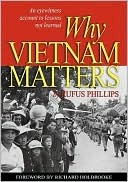 He spent his first diplomatic postings in the 1960’s in that country, taking part in efforts to “win the hearts and minds” of the Vietnamese. He saw those efforts fail, and disillusionment followed as he realized that American power, great as it is, has limits.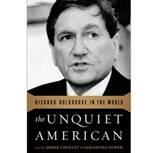
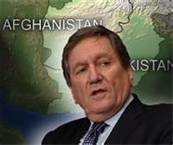 Holbrooke died suddenly in the middle of his diplomatic mission in another war, this one in Afghanistan. He saw differences with Vietnam, including the fact that America had been deliberately attacked by enemies with bases in Afghanistan. However, he also detected similarities with the quagmire that became Vietnam: ” . . . the existence of an indefensible border harboring enemy sanctuaries; American reliance on a corrupt partner government; and, most critically, the embrace of a counterinsurgency doctrine, which he had learned through painful experience was an exceedingly difficult military and civilian strategy to execute.” (The Unquiet American, page 95.)
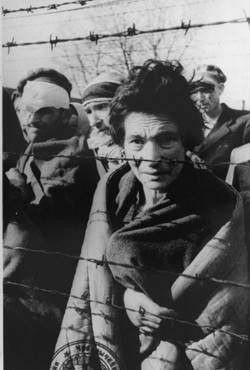 “Never again” is the appropriate slogan for remembering the Holocaust. But how do its survivors and their descendants deal with those memories? Perhaps some do forget. Others forgive and move on. But dwelling on the tragedy seems to fuel Zionism’s fires to burn others. Quoting from Jewish writer, Mark Braverman:
 American citizens built bomb shelters and wondered if their children would have a future. Christians feared the Soviet Union’s embrace of atheism.
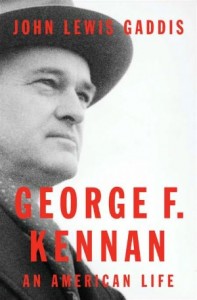 The book, which won the 2012 Pulitzer Prize for biography, brings alive those times of fear bordering on hysteria. It hints of policies which might serve us in our current conflict.
 In those earlier times, the U.S. was accused of supporting dictatorial regimes in certain African and South American countries because the regimes touted themselves as anti-communist. Now the U.S. is accused of propping up former dictators like Ben Ali in Tunisia and Mubarak in Egypt. These men clamped down on the growth of Islamists in their countries, so we supported them even if they employed brutal methods. Egypt, especially, became a huge recipient of U.S. aid.
 Ozzie appears to have died because someone pierced him with an arrow.
 Christian history fascinates: all the advances and retreats, deaths and resurrections of the church over the centuries. Such understanding allows perspective in these times of waning Christian influence in the old countries of “Christendom.”