


Those faded photos on the walls of my office at the U.S. consulate in Dhahran, Saudi Arabia, hinted at beginning bonds between two disparate nations. American oil prospectors sit in sand-dusted offices, close to where the consulate is now, resting a few moments before continuing the search for the black gold that would transform both nations. In 1938, Dammam well No. 7, a few miles from where I later was to work, began producing.
At the time, most Americans lived in small towns or central cities. Suburbs were mostly for the elite, founded on train lines that connected them to the still important city. Then came World War II, with its need for energy to power war machines. Following victory by America and her allies, Americans fled to the car-centric suburbs. The U.S. formed alliances with Middle Eastern governments, none of which could be called democracies, in order to keep the oil flowing for our cars and machines.
Americans had oil in their veins from the beginning of oil exploration in the 1800’s. Thousands of them from Oklahoma, Texas, and other oil producing states found jobs at Saudi Aramco, the Saudi oil giant, in a city built for them, with housing, swimming pools, restaurants, a commissary, and medical care.
Thus, the United States became bound to the Middle East, with all its religious divides, power politics, and ethnic hatreds.
During the Soviet era, the alliances were clear. We were against communism and so were they, at least the countries that provided us with oil. The founding of Israel complicated the alliances, but until the Soviet Union collapsed in 1991, our friends were the enemies of our enemies.
Since then, our major conflicts have risen from those early alliances. The terrorism that haunts us grew out of them.
Syria, our current nightmare, while not a friend in any traditional sense, is the enemy of our enemy, a secular state that opposed our terrorist foes. Now it, too, is home to a human tragedy that threatens to engulf the whole region and the world beyond. Our NATO allies are intricately bound to the region, affected by refugees from its wars. China’s dependence on oil to power its growing economy makes it a front row participant.
So those rough prospectors pictured in my office at the U.S. consulate began something that we never learned to deal with in any long term way. We wanted the oil, whatever the consequences.
The consequences have arrived.
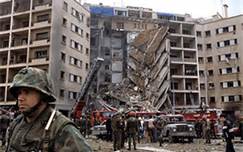 On April 18, 1983, fifty-two employees died when a terrorist drove an explosive-laden truck into the U.S. embassy in Beirut, Lebanon. These included Americans and Lebanese. Other innocent civilians were killed as they visited the embassy or walked by on a beautiful spring day. More than one-hundred employees were injured.
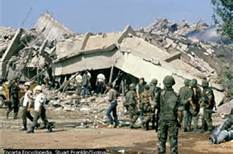 Between those attacks, terrorists blew up a U.S. Marine Corps barracks near the Beirut airport, killing 221 Marines and other servicemen.
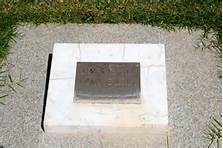 Their names were carved on a small memorial at the Tunis embassy.When terrorists attacked that embassy last year, the memorial was vandalized. This year it was rededicated on the anniversary of the Beirut attack in which they died thirty years before. When I worked in Tunis, I passed it every day, a reminder of the sacrifice of ordinary people.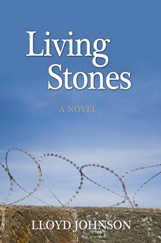



 The issue of chemical weapons hovers over the conflict. Bashar al-Assad has chemical weapons and has threatened to use them. No one doubts the brutality of the al-Assad famly. The father of Bashar massacred and obliterated the village of Hama in 1982 because of its opposition to his rule.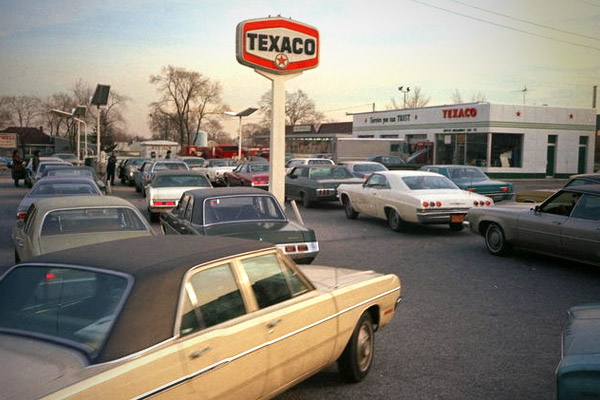
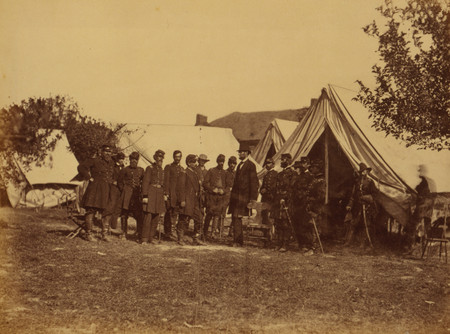 Otherwise reasonable people became too angry to discuss differences. Southerners cared more for their cotton economy and its slave labor than in justice. The North knew its own exploitation of immigrant labor, yet often saw itself as superior and worked from a position of self-righteousness in dealing with the slavery issue.