


Dachau, the German concentration camp for Jews and others considered inferior or dangerous to the Nazi cause, was liberated in the spring of 1945.
Allied soldiers stood horror stricken at the emaciated survivors staring at them through the fences. They were the pitiful remnants of the thousands who died there, some gassed or otherwise executed; others succumbing to disease, overwork, or mistreatment.
My husband and I visited Dachau over fifty years later. We stepped off the train and found our way to the Dachau Concentration Camp Memorial. The neighborhood was quiet, with few of the usual shops and restaurants associated with places where visitors come in large numbers.
Inside the camp, we studied exhibits tracing the history of this monument to inhumanity. The exhibits were stark: black and white pictures of Jews being corralled; methodical recording of statistics; and scientifically dispassionate accounts of brutal experiments done on prisoners.
As in many historic sites, a movie was shown in an auditorium to add to the exhibits. I think it’s the only time I didn’t watch such an audio-visual aid. I couldn’t. I wept and could not stop. My husband led me from the building.
I never want to go back to Dachau, but I think everyone should see it at least once. Then they will understand the phrase “never again.”
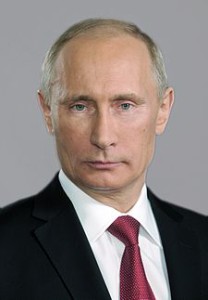 The Russian currency has tumbled in the world money markets. A combination of circumstances contributed. Russian President Vladimir Putin’s actions in the Ukraine led to sanctions by Europe and the U.S. In addition, it’s not a happy time for oil producers like Russia, as oil prices have reached historic lows.
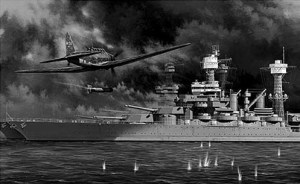 December 7, my calendar notes, is Pearl Harbor Day. The day commemorates lives lost in the attack on the U.S. naval base in Hawaii by Japanese forces in 1941. It led immediately to our entry into World II.
 In an article in the Foreign Service Journal (January, 2012), Margaret Sullivan recounted her early years in China as the daughter of an American missionary teacher when Japanese forces took over China. Ms. Sullivan remembers a Japanese soldier smiling at her family as they went through a checkpoint.
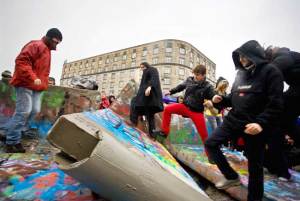 Jubilant crowds from East and West Germany began crossing it and hammering off pieces in 1989, as the Communist East collapsed. From the beginning, the Wall symbolized failure. What successful nation must build a wall to force its citizens to remain?
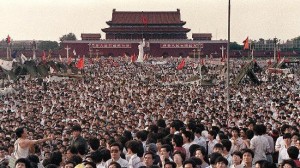 You may see the term “Tiananmen Square” frequently in the news this next week. A quarter century ago, a movement in that square in Beijing, China, for more democracy, was crushed by authorities in June, 1989. Hundreds of students are estimated to have been killed, perhaps more.
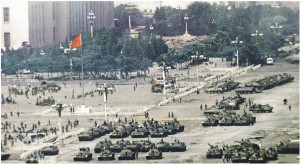 Spring, 1989, had seen the movement in China smothered by the military. However, in November of that same year, the barrier between East and West Germany in Berlin—”the Wall”—fell.
 This period was a beginning, not of leaving my faith, but of finding a more mature faith. Before in my world, Christians were Christians, and the rest was everybody else. Now I began to see graduations within the Christian community as well as in the community of “others.” I found that I could disagree but respect those who differed with me. I am, as the apostle Paul said, still working out my own salvation with fear and trembling.
 I also came to understand that some people who called themselves Christians have committed grievous sins against others. We worship Jesus who, though equal with God, humbled himself to become like us. Yet, in our arrogance, we scream at the different others as though we are God and know perfection. Now I am more aware of my own potential for error and am more willing to listen to other viewpoints.
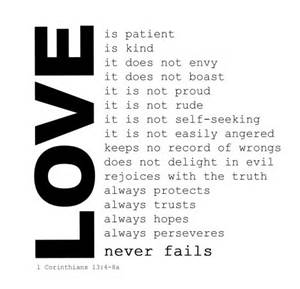 I find no fault in Jesus, but I fear that we have clung, not to Jesus and his radical love, but to something less, Christianity as a mere civil religion. Perhaps that is why Christianity is no longer the default religion in the Western world.