
Category Archives: Journal

Syria: Praying in the Peace


This afternoon Christians of all persuasions in our small island community came together to pray for the situation in Syria. The most peace I have felt in days washed over me in that quiet sanctuary.

I prayed for the people of Syria, for leaders in this country and abroad, for peace between Israel and Palestine, for the people of my faith in the Middle East, and for the people of all faiths in that conflicted land.

How often do we take time out of busy days to surround ourselves with listening silence, to pray without distractions?

I didn’t know such a quiet simplicity was so powerful. God grant peace to the nations such as I felt this afternoon.

Farm Summers


When I was growing up, one of my family’s relatives owned a farm about a day’s drive from our home in Nashville. We visited from time to time in summer when I was out of school. Sometimes I was allowed to stay a few days with cousins while my family returned to Nashville.

Those days were bliss: building dams across the creek in front of the house, hikes in the hills around the farm, a huge picnic under the big tree by the creek, trips to the spring for drinking water (the house had running water, but my aunt preferred spring water), swinging from grapevines in the woods, playing in the hayloft.

I remember the books. Stacked on shelves in the living room were the literary leftovers of generations of readers. My cousin and I would pick out a book and take it upstairs to read before bedtime, falling asleep with the books by our sides. In the morning when the cock’s crow woke us, we would breathe in the rural fresh air through opened, unscreened windows and continue reading.

Looking back, I realize imperfections. We had to watch out for copperhead snakes. The hills that I so liked to climb were gouged and riddled by the phosphate companies, to which my aunt had sold the mineral rights. Trees had covered the mining atrocities by the time I came along, but the scars still intruded. The pond that my cousins swam in had scum. I had to help with dishes after huge meals. The unscreened windows let in lots of flies.

Yet the freedom of those days is a blessing all children should experience before they pass so quickly into adulthood.

Fun’s Done


This is the age

of the half-read page

The quick hash

And the mad dash

The bright night

And the nerves tight

The plane hop

And the brief stop

The lamp tan

In a short span

The big shot

In a good spot

The brain strain

And the heart pain

The cat naps

‘Til the spring snaps

And the fun’s done.

–Virginia Brasier, “Rat Race,” The New Yorker, November 23, 1957

Life in 1957 included no email, cell phones, or digital tablets. Two-career households were not the norm. If life was a rat race then, what term would you use now to describe our frenetic lives?

Michael Hyatt suggests some positive disciplines to unwind our digital selves.

1.The discipline of rest.

2.The discipline of reflection.

3.The discipline of reading.

4.The discipline of relationships.

5.The discipline of recreation.

What Do I Have If I Am All That I Have?


A monster storm in the Midwest takes lives, including those of babies and children, and destroys multitudes of homes. A neighbor’s house burns and she loses all her possessions. A report in The Seattle Times outlines the fault lines for earthquakes in our region. Refugees in various parts of the world carry a few pitiful belongings as they leave homes and vocations, fearing for their lives.

It becomes less of a cliche now to talk of the impermanence of things. Where, then, is the non-thing center we hold to?

Impossible to know how those of us still blessed with sufficient physical possessions will react if we become those people we now examine through the news and social media. With varying shades of sympathy we pause. We may shed tears or even contribute to the Red Cross before heading off to find out about the Arias murder trial or the latest political hype.

But what’s left if we lose all except our lives? Will we bemoan the loss of our wide screen television if our loved ones are taken? If loved ones are, thankfully, accounted for, we might then concern ourselves with finding a secure place to eat, wash, find a bathroom, and sleep.

If those basic needs are met and family safe, what remains from former lives? What is the center that remains?

I don’t know, of course. I can only speculate. Perhaps it’s coincidence, but I’ve been reading The Cost of Discipleship by Dietrich Bonhoeffer. He was a Christian pastor who was hung by the Nazis in 1945 for his opposition to Nazism. His discussion about giving up all one possesses for the one “pearl of great price” begins to penetrate.


Thoughts After A Whidbey Island Landslide


Thousands of feet of earth tore away from a bluff just before Easter on Whidbey Island in Puget Sound, where my husband and I live. Whidbey Island, with 168 square miles of land, is one of the larger islands in the continental U.S., so most of Whidbey remains intact, and no one was seriously injured in the slide, though one home, so far, has been destroyed. Other homes sit precariously in danger of future sliding and have basically lost their monetary value.

In fact, all of us, whether we live on unstable soil or not, are never far from losing all that we have in some freak “black swan” event. Tornadoes, meteorites, prolonged droughts, or massive flooding are possible almost anywhere. Recessions can reduce the life savings of ordinary, hardworking citizens and threaten investment in homes.

Such possibilities are sobering when we consider how much time and money many of us have spent in obtaining material possessions.

Should we then become wandering hermits? If God so leads, but Jesus, whom I follow as a Christian, talked of the love of material possessions as the problem, not the possessions themselves. He himself accepted invitations to a good meal, even a banquet, when he had the opportunity. However, it was the community which was important, not the trappings.

Best to avoid major debt or excessive yearning after things, but enjoyment from honest toil, is not forbidden. One of our lifelong tasks is to find the balance between enjoying our material blessings and using them to advance the larger community, including the vulnerable and the have-nots. One way or another, we will lose our physical possessions, if not at the present time, then when we leave this life. They are on loan to us, and I believe we will one day be called to account as to how we used the loan.

Email in the Afternoon


The Internet entices like a box of delicate chocolates. Once you start, you don’t want to stop.

Our ancestors managed without checking the next six hours of weather every three hours, or following Britney Spears or Lady Gaga’s latest doings, or watching cute videos on YouTube. Do I even need to journey several hours through more serious stuff: the current Washington debacle, the latest on North Korea, or the most recent crisis in the Middle East? The Internet has a tendency to suck you in forever because it is limitless. If not managed, it leaves no time for real life.

A while back, I noticed the time I spent checking email, Twitter, Facebook, and the news. I decided to wait until afternoon and limit myself to less than an hour. In the evening, when I’m less productive, I allow myself to explore, for an hour or so, the unlimited links of the Internet world. Even so, I must guard against the monster gobbling up my reading time.

VORTEXMy life is more productive and more fulfilled after I snatched it back from the vortex. It’s my life. It doesn’t belong to unfettered digital wanderings any more than it belongs to drugs or other addictions.

I can exercise on my stationary bike and read my print newspaper and actually finish it. It doesn’t have a hundred links that tempt me to wander forever down the halls of the Internet.

Like other virtues with a potential to morph into vices, the Internet is a wonderful servant and a terrible master.


Meteors, iPads, and Neighbors


My neighbor calls. “Are you all right?” she asks.

“As far as I know,” I reply. “Why do you ask?”

“Well, it’s ten in the morning, and your back light is still on.”

I laugh. “We’re fine. Ben got into the news on his iPad, and we haven’t been down for the paper yet.”

I hang up. Comforting to know, in a age when images of a meter falling to the ground in Russia are instantly beamed to our iPads, that folks still keep track of a neighbor’s porch light.

Community at Christmas


This year, the electricity stayed on. The forecast remains stuck in rain mode rather than snow. A few years ago, it snowed, and the power was off for days before our advent concert. We came anyway and huddled together in our winter coats and blankets, listening to a program powered by a generator. Regardless, the blessings are the same, the songs are heard and absorbed. The old story, is as precious as ever in a still-dark world, where innocents cannot be protected.

Our end of the island, about an hour north of Seattle by ferry, is home to around 15,000 citizens. Older islanders have been here for generations, farming, logging, and fishing. Newcomers join, desiring a slower pace. The island ambience attracts artists, who stay full-time or part-time between work in other places. Writers, sculptors, painters, dancers, musicians, dramatists, and others ply their craft.

The holiday season calls on much of this artistic talent, creating so many gatherings and performances that one has difficulty attending all of them. For our church’s advent concert this year, we knew to come early, for seats filled up quickly with islanders, not all from the church. We hardly breathed during the performance of musicians and readers. Where did all this talent come from? How blessed we are.

We know we are blessed. We have our computers, iPhones, iPads, Kindles, and Nooks, but they work only as long as we have electricity. We marvel at another blessing that our country struggles to keep—that of community.

Serendipity in Marseille


A serendipity can be defined as an unexpected happiness. During a low time in my life that seemed endless, the playing of the Pachelbel Cannon on a Sunday afternoon charged my inner being with the certainty that, eventually, all would be well.

Years later on an afternoon in Marseille, France, my husband and I searched for a place to eat. We had arrived in the French coastal city to spend one night before heading out early the next day on a ferry. It would take us across the Mediterranean to the historic city of Algiers.

We wanted only to eat and collapse in bed back in our hotel. I was a newly assigned junior economic officer at the U.S. Embassy in Algiers. I wandered in the anxious space one inhabits before entering unknown territory. Could I handle this assignment? What about the threatened insurgency in Algeria? The Embassy had recently evacuated all minor dependents because of terrorist threats.

This being Europe, not many restaurants were open in the afternoon. We stumbled onto a McDonald’s that, like its prototypes everywhere, was open all day.

We went in, bought our food, and settled upstairs in the almost empty restaurant. Then we heard the sounds of classical music. The McDonald’s may have been American-franchised, but this was France. A classical pianist played below. We enjoyed our Big Macs within the pleasant atmosphere of Mozart and Beethoven.

Yes, in a couple of days we would climb the hill out of Algiers’ Casbah and follow the narrow streets into an uncertain future in that troubled land. But for the moment, the music calmed my anxieties and prepared me to cope with what lay ahead.

Leaving Home: Scribblings From Exile


Dietrich Bonhoeffer, the Christian pastor executed by the Nazis in World II, wrote: “When Christ calls a man, He bids him come and die. It may be a death like that of the first disciples who had to leave home and work to follow Him, or it may be a death like Luther’s, who had to leave the monastery and go out into the world. But it is the same death every time—death in Jesus Christ, the death of the old man at his call.” (from The Cost of Discipleship)

The reason I title my blogs, “Scribblings from Exile,” is that I believe Christians, even in America, are in exile. The blessings of democracy compel us to perform earthly citizenship duties, but we are, as the apostle Paul called us in one of his letters, ambassadors from another kingdom. Jesus rebuked his disciples for supposing he intended to be a political king.

A theme of my story Singing in Babylon is the understanding of this calling into exile. Kate and Philip, American Christians, feel themselves in exile when they journey to work in Saudi Arabia, a Muslim majority country. On returning home to the United States, they realize they are still exiles. They do not belong to the consumer culture of the West any more than they belong to the Muslim-majority Middle East.

If we Christians in Western countries understood the call to die to our culture, as we might if we understand Bonhoeffer, would our message be listened to rather than ignored or ridiculed?

That Human Trait: To Demand Meaning


From all indications, U.S. ambassador Chris Stevens dedicated his intellect and talents to serving his country and the cause of peace. Yet he died, asphyxiated in a burning building set on fire by citizens of a nation he tried to help. Three other Americans died in Libya as well, victims of riots caused by an obscure video none of them had any connection with.

News stories interrupt our days with other reports of rampages by sick people who kill and maim innocent strangers. In the Middle East. In our own neighborhoods. How do we respond? How do we find direction?

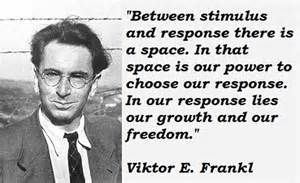
Viktor Frankl in his classic Man’s Search for Meaning did not believe one should seek suffering. A survivor of Nazi concentration camps, Frankl did believe that when suffering was unavoidable, we could find meaning in it. His book is a witness to his beliefs.

When we face times of suffering, Frankl indicates, we are better able to bear them if we have purpose, a reason for living. During such times as these, those of us who are Christians renew our commitment to our faith in a purposeful God. We do not worship suffering—Christ teaches us to love life—but suffering is a part of our story. Our salvation came through suffering. We may be lost in confusion for a time, like the disciples who stumbled through an awful Friday and Saturday. As author Tony Campolo’s book title states, however: It’s Friday, but Sunday’s Comin’.

It’s Friday.

Impromptu Community; A Moment of Unexpected Grace


Most of us have experienced impromptu community, an unexpected incident that binds us to the people around us. Passengers on a plane bound for the United States on September 11, 2001, had to land unexpectedly in Newfoundland, Canada, when U.S. airspace closed following terrorist attacks in the U.S.

The Newfoundlanders showered unexpected hospitality on the passengers, lodging them in schools and churches, and feeding them. This hospitality, coupled with the horrifying events of the day, bonded the passengers to each other as well as to their hosts.

Perhaps a serendipity, a surprising moment of grace lifts us up. Eventually, the moment passes and we return to our own lives. Yet, that transforming moment pushes us gently toward hope.

A friend sent me a link to such a serendipity. First: a pedestrian square filled with tourists, couples, babies in strollers, children, the bored, the young, and the old. Then it becomes, for an instant, a community through the power of music.

Listen to the music, but watch also the touch of a sudden community.


Atlas and the Vulnerable


I read Atlas Shrugged, by Ayn Rand, several years ago. The message, as I remember, is the burden on those who strive and work of carrying the rest of the world. “The rest,” Rand believed, are parasites who live off the labor of the producers.

Ayn Rand was born in Russia and witnessed the horror of the communist takeover there. America became her ideal, and she immigrated to the United States as a young woman. She believed in unfettered capitalism, a complete separation of economics and state.

Ayn Rand’s philosophy may work well for those of us endowed with the blessings of health and self worth. But not all of us are. None of us is immune to a catastrophe that could ruin us. And why do we presume that those with power will always use it in beneficial ways? Without laws, the powerful too often become corrupt.

Years ago I saw a play given by homeless people about homelessness. It taught me some of the many reasons for their condition. Some homeless are shiftless and lazy. Some work hard but make poor choices or are victimized by shysters. Some suffer misfortunes that are beyond anyone’s control like medical illnesses that could strike any of us and leave us helpless.

Vulnerability is closer to all of us than the more fortunate sometimes suppose. If we desire a civilized society, we must provide ways for the widows and orphans to overcome their vulnerability so they, too, can contribute.

The best welfare we can give a person is the means to find his or her gifts that benefit society. For myself, I know that for any success I have enjoyed in this life, I owe much to the parents who raised me. I began with the advantage of a family who loved me, taught me that I am of worth, and gave me confidence to make my way.  They paid for a college education for me that I might have certain skills. They gave me a love of learning. These are gifts that I did not earn.

The Gift of Ignoring


Everyday as I boot up my computer, I try to ignore the items that fly at me off the news page. I don’t check my email, either. I look at the weather and ignore the rest. (This is the Pacific Northwest, where weather is as changeable as young love.) I confess to failing occasionally, but I believe the ability to ignore is a gift worth cultivating.

I’m able to write full time, certainly a blessing. However, blessings can be wasted. I must plan my time intentionally, guided by purpose. First I write for several hours. Then I allow myself a brief check of email in case an urgent one requires immediate attention. Otherwise I give only a cursory glance to the digital messages. Then it’s necessary chores: perhaps a marketing task or cooking a casserole or cleaning the house or attending a meeting—whatever obligations I need to meet for that day.

Late in the day, when I’m tired and want to do frivolous stuff for a while, I’ll check email, blogs, maybe some social media sites, eventually the news. I have to work it this way.

The Internet is a bottomless pit that is the best illustration I know of insatiability. You can literally spend all day on it. But if you do, nothing else gets done.

An intentional life requires discipline, including the gift of ignoring even good things until the right time.


Clock Time and the Other Time


We measure time by clocks and watches and cell phones. We divide time into minutes, hours, days, years. This measure of time is scientific, verifiable.

But when we wait to find out the results of a loved one’s operation, time creeps. When we are on vacation, time flies. The time you spend in a dentist’s chair may be the same verifiable time you spend sharing kindred thoughts with a friend, but they will not appear the same time to you.

To ask which kind of time is the right one is meaningless. They are not in competition, but measure different processes. Our ability to physically order our lives requires the first kind of time. Our inner selves live by the other time.

We are body and we are soul. To each its proper place.


A Time of Wildfires


In a time of wildfires in much of the country, my husband and I visit a few acres of family land in eastern Washington. As we pass through the Cascades from the Pacific coast and enter the rain shadow, the landscape changes from lush fir and cedar to the pines of a dryer climate.

We drive partway up the side of a 4,000 foot mountain on a forest service road and park our ancient Toyota truck. After bringing out chairs, we lose ourselves in the hush. Overshadowing us are 10,000 foot peaks, still snow-capped in late June, the result of a wet, cold winter. The sun warms us now, as it draws out the unique perfume emitted by Ponderosa pines. Once in a while we hear the distant hum of a vehicle on the road far below, but the only other sounds are the wind scratching through tree limbs and the birds chattering from hidden perches.

So far this year, no wild fires have threatened, as in Colorado and other states, but we know it could happen here.

A few years ago, in one of the dry years that haunt us also, a wildfire blackened miles. It spread to this mountain. Yet patches of trees seem almost untouched, and life survives in others, too. They shoot out new growth from darkened trunks. Saplings grow, not only pines, but also maples. The slopes shimmer in glades of green, covering over layers of ashes.

God created a nature that works toward healing. Cannot spiritual and emotional scars heal also, like the renewal that blossoms over the burnt areas of our mountain?


Love Covers A Multitude of Sins


I grew up in a Southern Baptist church in Nashville, Tennessee. I never rebelled against the principles instilled in me by that church, despite living in many different cultures and growing beyond a few of the attitudes that infiltrated that age in the South. Why do the bedrock teachings remain as a part of my belief system? Why, when others, less challenged by change than I, leave the religion of their childhood?

The reason for the endurance of the lessons taught me, I think, is love. The song that mentions “a sweet spirit in this place” could have been written about my church. Why would I rebel against love and caring?

Perhaps some of the members of the church were racist. I don’t know for certain because we, at that time a white church to be sure, were never challenged. Ours was a humble, working class membership and not likely to be noticed by those who challenge institutions.

It came easy for me to change my views about race. The church taught love, and the seed thus planted couldn’t be smothered. One picture graced the wall of my childhood Sunday school class as we sang about Jesus loving all the different colored children of the world. A joyful Jesus held hands with a group of children. One was a fair-haired child. Another was a black African boy. The others were, if my memory is correct, a native American and an Asian child.

Teaching love and living it, as that church did, overcomes human failings and allows for later growth, as the title of this passage from the first letter of the apostle Peter suggests.

Reach of Reason, Place of Faith


Reason seeks for truth that it can prove. Religion, some say, asks us to believe things that can’t be proved. But why is it assumed that a search for truth is worthwhile? Why is the truth good? By inference, what is bad about untruth? Are we not making a faith decision? That truth is better than untruth?

This scientific age, based on provable truths, brings us untold medical advances. It also brings us moral dilemmas. An individual facing the decision of when to “pull the plug” on life support systems for a loved one may wish for days when the seriously ill could not be kept alive almost indefinitely.

The industrial age allows unprecedented material advantages. It also allows pollution and ecological damage, especially as millions more in countries like India and China enter a more developed stage and seek trappings of the middle class life. We aspire to a lifestyle that strains our resources. As those scarce resources become more expensive, class differences tend to increase. How we deal with issues like the environment and inequality requires faith choices. Hopefully, we reason as far as we have evidence, but eventually we jump off in faith.

Once in a while, a scientist lies, or twists his findings for his own advancement or simply from carelessness. Reason, apparently, doesn’t eradicate all selfishness and mistakes.

Reason is a wonderful gift, but faith provides a different guidance, related to purpose and meaning.

Forming Communities, Not Always of Kin


After my father died, my mother rented out a room in our home to boarders. One of the local elementary school teachers rented our second bedroom until she met, fell in love with, and married our church’s minister of music.

Then Mom turned the upstairs into an apartment. During my adolescent years, she rented it to more teachers from the local schools.

It seemed natural to have an expanded “family” around as I was growing up.

Then my brother returned from college and two years in the army. He took over the upstairs until he married and moved out.

As I left for college and then marriage, Mom rented the apartment to young couples. In her declining years before she died, she rented the apartment to a single, working woman.

Looking back, I realize that our community arrangement benefitted us all. The working singles and couples had an affordable place to live. Mom was not by herself as her children moved out. I gained by having young teachers who were, to some extent, role models for me.

Pausing To Catch the Still, Small Voice


The conference went well. A spiritual and  intellectual feast resulted from a fortunate confluence: writers and poets on faith like Luci Shaw and Marilynne Robinson, best-selling books from around the globe, and sensitive readers.

Yet I found myself exhausted physically and spiritually at the end of the second day. Tired. A bit lonely as evening came on. Discouraged with my own writing, which seemed so much drivel. Too trite. Too driven by clichés. I found myself in a Dantean wood of sorts.

In this mood I wandered into the college vesper services.

I listened to “The Lamb” and “The Tyger” by William Blake, sung by the college choir. Readers presented more poetry and a reading from Job. More songs. I soared. Perhaps my words might one day soar as well.

As I listened to poetry ancient and modern, I knew why the church, despite human failing, endures still, lighting the way for uncountable billions.

No, I know my words will never quite reach what I desire for them, but I know it is not hopeless. Tomorrow I will try that new beginning on the novel that now teases me.

Hope. That’s the name of it, I think.