
Category Archives: Journal

Waiting for the Alleluias


We did not clap during the Good Friday concert at my church last night. It was a somber concert, about grief over the loss of loved ones, but with a tinge of hope that wove a few colors though the black tapestry. We left silently and went home.
Tomorrow morning, God willing, we will enter the sanctuary, black gauze veiling the windows, as quietly as we left it on Good Friday. We will sit as the children gather around the one light in front, and the pastor will begin the story about Jesus and his death. Then suddenly (I never remember quite how), will come the cry, “He is risen!”


We will pull the black from the windows, the lights will come on, and the brass instruments and the violins and the organ will blaze the message, “He is risen!” and we will sing our alleluias for the first time in forty days.
For two thousand years, men and women and children have celebrated this event. It is for us, as Cardinal Donald Wuerl said yesterday on the Morning Joe television program, based on fact, the fact of redemption and sacrifice and the conquest of death and our own propensity to sin and harm our fellows.

We need Easter this year, in the midst of hate and doubt and secular power. But then, we have always needed it.

Merely Chance Or A Work in Progress?


Does our universe operate on chance only? One sperm out of millions finds an egg. A tornado devastates one town and spares another a few miles away. Yet we have something called the laws of probability. We can’t predict certain things for an individual, but we can predict them for whole populations.

Some cancers, which a generation or so ago appeared to operate on blind chance, we now find are influenced by whether we smoke or by what we eat. The genes we inherit, presumably by “chance” exert influence, but we have some power to mitigate them. As we have more knowledge, we may push back “chance” even further. We may find that we have more responsibility than we supposed to make right choices.

Suppose a purposeful love is the reason we’re here? A love the Greeks called agape love, not confused with romantic love or friendship love or the attraction someone expresses when they say “I love chocolate.”

It’s a love that begins when we’re loved and thus able to respond with love to the one who values us, then we’re able to love others. We don’t love others better than ourselves; we love them as we love ourselves.


But we can’t begin it without being loved first. Something happens, something that begins with love. Our societies and our personal lives seem created to function through love. When we don’t have love, our societies and our individual lives crash.

The Joys of How and Why

A washing machine cleans clothes by the actions of the soap, water, agitator, spin, and other mechanical features. (The how.) An engineer wishing to invent a better machine or a householder looking for a newer model may profitably study these features. The ultimate reason that the machine cleans clothes, however, is because someone wants clean clothes, loads dirty clothes and soap into the machine, and turns it on. (The why.)

A computer math course taught me that we can have other number systems than the one based on ten. Computer systems, at least when I was studying them, are based on the binary system, the on/off properties of two. You go on up to four, eight, sixteen, thirty-two, sixty-four, and so on. Presumably you can have a system based on threes or thirteens or three thousand and sevens, if you want to. In other words, the possibilities are endless.

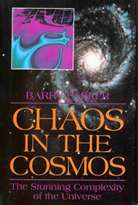
A previous blog discussed systems that we, as yet, have no way to predict. The usual example given is the weather, which we still can’t accurately predict beyond two or three days.(In the Puget Sound region, even the prediction of a few hours can be in error.) The author theorized that these systems we can’t predict aren’t really chaotic, but we lack the knowledge to unlock them. And when we answer one question, we find a thousand more waiting.

The universe amazes us with its complexity. Humankind is equally marvelous. The study of both leaves us in awe and provides useful knowledge, but the ultimate why for these marvelous works is beyond science. That journey begins with faith that sends us in another direction.

Writing and Faith

Writing is a journey of faith. You write a novel, spend months, maybe years, fleshing it out, creating characters, not knowing if it will be read by any but an editor who will reject it. Or you pour your passions into an article that may never be accepted for publication.

But isn’t that the way with all of us who give ourselves to a task? Preaching the love of God to an alienated world, working for a better environment, aiding unwed mothers, building low-income housing, relieving hunger, or giving ourselves to a million other worthwhile causes that captivate our passions and may or may not know ultimate success.

In medicine and the sciences, researchers toil for further knowledge or to relieve human suffering. Others give themselves to political causes that grip them.

The journey begins in faith and gives purpose and meaning to one’s life. Which is not to deny that a cause can be in error, as with the suicide bomber who kills not only himself but the innocent. Misguided faith can mask terrible evil.

Nevertheless, those who live only for themselves without any outside interest are to be pitied. Those who are ignorant of faith are surely little more than animal creatures who have waylaid their souls.

Beneath Diversity, A Comforting Order

Our View!


As winter began, my husband and I rented lodging on the far edge of the wild Olympic peninsula. No telephone, no television, no Internet. Out the window a few yards away, the boiling Pacific Ocean crashed onto the beach. We scanned the sculpted rocks and the writhing horizon that took away our breath with its beauty.

We stayed only a few days. To gain the full benefit, I think, one needs at least a week, preferably two or three. A couple of days passed before I accustomed myself to the rhythm of the place, before the thoughts began coming, the words forming.

I didn’t miss the telephone (not even our cells worked) or the television. The Internet was the most difficult to do without. No checking on the weather two or three times a day. No news from the outside, which, these days, is perhaps a blessing.

I think what I came away with (along with a measure of deeper peace) is the sense of God’s infinite diversity. Tides four times a day, but each different from the one before. Ceaseless waves, but each one, like a snowflake, different from any other.

This diversity operated within a dependable order. Without order, we could not check tide tables or know light and dark would succeed each other.

Within this comforting order, one is free to create infinitely and never exhaust the possibilities.

Musings After A Christmas Tragedy

Our island community grieved when a tree fell on a car driven by a family on the way to a relative’s house on Christmas Day, causing death and injury. Could God not have stopped that tragedy? Could have but wouldn’t? Would have but couldn’t?

When I was about four, I was happily walking through a field of clover when a bee stung me.  I had unknowingly stepped on the bee, and the bee reacted as bees were supposed to, but I had not wilfully done wrong, any more than the family had done wrong by driving down a road. Nursing my bee sting, I sought my mother’s comfort. Because she loved me, I could overcome a world in which bees sting small children.

Bad things happen that we cannot prevent, even by our best efforts. Such things are evidence, whatever else they are, that we need a relationship outside ourselves to whom we can go for comfort when those things happen.

The Holocaust surely is a tragedy as evil as ever envisioned. It caused some to disavow the idea of a loving God. I see it as evidence, neither of God’s impotence nor of his lack of caring, but as evidence of human failing. The Holocaust was not sent by God. It happened because we sinned, chose hatred. Directly caused by Hitler and the Nazis, yes, but it also may be traced to choices as far back as the religious wars of the 1600’s, which left Germany a devastated nation and led eventually to more wars and ethnic cleansing. The Holocaust came, not from God, but from humans. It is evidence of our choices, for which we need repentance and confession and forgiveness, the only actions that will prevent more Holocausts.
Why should we expect God to solve a problem that we ourselves have created? Nor should we expect God to change the rules of nature, the reaction of a bee to a threat or the natural fall of a tree when its time has come.

Like This, Lord? Surely Not

God Surprises

If we are Christians, we hear this Bible verse often during Advent: “But when the time had fully come, God sent forth his son . . .” (Galatians 4:4, RSV) Though plans for Jesus’ birth may have begun in eternity, their fulfilment surely hit like a tsunami to those involved.

So it must have seemed to a peasant Jewish teenager named Mary. Mary marveled at what God was asking her to do—didn’t seem possible—but she obeyed.

But really, now—the Jews had prayed for the Messiah for centuries, and this is the way God answered their prayers?

Elizabeth Elliot writes in A Slow and Certain Light of the call that came to her to serve among the Auca people, members of whom had killed her husband. She writes of the call: “And when it came, it was as clear as the sunlight. What to do was all mapped out for me exactly, and I had a matter of minutes to make up my mind to do it.”

Years ago, I passed the exam for the U.S. State Department’s Foreign Service, but for over two years, nothing happened, so I chose another job, one I fell in love with.  Then, just before a weekend, a woman called from the Department and said I was eligible for entry into the Foreign Service, but I must decide immediately. I asked for the weekend to decide. That weekend I attended a stimulating conference in connection with my current job. I decided I loved that job and would not exchange it for the unknown of the Foreign Service. But I prayed that I would do God’s will. On Monday morning, I told the woman I would accept the offer for the Foreign Service. I still, to this day, cannot explain why I said yes when I planned to say no. An exciting life opened to me that I have never regretted choosing.

Perhaps the key to finding our path is to busy ourselves with what is at hand: applying for jobs, housekeeping, studying, working hard and honestly. We do well whatever comes to our hand and trust that God’s call can best find us there.

Lessons, Formal and Informal

Like all college reunions, this one provoked nostalgia, but it tied my student years to events of the present day, too

As we shared past experiences, I developed a new appreciation for my professors in that southern Christian college. The place was, I now realize, an island of growth in a sea of a less than Christian time and place. We could ask questions, express doubts, and be stimulated by a faculty remarkable for a combination of intellectual toughness and Christian transformation.

If our professors exemplified the best of Christian scholarship, the college’s administration taught me another lesson. We southern young people, brought up to be polite and courteous, rebelled against the food served in the cafeteria. Rather humorous in the light of the social ills we could have chosen to rebel against.

Nevertheless, I learned what happens when two sides of an issue face each other, especially when one occupies an inferior position, as we students did. The college administration insisted on meeting us with cold logic, irritated that unformed students could question their assertion that the food was acceptable according to institutional norms.

The deeper issue was not the food but our desire to be taken seriously, to be listened to.

I think about that time when I study the youthful (and not so youthful) protestors of today. I am not much of a protestor. I’d rather dialog with those with whom I disagree. Protests tend to encourage a them/us atmosphere, even lead to violence. Nevertheless, those protested against, usually the stronger side, can seize it as a chance to dialog, not yielding to the temptation to name call or label or dismiss the protestors as the worthless ignorant. Better if both groups learn respect for the other, even journey toward a bridge that both may cross, a bridge formed by two opposing views coming together in a new and stronger joining.

Vespers

The setting for much of my novel Quiet Deception is a college campus. The campus is fictional, as is the story, but my own college experiences cast the mood.

Those experiences, and others barely remembered, surfaced when my husband and I visited my college for an alumni reunion, my first visit since my graduation. Old friends jogged memories. A stroll past my former dorm room whispered of bonds shaped during midnight talk sessions. Bitter sweetness, too, as we passed students, their decisions yet to be made, possibilities before them, as they once were for me.

The college vesper service knit these disparate musings into a small epiphany, the kind that bless us from time to time. The symbols of my religion, rock solid, touched centuries of Christian faith through times of growth, decline, and resurrection.

Vespers, the service of transition from the day’s activities to a time of rest, spoke of God’s presence in all of life’s transitions.

Day is done, but love unfailing dwells ever here;

Shadows fall, but hope, prevailing, calms every fear.

God our Maker, none forsaking, take our hearts, of Love’s own making,

Watch our sleeping, guard us waking, be always near.

(“Day is Done,” James Quinn)

The Unwired World and Victor Hugo

My husband and I accidentally became part of the unwired world. On a recent trip to my college reunion in Birmingham, Alabama, we discovered that we had left behind not only our laptop but our iPad. We gazed in horror at ten days ahead with no internet connection other than what we could snatch from those hotel lobby communal computers.

No access to instant maps, weather, and the news. And what about my blog posts? Overseeing a contest I was involved in?

Well, I wrote the blog hurriedly, but the Hampton Inn computer sufficed. I learned to dart through my email. No dawdling when another hotel visitor paces on the other side of the glass door waiting his turn.

But how would we exist without our internet fix? None of that early morning time shaping my latest work in progress, either.

My husband contented himself with the only print novel we had brought along. I jealously guarded my Kindle, on which I had recently downloaded our next book club selection, Les Miserables, by Victor Hugo. I had thought its old-fashioned prose would turn me off, suitable only for releiving bordom on the cramped airplane ride. Instead, as I took the time to savor it, I relished the beginning chapters that set the atmosphere with its naration of the old Bishop’s care for the vulnerable ones. When Jean Valjean finally appeared on the scene, I eagerly turned the electronic page to savor the Bishop’s handling of Valjean when he was caught with the Bishop’s silver service.

I lost myself in the story when the Bishop told the authorities that not only had he given the silver to Valjean, but that he had meant to give him some silver candlesticks (which the thief had missed in his hurried departure from the Bishop’s residence) and handed these over as well. I’ve never seen a piece of fiction illustrate Jesus’ instructions to give to those who take from you. It exemplified the Christian ethic: giving instead of hoarding, forgiving instead of retribution, loving instead of despising those who have broken society’s rules.

I may have grasped the story reading it hurriedly between my time on the computer, but not with the delight that this leisurely read allowed me.


The Strength of Tension

As an American Christian living in Saudi Arabia, I found clues to my own people.

When we Western expatriates hiked in the desert, we met groups of Bedouin Arabs who welcomed us, women as well men. Often the women did not even cover their heads. In the cities, however, Saudi women not only wore black abiyah robes and head coverings, but often veiled their faces and wore gloves. They appeared to be more isolated than their rural counterparts. Apparently, modern city lifestyles challenged tradition. The more conservative practices indicated a reaction to such challenge.

In times of change, Christians, like everyone else, cling to what we have always known. When our beliefs are questioned, we become like ethnic immigrant communities. We draw in together for protection against a larger society that follows a different set of rules.

Yet we Christians need both those with new ideas and those who would teach us the wisdom found in our core beliefs. Conservatives need liberals to remind them of larger issues, of the need for Christians to clamor for social justice and of the awful price which rampant consumerism exacts. Liberals need conservatives to remind them that Christianity without a crucified and resurrected Christ may become little more than a political party or a social club.

It is the tension of opposite forces coming together, we are told, that gives the arch its strength.

What Is It You Want To Do?

The best guides and teachers do more than pass along information. They enable followers to find their own unique paths.

I once worked as a planner for historic preservation in five counties nestled in the north Georgia hills. I guided community groups who respected their historic heritage and wished to pass that heritage on to future generations. I understood my job not as one who merely gives out information, but as one who enables.

Typically, a group of citizens from one of the area’s small towns would call me in for consultations on historic preservation. The main task I performed was to ask “What is it you want to do?” When we had determined that, I would guide them in brainstorming the best ways to accomplish their goal.

I think the idea of enablement has carried into the writing I do, including this blog. The objectives are wider now than historic preservation. My later job as a Foreign Service officer turned me on to the wider world, its cultures, and how we, especially we Christians, relate to it. An ever changing world calls for Christians to explore new ways of dealing with it.

I would like to enable Christians and seekers to think about their place in the seething globe we now inhabit. I want to help them understand world events and trends, then to find their calling.

We no longer can concern ourselves only with this country or its domestic issues. Christ’s call is to go into all the world.


Science and Will

Science is a wonderful servant but a terrible master.

Science gave us antibiotics. We use them to vanquish horrible diseases and save lives. We overuse them and create superbugs.

Scientific advances gave us the automobile, which allows us undreamed of independence. It also leads to increased isolation of the elderly, the young, the handicapped, and the poor, who have less access to automobiles.

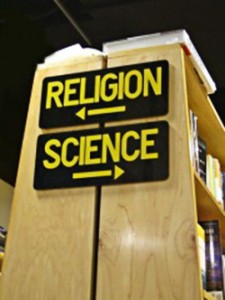
Science deals with physical processes. What we do with those physical processes and the decisions we make that lead to good or evil are determined by our morality, by our faith in what we cannot always prove.

Some would say that education and reason are the tools for deciding what is right. But none of us has perfect knowledge. At some point along the continuum, we have to jump off into faith.

And even the best of us react first in our own interest if what we value is threatened. All of us act unreasonably at times as far as the common good is concerned.

We often know what we should do. What we lack is the will to do it. Some process other than the material has to transform our will and give us the ability not just to know right, but to do it.

Love more than any other force I know has the power to transform the will to act for the good of all, not just for ourselves.


The Tolling Bell

The latest headlines tell of yet another weather-related tragedy. Over a hundred people were killed by a tornado in Joplin, Missouri. We feel sorrow for the affected individuals and families, as we felt for the victims of tornadoes in Alabama and other states a few weeks ago.

When those earlier storms missed the people of Joplin, surely no one would have blamed them for experiencing relief, but now this second wave of fierce tornadoes has hit their city.

At the moment, I’m sitting in my “safe” home in the Pacific Northwest. So far this year, our main complaint is the cold, rainy spring. But I know disaster could strike here, too. In a moment or two, nature could unleash tragedy: earthquake, tsunami, or perhaps a volcanic eruption.

What’s the message for us when we read of tragedy in another part of the country or the world? The message is that those people are us. Because one day it will be us, if not in some natural catastrophe, then a personal one. No one who lives an average life escapes “storms.”

We help victims with prayers, money, and  other resources as we are able and as appropriate. More than this, we understand our own vulnerability and are inspired to live our short span of life as unselfishly as possible.

The poet and priest, John Donne, wrote:

No man is an island,
Entire of itself.
Each is a piece of the continent,
A part of the main.
If a clod be washed away by the sea,
Europe is the less.
As well as if a promontory were.
As well as if a manor of thine own
Or of thine friend’s were.
Each man’s death diminishes me,
For I am involved in mankind.
Therefore, send not to know
For whom the bell tolls,
It tolls for thee.


When the Olive Tree Fails

What are black swans? No, not the movie and not the waterbird. The term “black swan” is the current buzzword for those catastrophes that occur once in a lifetime, or once in a hundred years, or once in a thousand years or maybe even for the first time ever.

Black swans cannot be predicted in any definite sense. They can be natural like the earthquake in Japan or the recent Southeast tornadoes or the Mississippi floods. They can be economic like the Great Recession that began in 2008. They can include violent solar storms on the sun which may interfere with electric grids on the earth.

After a black swan event, the lives of those affected may change drastically. Such a catastrophe can change whole countries, as the earthquake did in Japan.

Some believe that efforts to avoid the natural rhythm of ups and downs make the inevitable event more catastrophic than it would have been. Flooding from the Mississippi River is supposed to occur fairly regularly, these people say. To attempt to prevent all flooding on the great river only assures that eventually a massive flood will sweep away even the flood controls.

The attempt to prevent all forest fires only means that a huge conflagration eventually will destroy a larger area than would many smaller fires.

Attempting to prevent all business collapses only leads to larger business collapses in the future, so the thinking goes.

I don’t have the expertise to judge these ideas, but I do wonder if we have come to believe that nothing bad is ever supposed to happen. We are never supposed to suffer, never supposed to be depressed, never supposed to be denied our wishes. We have difficulty accepting conditions like unhappiness, old age, death.

To accept that we are finite and vulnerable surely is a mark of wisdom. Spending our resources to fight winnable battles is worthwhile. To think we can conquer all misfortune with material wealth, however, is absurd. Better to invest in our spiritual lives and in our relationships with our families, friends, and communities. These will be of value when the next black swan visits.


Life and Death and Grace

I recently was hospitalized for knee surgery. It is almost always successful. As a writer, however, I am gifted or cursed with an imagination.

Suppose they damage my brain with too much anesthesia? Suppose I’m cut off from oxygen too long? Suppose they slip while cutting whatever they have to do to fix the knee? And so on.

The hardest is the point of no return. The anesthesiologist has politely explained exactly what will happen. He appears to be competent, but what do I know? I tell my husband goodbye. They wheel me down the hall. I remind myself that friends and loved ones are praying for me. I try to develop one of the characters in my latest novel in progress to keep my mind off what I have chosen to do. Then I fall off the cliff.

The next minute, as it seems to me, I’m waking up. They are cheerily asking me questions. I appear to be alive and in my right mind. My leg is still there, swathed in bandages.

Later, wheeled to my room, greeted by my husband, who tells me everything went splendidly, I am overwhelmed with gratitude. I thank God that I have access to competent physicians and to health insurance that means the access is affordable.

I am grateful for God’s gift of life. Yet, I ponder, as one is wont to do when confronted by unmerited grace, on both death and life, how one is more certain than the other, when we consider our life spans.

One day the operation won’t be successful or one night I shall go to bed and not wake up or I will be in an accident or my health will finally decline into death. When my time comes, I do not want extraordinary measures. In other words, while I rejoice today in my “new” life, I also know that death will be the final result of having been born.

Yes, as a Christian, I believe I shall live eternally but confrontation with my mortality in this life still sobers. God has given me a gift, a gift to be used, not squandered or buried in fear. Used as the good servants did in the parable of the talents, in risk and joy. The time is short.


The Cult of Death

Osama bin Laden’s obituary was featured in The Economist this past week. The article mentioned bin Laden’s famous dictum outlining the fundamental difference between his followers and Americans. Americans love life but his followers love death, he said. Apparently he believed this love of death would defeat those who love life.

Are those who love death stronger than those who love life? The signature act of death worshipers is the suicide bomber. Is this activist a type of courageous martyr, who also makes unwilling martyrs of those innocents he or she kills?

Viktor Frankl, a Jewish psychiatrist, survived a Nazi concentration camp. Like the victim of a suicide bomber, he suffered because of a fanatic’s belief that his life was not of value. Frankl learned much from his concentration camp suffering, but he wrote in his classic Man’s Search For Meaning: “But let me make it perfectly clear that in no way is suffering necessary to find meaning … To suffer unnecessarily is masochistic rather than heroic.”

Jesus did not wish to suffer on the cross. He did so because of love, because he wanted others to live. To die so that others may enjoy better lives, it seems to me, is the only reason to choose death. To love not only our life but the life of our neighbor is the beginning of the strength that defeats evil.


Mourning Osama Bin Ladin

I mourn Osama Bin Ladin. Not his death but his life. He wanted to purify the religion, we are told, of his native Saudi Arabia. He thought ideas brought into his country by Western nations were corrupting it. What an awful path he took in his attempt to carry out what in itself could have led to serious discussion and change within his country.

He could have chosen persuasion and a vocation as a peaceful spiritual leader, something like Gandhi. He could have reasoned and debated to bring changes. He could have kept open his own life to spiritual growth and change and listened to others with different opinions.

Instead, like too many people who desire change, he thought he had the right to kill people to bring about those changes. He wasn’t able to understand the rights of others to choose or to understand that no man, however close to God he thinks he may be, is God.

Perhaps humility is the first choice of those who would change others.


Meditation on a Saturday before Easter

Theologians may debate the meaning of Jesus’ sacrifice. For me, love is the only force that overcomes evil. Jesus’ willingness to die for us is the love that defeats evil. Love is the action that evil cannot answer.

In the sacrifice of himself, God throws out the challenge for evil’s ultimate defeat.

As we live out that love and compassion, we strike back as part of God’s army against evil.

Recharge

The geography and times in which I live can leave me tongue-tied in the expression of my faith. As readers of this blog know, I live in the Pacific Northwest. Its coffee house milieu is a setting for militant relativism. Speaking within it requires one to learn a new vocabulary. In addition, several friends carry remnants of a childhood religion that bordered on the abusive. Religious phrases that are meaningful to me remind them of intolerance and hurt.

The need to reset my spiritual compass is one reason I attend writers’ conferences that cater to Christian writers. This week I attended such a conference. As in similar professional gatherings, I networked with other writers, agents, and editors and attended seminars on writing. However, this one, set among California redwoods, recharged my batteries and connected me with my center.

On Palm Sunday morning the compass discovered its lost direction. As we sang about love and redemption, I wept as the divine touched me and restraints loosed for a season.