


I met Dr. Lloyd Johnson at the Northwest Christian Writers Association Renewal conference in May. We discovered a mutual interest in Middle East issues, though with different emphases.
Following are excerpts from the bio on Dr. Johnson’s blog http://lloydjohnson.org/
“Following the man of Galilee, and learning from Jesus’ stories, I began to write tales about people struggling with the issues in their lives and the current conflicts in that part of the world. We in the United States learn of the Arab Spring but have little information about ordinary people’s daily lives in Israel and the West Bank.
Previously, as Clinical Professor of Surgery at the University of Washington, I taught and practiced general and thoracic surgery in Seattle for many years . . . . Additionally I worked as Professor of Surgery at the Haile Selassie I University in Gondar, Ethiopia for three years. I served for two years in the U.S. Air Force as a flight surgeon, and volunteered in hospitals for several weeks each in Kenya, India, and in Pakistan with Afghan refugees.”
Here is one of Dr. Johnson’s entries, posted on June 16, 2012
“THOSE WHO CANNOT REMEMBER THE PAST ARE CONDEMNED TO REPEAT IT.”
from George Santayana (1863 – 1952), The Life of Reason, Volume 1, 1905
Memory is a gift. When you wake up in the morning, you may still remember what happened yesterday—or 20 years ago. Sleep does not erase it. Like memory in your computer, it should still be there on re-start. You need the anchor of memory to know who you are and how you relate to the rest of the world around you.
Santayana addressed long term recollections of history, ours or others, that are crucial to teach us how to live in the present. We can choose to learn from the past or not. Both the good and the bad events. Father’s Day brings inspiring memories to me. Many are not so fortunate to have had a loving dad. But at age 18 I lost him tragically, to a drunk driver. Devastated, I learned to forgive and not live in bitterness. The past is history, only to inform the present, not paralyze it.
Paul, the famous Jewish apostle, wrote to his friends in Philippi, “Forgetting what is behind, and straining toward what is ahead, I press on…” He had much to forget—persecution to death of Jesus followers, and then becoming one himself, his own beatings, shipwrecks, imprisonments and finally execution. He determined to not let the past poison his life, or that of others.
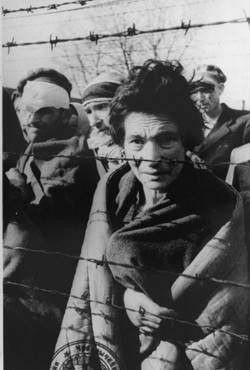 “Never again” is the appropriate slogan for remembering the Holocaust. But how do its survivors and their descendants deal with those memories? Perhaps some do forget. Others forgive and move on. But dwelling on the tragedy seems to fuel Zionism’s fires to burn others. Quoting from Jewish writer, Mark Braverman:
“…Israeli writer Avraham Burg sees the Holocaust as the central reality for Israel—infecting every aspect of daily life and even driving government policy:
‘In our eyes, we are still partisan fighters, ghetto rebels, shadows in the camps, no matter the nation, state, armed forces, gross domestic product, or international standing. The Shoah is our life, and we will not forget it and we will not let anyone forget us. We have pulled the Shoah out of its historic context and turned it into a plea and a generator for every deed. All is compared to the Shoah, dwarfed by the Shoah, and therefore all is allowed—be it fences, sieges,…curfews, food and water deprivation, or unexplained killings…Everything seems dangerous to us…(2008, 78′” Braveman’s page 87
“Our world-view—our attitude toward the other—is so totally conditioned by our sense of our entitlement, undergirded by the idée fixe of our eternal victimhood, that we cannot see the other except as a threat that must be neutralized.” Braverman’s “Fatal Embrace,” page 93.
Does a historic ethnic abuse seven decades ago justify another now, the oppressed becoming the oppressors?
 Best to mute the TV adds, too. Avoid contamination from, at best hyped up hyperbole and at worst outright lies.
 American citizens built bomb shelters and wondered if their children would have a future. Christians feared the Soviet Union’s embrace of atheism.
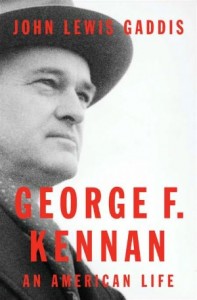 The book, which won the 2012 Pulitzer Prize for biography, brings alive those times of fear bordering on hysteria. It hints of policies which might serve us in our current conflict.
 Today’s revolutions accelerate with the instant communication of Facebook and text messages. Building a new nation requires a quieter courage: a patience to examine complex issues and an ability to find compromise between competing views of a nation’s future.
 The revolutionists in Egypt and Tunisia vanquished corrupt dictators. Now can they survive the hard slogging? Compromise on cherished views to include the views of others? Set up impartial courts and rules of law that discourage the same corruption that bedeviled the old regimes?
 Our country formally gained independence from Great Britain in 1783. But the first structure we accepted for the new country, the Articles of Confederation, failed. After a fierce struggle between competing factions, we began again with the creation of the U.S. Constitution, ratified by Rhode Island, the final former colony to do so, in 1790. It’s an amendable document, meaning that the founders of the nation knew it wasn’t perfect and never would be.
 The situation has improved for Christians of the Orthodox persuasion. In fact, Russian President Vladimir Putin stands accused of using the Russian Orthodox church as a means of bolstering his less than democratic regime. Some Russians are concerned by the power the church appears to be gaining in Putin’s government. Reports suggest that the church’s influence may be one reason for Russia’s support of the bloody Assad regime in Syria.
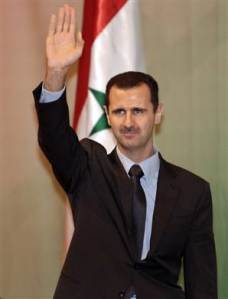 Syria is Russia’s remaining ally in the Middle East and hosts a Russian naval base. The church, rightly, is concerned about the fate of their fellow Orthodox believers in Syria should the Assad regime fall and be replaced by a possibly Islamist government. However, to suggest that Assad should be allowed to slaughter innocent civilians so that Christians might—possibly—be better protected, seems contrary to Jesus’ teachings, to say the least.
 In those earlier times, the U.S. was accused of supporting dictatorial regimes in certain African and South American countries because the regimes touted themselves as anti-communist. Now the U.S. is accused of propping up former dictators like Ben Ali in Tunisia and Mubarak in Egypt. These men clamped down on the growth of Islamists in their countries, so we supported them even if they employed brutal methods. Egypt, especially, became a huge recipient of U.S. aid.
 This scientific age, based on provable truths, brings us untold medical advances. It also brings us moral dilemmas. An individual facing the decision of when to “pull the plug” on life support systems for a loved one may wish for days when the seriously ill could not be kept alive almost indefinitely.
 In my novel Singing in Babylon, the female protagonist, Kate, moves to Saudi Arabia from her native Tennessee to teach. She travels for her first time outside the United States. On a drive with her friend, Philip, an American journalist on assignment to the Middle East, she notices a veiled and gloved woman pushing a child on a swing in a public park. The woman glances at the unveiled Kate, and Kate wonders how the woman feels about this Western female’s intrusion into her world.
 Fast food restaurants, unveiled women, and automobiles bring unprecedented freedom and rapid change to a nation in one or two generations. These changes arrived in a country accustomed to centuries-old merchant towns, Bedouins herding camels and goats, and ancient tribes familiar with the customs of generations.
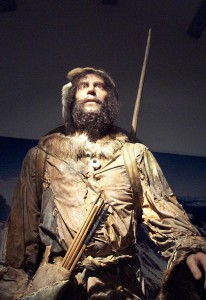 Ozzie appears to have died because someone pierced him with an arrow.
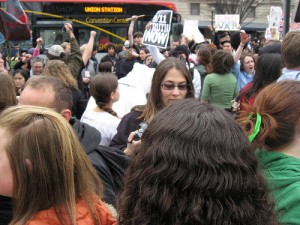 Protests suggest an us-against-them confrontation that risks the protest turning into a riot or, at best, toward hardening of hearts on both sides.
 I prefer writing: opinion pieces, articles, and blogs, for example, print or digital, to protesting. Even more, I like personal conversation between two or a few people. Talking together can be risky, too, of course. People may end up shouting at each other and walking away in anger.
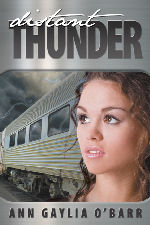 In Distant Thunder, Ms. O’Barr has melded a personal journey of searching and restoration with a candid, point-blank look at American culture and faith. Okay, that’s been done before. A lot. But what makes this book unique is the author’s perspective on America through the eyes of Americans who have spent a considerable portion of their adult lives outside of America. . . .
 The United States is one of the world’s oldest democratic republics, but democracy as practiced here is very much a work in progress. Its continuance is not guaranteed. Politics and power weave uneasily through our relatively new experiment in democracy.
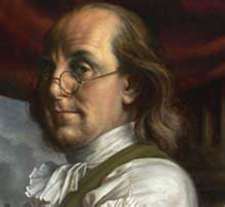 Benjamin Franklin is said to have remarked at the signing of the Declaration of Independence: “Gentleman, we must all hang together or, assuredly, we shall hang separately.”
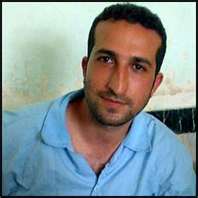 Greetings from your servant and younger brother in Christ, Youcef Nadarkhani.
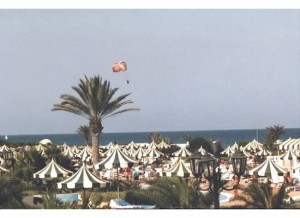 I search news reports for clues about a country’s first encounters with democracy. That country is Tunisia, where I once lived and worked. I scan the recent pictures. When I lived there, few women, and no younger ones, wore the head scarf. Most of them dressed like counterparts on the streets of Paris. Now the head scarf appears more often. Plenty of women do not wear it, but it still surprises me that some do.
 President John F. Kennedy was exasperated at the Buddhist resurgence in Vietnam which undermined a Vietnamese president we supported. As Preston points out, perhaps the president should have noticed that ninety percent of the country was Buddhist.
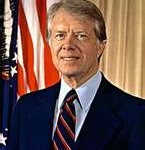 Another president, Jimmy Carter, underestimated the power of Islam in Iran, which led to the fall of the U.S. embassy there and the installation of an Islamic anti-American regime. Iran was a modernizing nation, a result of oil revenues, but religion’s hold did not vanish. In fact, modernization may have increased yearning for the certainty of religious belief in the face of rapid change.
 My colleagues assigned to those countries had to deal more often with the problems caused by U.S. citizens traveling abroad solely for promiscuous purposes. Taxpayer-funded employees should understand that these activities are off-limits for them. Period.
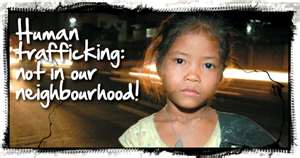 Trafficking of human beings for immoral purposes is not confined solely to foreign countries. Albert Mohler