
Hope for Healing in the Holy Land


Conflict in the Holy Land has been around all of my life. Every U.S. president since the Second World War has dealt with it. My years in the Foreign Service acquainted me with diplomats who have invested considerable effort in attempts to bring the sides together. Yet the problems seem unsolvable, an irresistible force meeting an immovable object.

I recently read an article by Lynne Hybels, a co-founder of Willow Creek Community Church in Illinois,  in Sojourners (June, 2012). Hybels took part in a conference in March, 2012, called “Christ at the Checkpoint,” held in Bethlehem. Messianic Jews, Palestinian Christians, and American Christians presented Bible studies, lectures, panel discussions, workshops, and testimonies.

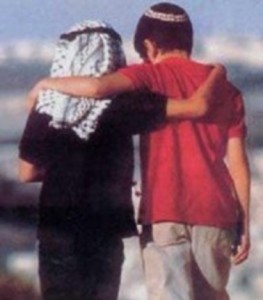
A friend of mine visited Israel and Palestine a few years ago as a Christian interested in peace between the two sides. He witnessed the coming together of Jewish and Palestinian families who had lost loved ones in the conflict.

It may be that Christians hold the key to a solution in that blood-soaked land. Neither “side” can expect complete vindication of their views. Too many wrongs have happened to expect complete justice. Can the Christian doctrines of reconciliation and forgiveness be the key?

Foreign Policy? You Mean Some Kind Of International Insurance?


The editor at the writing conference where I pitched a novel several years ago shook his head. “Stories with foreign themes don’t sell well.”

“Even with all the turmoil in the Middle East?” I asked.

“Even with that.” He didn’t offer to look at my one-sheet.

In the July/August 2012 issue of Foreign Affairs, Princeton Professor Robert O. Keohane reviewed a couple of books about the future of America’s place in the world. He discussed the disinterest of many Americans in international issues unless we are in a crisis situation. He mentioned the “intense domestic partisan conflict” that prevents problems from being resolved and that “constitutes a major threat” to our continued leadership abroad.

We seem unable to understand the opportunity we have for influence in the world. With the opportunity comes responsibility. How well we lead in the world depends on how well we govern at home. When our government appears dysfunctional, other countries tend to dismiss our advice to them about democracy and free elections. When we can’t work out compromises, as any democracy must, our efforts to defuse clashing Middle Eastern ethnic groups are ignored. We can’t keep our own house in order, so what right have we to advise other governments?

We will profit by an interest in the global happenings that influence us: the Euro currency crisis, the spread of Chinese commercial interests into Africa and South America, the Iranian nuclear crisis, and so on.

We are right to be concerned about domestic issues, but as Jesus said about the righteousness of the Pharisees: they were right to be concerned about such things as tithing, but they also should add justice, mercy, and faithfulness.

We need to add concern about issues beyond our shores to our domestic interests. If we don’t, the world will forget about us and our squabbles. They will look for leadership to a more internationally savvy nation, and who knows if that nation will be democratic and free?

To Community


A journalist friend of mine coined the verb phrase “to community.” He said we needed a verb form for the act of coming together in kinship-minded groups.

The protagonists in my stories often “community.” Their stories are sewn within the larger fabric of history, but the characters meld into community as they resolve issues in their lives. I don’t plan it that way, but for some reason, my characters can’t operate without this fellowship. It may be one of expatriate Americans in a foreign locale, or an impromptu group formed on a train, or a new family by marriage. The stories involve all kinds of plots, but the community forms in the midst of the action.

In Singing in Babylon, Kate and Philip find community in a home church in Saudi Arabia, then with Philip’s family. In Quiet Deception, a mystery set on a college campus, four students form friendships while some of their professors share shortcomings with their colleagues. In Searching for Home, Christian families bond in embassy communities in the Middle East as terrorism threatens. In Distant Thunder, it’s a group of strugglers who meet on a train, between Washington and Seattle, each at a decision point in their lives.

Communities are formed sometimes by age or interest and sometimes by circumstances that turn acquaintances into friends, then into members of a community. As my characters live out their stories, they teach me that Christianity is very much a community religion.

Catching Waves Instead of Drowning


A frustrated pastor I know suggested that the reputation of Christians is one of the main reasons those outside the church prefer to stay out.

Too often, we are perceived as arrogant, judgmental, and legalistic. We want to pass laws, so it is suggested, to force everyone to “my way or the highway.” Some say we are ignorant of the world outside our own country and equate the American way with God’s way.

The lessons of our history in this country should humble us. The slave trade continued for decades after the American Revolution, and slavery as an institution endured for almost a century after this nation was formed, supposedly “under God.” Yes, enlightened Christians led the way to abolish slavery, but many rank-and-file Christians thought slavery was okay because, after all, Abraham had slaves, didn’t he? Slaves had always been around. They were part of the natural order.

If more Christians, including Christian slave owners, had worked to liberate slaves and find a way to resolve the dilemma, both moral and economic, that the young nation found itself in, perhaps the Civil War could have been avoided.

If Christians had sympathized with the desire of some women to move beyond post World War II suburbia, the women’s movement might have developed a more humane thrust. An implied hatred of men might have been replaced by an understanding of the need for men to share responsibility for the home. Women simply followed men out into the same hectic, materialistic lifestyle instead of fostering a partnership. Christians might have redeemed the issue.

What would happen if Christians caught the waves of the future instead of trying to catch up after the waves broke? Or even drowning in them?

A Time of Wildfires


In a time of wildfires in much of the country, my husband and I visit a few acres of family land in eastern Washington. As we pass through the Cascades from the Pacific coast and enter the rain shadow, the landscape changes from lush fir and cedar to the pines of a dryer climate.

We drive partway up the side of a 4,000 foot mountain on a forest service road and park our ancient Toyota truck. After bringing out chairs, we lose ourselves in the hush. Overshadowing us are 10,000 foot peaks, still snow-capped in late June, the result of a wet, cold winter. The sun warms us now, as it draws out the unique perfume emitted by Ponderosa pines. Once in a while we hear the distant hum of a vehicle on the road far below, but the only other sounds are the wind scratching through tree limbs and the birds chattering from hidden perches.

So far this year, no wild fires have threatened, as in Colorado and other states, but we know it could happen here.

A few years ago, in one of the dry years that haunt us also, a wildfire blackened miles. It spread to this mountain. Yet patches of trees seem almost untouched, and life survives in others, too. They shoot out new growth from darkened trunks. Saplings grow, not only pines, but also maples. The slopes shimmer in glades of green, covering over layers of ashes.

God created a nature that works toward healing. Cannot spiritual and emotional scars heal also, like the renewal that blossoms over the burnt areas of our mountain?


Learning from Jesus’ Stories in Today’s Conflicts; Guest Blog by Dr. Lloyd Johnson


I met Dr. Lloyd Johnson at the Northwest Christian Writers Association Renewal conference in May. We discovered a mutual interest in Middle East issues, though with different emphases.

Following are excerpts from the bio on Dr. Johnson’s blog  http://lloydjohnson.org/

“Following the man of Galilee, and learning from Jesus’ stories, I began to write tales about people struggling with the issues in their lives and the current conflicts in that part of the world.  We in the United States learn of the Arab Spring but have little information about ordinary people’s daily lives in Israel and the West Bank.

Previously, as Clinical Professor of Surgery at the University of Washington,  I taught and practiced general and thoracic surgery in Seattle for many years . . . . Additionally I worked as Professor of Surgery at the Haile Selassie I University in Gondar, Ethiopia for three years.  I served for two years in the U.S. Air Force as a flight surgeon,  and volunteered in hospitals for several weeks each in Kenya, India, and in Pakistan with Afghan refugees.”

Here is one of Dr. Johnson’s entries, posted on June 16, 2012

“THOSE WHO CANNOT REMEMBER THE PAST ARE CONDEMNED TO REPEAT IT.”

from George Santayana (1863 – 1952), The Life of Reason, Volume 1, 1905

Memory is a gift.  When you wake up in the morning, you may still remember what happened yesterday—or 20 years ago.  Sleep does not erase it.  Like memory in your computer, it should still be there on re-start.  You need the anchor of memory to know who you are and how you relate to the rest of the world around you.

Santayana addressed long term recollections of history, ours or others, that are crucial to teach us how to live in the present.  We can choose to learn from the past or not.  Both the good and the bad events.  Father’s Day brings inspiring memories to me.  Many are not so fortunate to have had a loving dad.  But at age 18 I lost him tragically, to a drunk driver. Devastated, I learned to forgive and not live in bitterness.  The past is history, only to inform the present, not paralyze it.

Paul, the famous Jewish apostle, wrote to his friends in Philippi, “Forgetting what is behind, and straining toward what is ahead, I press on…”  He had much to forget—persecution to death of Jesus followers, and then becoming one himself, his own beatings, shipwrecks, imprisonments and finally execution.  He determined to not let the past poison his life, or that of others.

“Never again” is the appropriate slogan for remembering the Holocaust.  But how do its survivors and their descendants deal with those memories?  Perhaps some do forget.  Others forgive and move on.  But dwelling on the tragedy seems to fuel Zionism’s fires to burn others.  Quoting from Jewish writer, Mark Braverman:

“…Israeli writer Avraham Burg sees the Holocaust as the central reality for Israel—infecting every aspect of daily life and even driving government policy:

‘In our eyes, we are still partisan fighters, ghetto rebels, shadows in the camps, no matter the nation, state, armed forces, gross domestic product, or international standing.  The Shoah is our life, and we will not forget it and we will not let anyone forget us.  We have pulled the Shoah out of its historic context and turned it into a plea and a generator for every deed.  All is compared to the Shoah, dwarfed by the Shoah, and therefore all is allowed—be it fences, sieges,…curfews, food and water deprivation, or unexplained killings…Everything seems dangerous to us…(2008, 78′” Braveman’s page 87

“Our world-view—our attitude toward the other—is so totally conditioned by our sense of our entitlement, undergirded by the idée fixe of our eternal victimhood, that we cannot see the other except as a threat that must be neutralized.”   Braverman’s “Fatal Embrace,” page 93.

Does a historic ethnic abuse seven decades ago justify another now, the oppressed becoming the oppressors?


Democracy Is Like the National Football League; Only One Team Wins


As I write, the Egyptians have discovered that their new-found road to democracy is a rough one. The electorate has chosen between several candidates in two different elections and finally picked the man who will head the new government. The supporters of the ones who lost express bitter disappointment. Welcome to the hard truths of democracy. Like the NFL each year, only one team wins the championship.

Losing is part of the democratic process. Many candidates lose. How they lose is one determinant of the democracy’s success. A first step toward democracy is accepting the loss. The losers vent their frustration by working for the next election, not engaging in violence. Obviously, the winners must follow the rules as well and allow a next election. In addition, corruption and power (including military power) must be contained.

Conceding an election is particularly hard when the contest draws on deeply held beliefs. We fear that if we lose, the country is lost. Perhaps we place too much faith in winning at the ballot box. How we live will influence our fellow citizens more than how we vote. The early Christians, a decided minority, influenced the generations after them as greatly as the imperialistic Roman Empire.

The best candidate doesn’t always win. Political experts complain that emotion rather than reason may carry the day. Injustice has sometimes been voted in at the ballot box. Once in a while, an NFL team wins by sheer luck.


Boycotting The Election


I’m taking a sabbatical from politics. I plan to vote, but I intend to skip the political ads and speeches. Boycott the season’s entertainment.

For information, I’ll read the analytical articles from observers who have proven track records. Forget the social media rumor mills and the talk shows.

Best to mute the TV adds, too. Avoid contamination from, at best hyped up hyperbole and at worst outright lies.

When I worked overseas for the U.S. government, one of our favorite ways to reach out to citizens of countries with little or no democracy, was through our election night coverage. We would open an embassy site to the public so they could watch our democracy in action on TV. We were rightly proud of our American electoral process.

Come November, I’m sure our embassies will still follow this practice, as they should. After all, compared to the election chaos in, say, Egypt, our process looks pretty good. Explaining the huge amounts of money currently expended by a few rich people to influence voters, however, may prove embarrassing. It may remind those other countries of the money-fueled corruption in their own governments. It may give the impression that American politicians can be bought.

How are you coping with the election season onslaught?

Love Covers A Multitude of Sins


I grew up in a Southern Baptist church in Nashville, Tennessee. I never rebelled against the principles instilled in me by that church, despite living in many different cultures and growing beyond a few of the attitudes that infiltrated that age in the South. Why do the bedrock teachings remain as a part of my belief system? Why, when others, less challenged by change than I, leave the religion of their childhood?

The reason for the endurance of the lessons taught me, I think, is love. The song that mentions “a sweet spirit in this place” could have been written about my church. Why would I rebel against love and caring?

Perhaps some of the members of the church were racist. I don’t know for certain because we, at that time a white church to be sure, were never challenged. Ours was a humble, working class membership and not likely to be noticed by those who challenge institutions.

It came easy for me to change my views about race. The church taught love, and the seed thus planted couldn’t be smothered. One picture graced the wall of my childhood Sunday school class as we sang about Jesus loving all the different colored children of the world. A joyful Jesus held hands with a group of children. One was a fair-haired child. Another was a black African boy. The others were, if my memory is correct, a native American and an Asian child.

Teaching love and living it, as that church did, overcomes human failings and allows for later growth, as the title of this passage from the first letter of the apostle Peter suggests.

Communists and Terrorists


As the United States seeks to defeat terrorism in the twenty-first century, we might remember our twentieth century struggle with the forces of Soviet communism. We’ve almost forgotten the terror of the nearly half century Cold War with the Soviet Union. The world came perilously close to nuclear catastrophe.

American citizens built bomb shelters and wondered if their children would have a future. Christians feared the Soviet Union’s embrace of atheism.

Yet the catastrophe was avoided, and the Soviet Union collapsed. John Lewis Gaddis has written a marvelous book about George F. Kennan, a U.S. diplomat and Russian expert during those times (George F. Kennan, An American Life).

The book, which won the 2012 Pulitzer Prize for biography, brings alive those times of fear bordering on hysteria. It hints of policies which might serve us in our current conflict.

Kennan was not always right, but he usually was. He cautioned against being drawn into war when American interests are not directly affected. He recognized the limits of our resources and believed we should husband them with care.

Our best defense, Kennan believed, was to become a strong nation morally and economically. He worried that the public often undermined its best interests by yielding to excessive emotionalism in dealing with complex issues instead of taking the time to understand them.

We cannot, he believed, right all wrongs, but rather “distinguish lesser from greater evils.” We should strive to be true to our ideals and in that way be an example that others might aspire to.

Aren’t Kennan’s concepts valid in today’s struggle with terrorists?

After the Revolution Comes the Hard Part


Social media played a decisive role in kindling the recent revolutions in the Middle East. Now the hard part begins.  A revolution requires courage, to be sure, but a courage more often based on emotion than on reason.

Today’s revolutions accelerate with the instant communication of Facebook and text messages. Building a new nation requires a quieter courage: a patience to examine complex issues and an ability to find compromise between competing views of a nation’s future.

The revolutionists in Egypt and Tunisia vanquished corrupt dictators. Now can they survive the hard slogging? Compromise on cherished views to include the views of others? Set up impartial courts and rules of law that discourage the same corruption that bedeviled the old regimes?

Thomas L. Friedman, writing in the New York Times (June 9, 2012) compared the different processes as Facebook meeting “brick-and-mortar” politics.

Our country formally gained independence from Great Britain in 1783. But the first structure we accepted for the new country, the Articles of Confederation, failed. After a fierce struggle between competing factions, we began again with the creation of the U.S. Constitution, ratified by Rhode Island, the final former colony to do so, in 1790. It’s an amendable document, meaning that the founders of the nation knew it wasn’t perfect and never would be.

As Egyptians pick themselves up from an election that proved less than ideal, can they go to work with what they have so far produced?

Can we Americans survive our own paralyzing politics?

When Religion Is A Pawn


When the former Soviet Union was ruled by an atheistic communist regime, Christians in the West worried about the fate of Russian believers. The government shunned and sometimes persecuted them. After the fall of Soviet communism, Christians hoped the new Russian government would embrace religious freedom.

The situation has improved for Christians of the Orthodox persuasion. In fact, Russian President Vladimir Putin stands accused of using the Russian Orthodox church as a means of bolstering his less than democratic regime. Some Russians are concerned by the power the church appears to be gaining in Putin’s government. Reports suggest that the church’s influence may be one reason for Russia’s support of the bloody Assad regime in Syria.

Syria is Russia’s remaining ally in the Middle East and hosts a Russian naval base. The church, rightly, is concerned about the fate of their fellow Orthodox believers in Syria should the Assad regime fall and be replaced by a possibly Islamist government. However, to suggest that Assad should be allowed to slaughter innocent civilians so that Christians might—possibly—be better protected, seems contrary to Jesus’ teachings, to say the least.

Religious freedom must be at the forefront of any Christian agenda, for Christian believers as well as for adherents of other persuasions. We cannot equate religious freedom, however, with a tyranny that uses Christians to support a brutal regime. Christians must reject any power play which employs them as political pawns. Jesus lived his life in direct opposition to political gamesmanship, even to his willing death on a Roman cross.

He May Be a Brutal Dictator, But He’s Our Brutal Dictator


The Cold War between communist nations led by the Soviet Union and anti-communist nations led by the United States fades into memory, buried during the late twentieth century revolutions in eastern Europe. Yet similarities linger in the more recent revolutions, the ones where citizens are revolting against tyrannical leaders in the Middle East.

In those earlier times, the U.S. was accused of supporting dictatorial regimes in certain African and South American countries because the regimes touted themselves as anti-communist. Now the U.S. is accused of propping up former dictators like Ben Ali in Tunisia and Mubarak in Egypt. These men clamped down on the growth of Islamists in their countries, so we supported them even if they employed brutal methods. Egypt, especially, became a huge recipient of U.S. aid.

Have such policies backfired as newly-freed citizens elect their own governments, seemingly more attuned to the Islamists? Was it better when we supported corrupt leaders who became wealthy by showering their cronies with public largesse? Who didn’t quibble at torturing their own people?

We don’t know if the new Islamists will continue to support democratic elections once in power. We don’t know if they will allow religious freedom. Perhaps if we had been less supportive of the former dictators who tortured them, the new governments now would be more supportive of our policies. In that earlier confrontation with the Soviet Union, at least the eastern Europeans knew we were on their side and became our friends once they gained their freedom.

We should question both the wisdom and the morality of giving support to inhumane governments. (As we now accuse the Russians of doing with Syria.) It can lead to disastrous consequences later.


Reach of Reason, Place of Faith


Reason seeks for truth that it can prove. Religion, some say, asks us to believe things that can’t be proved. But why is it assumed that a search for truth is worthwhile? Why is the truth good? By inference, what is bad about untruth? Are we not making a faith decision? That truth is better than untruth?

This scientific age, based on provable truths, brings us untold medical advances. It also brings us moral dilemmas. An individual facing the decision of when to “pull the plug” on life support systems for a loved one may wish for days when the seriously ill could not be kept alive almost indefinitely.

The industrial age allows unprecedented material advantages. It also allows pollution and ecological damage, especially as millions more in countries like India and China enter a more developed stage and seek trappings of the middle class life. We aspire to a lifestyle that strains our resources. As those scarce resources become more expensive, class differences tend to increase. How we deal with issues like the environment and inequality requires faith choices. Hopefully, we reason as far as we have evidence, but eventually we jump off in faith.

Once in a while, a scientist lies, or twists his findings for his own advancement or simply from carelessness. Reason, apparently, doesn’t eradicate all selfishness and mistakes.

Reason is a wonderful gift, but faith provides a different guidance, related to purpose and meaning.

A Concern Beyond American Idol


In my novel Singing in Babylon, the female protagonist, Kate, moves to Saudi Arabia from her native Tennessee to teach. She travels for her first time outside the United States. On a drive with her friend, Philip, an American journalist on assignment to the Middle East, she notices a veiled and gloved woman pushing a child on a swing in a public park. The woman glances at the unveiled Kate, and Kate wonders how the woman feels about this Western female’s intrusion into her world.

Later, she and Philip explore a seaside camp for Western expatriates on the shores of the Red Sea. She compares the women in bikinis with the veiled woman she saw earlier. For the first time, Kate understands the struggles of an ancient civilization to come to terms with the strange culture thrust into their lives by oil money.

Fast food restaurants, unveiled women, and automobiles bring unprecedented freedom and rapid change to a nation in one or two generations. These changes arrived in a country accustomed to centuries-old merchant towns, Bedouins herding camels and goats, and ancient tribes familiar with the customs of generations.

Kate’s exposure to other cultures allows her further understanding of her own country, what is of  value and what is neglected, and what directions it should take. Her experiences mature her perception of the world.

Travel to other countries is not the only path to an informed view. We have easier access to news reporting about world events today than at any time in the past. If we confine ourselves to the latest celebrity stories, however, and ignore the in-depth news, the advantage of this wealth of information will do us no good.

The unrest in the Middle East, for example, has a direct bearing on our future. The current brutality in Syria, where unarmed women and children were murdered this past weekend, and the unrest caused by Egyptian elections will affect us. When desperate millions thirst for security, they will choose whoever promises it: dictators, Islamists, or al-Qaeda.

Our response to such challenges will be wiser if we understand the problems. Ignorance and uninformed politics can lead to disastrous decisions.


Ozzie the Iceman, Murdered Because?


The ice-preserved body of a man estimated to have died over 5,000 years ago was found in 1991 in the Ötztal Alps. He is called Ötzi or Ozzie because of the place where he died and was amazingly preserved in his glacial resting place.

Ozzie appears to have died because someone pierced him with an arrow.

Why was Ozzie murdered? No way to know, of course, but we can guess. Maybe Ozzie and his murderer wanted the same animal for food. Or maybe Ozzie was not of the killer’s tribe and so not to be trusted. Then again, perhaps Ozzie and his murderer wanted the same woman or the same piece of hunting ground or the same cave.

Most likely, Ozzie wasn’t murdered because of religious hatred. Killing appears to have been with us for thousands of years, with or without religion.

What can wrench us away from this deadly trait? Surely, only a complete transformation of our characters. A man once preached a transformation through a realization of God’s love for us. Then, knowing love, we may choose to love our neighbors as we love ourselves.

Protests or Bridges?


Peaceful public assembly is one of our constitutional rights, including peaceful protests. Yet, I find myself turned off by protests, including those whose ideas I endorse.

Protests suggest an us-against-them confrontation that risks the protest turning into a riot or, at best, toward hardening of hearts on both sides.


I prefer writing: opinion pieces, articles, and blogs, for example, print or digital, to protesting. Even more, I like personal conversation between two or a few people. Talking together can be risky, too, of course. People may end up shouting at each other and walking away in anger.

A meaningful dialog requires ground rules. The old practice of first repeating what the other person says until the other says you have correctly understood, before you answer, works well. This slows you down before you launch into your position. If you have listened carefully to the other, you are more likely to answer to what the other really thinks and not to a projected stereotype of your own creation

The idea not only is to respect another’s position but even to become friends. Friends are more likely to reach a position of mutual accord, different from what each began with, but stronger for incorporating views of opposing ideas.


Opposing tension brought together builds a strong bridge.

Stories Within Stories


A novel may unfold on several levels.  The first is the entertainment level. One can read it for pleasure and be perfectly satisfied. The story may also suggest deeper elements, if the reader wishes to explore them.

My newest novel, Distant Thunder, (OakTara Publishers), is, on one level, a romance. A divorced mom facing her only child’s deployment to Afghanistan, deals with anxiety over that, as well as the boring muddle her life has become. On a train ride, she meets a U.S. diplomat grieving the death of his wife in a car accident in the Middle East after a marital quarrel. A close friend was killed in a car accident a couple of weeks later. A coincidence? Was betrayal to country involved?

The two edge toward cautious friendship, but always with past hurts simmering below the surface.

So there you have it: a romance with a bit of mystery, even intrigue, thrown into the plot.

If you wish, you can fish for deeper elements, also.

Following are excerpts from a review by Bruce Judisch, who understood the different strands.

In Distant Thunder, Ms. O’Barr has melded a personal journey of searching and restoration with a candid, point-blank look at American culture and faith.  Okay, that’s been done before.  A lot.  But what makes this book unique is the author’s perspective on America through the eyes of Americans who have spent a considerable portion of their adult lives outside of America.   . . .

(Excerpted from  http://brucejudisch.blogspot.com/  May 13, 2012.)

You can read it for pure entertainment or go deeper, as you wish.

So How Does Politics Affect Democracy?


The United States is one of the world’s oldest democratic republics, but democracy as practiced here is very much a work in progress. Its continuance is not guaranteed. Politics and power weave uneasily through our relatively new experiment in democracy.

A recent article suggests: “Politics is at once integral to the democratic process in the United States and the cause of politicians’ acting against the national interest in order to win or stay in public office.” (Leslie H. Gelb, Foreign Affairs, May/June, 2009.)

With few exceptions, the history of civilizations has been the history of groups seizing power and doing all they can to retain that power regardless of what it does to others. The failure or success of the American experiment in democracy is determined by whether we give in to that natural tendency to want ultimate power or whether we overcome that tendency and respect others as part of the democratic process.

Benjamin Franklin is said to have remarked at the signing of the Declaration of Independence: “Gentleman, we must all hang together or, assuredly, we shall hang separately.”

Humility requires us to admit that no one of us has perfect understanding. We need each other. We need contrasting, and even competing ideas. We should welcome the ideas of those with whom we disagree. If we seriously consider them, we either discover a better way that incorporates our view with theirs, or find stronger reasons for believing as we do and that may persuade others to our viewpoint. And no one of us will win all the time. If we find ourselves on the losing side, we should lose with grace.

Letter From Prison


Youcef Nadarkhani, a Christian pastor in Iran, has been jailed since October, 2009, for issues related to his faith. Recently a letter, reportedly from him and written in prison, was released by Present Truth Ministries. I don’t know if the pastor wrote it in English or it was translated, but I quote the entire letter as I found it. It is longer than my usual blog. I justify the length because I am touched by echos in the letter reminiscent of New Testament letters written by the apostle Paul while in prison,. The letter follows:

Greetings from your servant and younger brother in Christ, Youcef Nadarkhani.

To: All those who are concerned and worried about my current situation.

First, I would like to inform all of my beloved brothers and sisters that I am in perfect health in the flesh and spirit. And I try to have a little different approach from others to these days, and consider it as the day of exam and trial of my faith. And during these days which are hard in order to prove your loyalty and sincerity to God, I am trying to do the best in my power to stay right with what I have learned from God’s commandments.

I need to remind my beloveds, though my trial due has been so long, and as in the flesh I wish these days to end, yet I have surrendered myself to God’s will.

I am neither a political person nor do I know about political complicity, but I know that while there are many things in common between different cultures, there are also differences between these cultures around the world which can result in criticism, which most of the times response to this criticisms will be harsh and as a result will lengthen our problems.

From time to time I am informed about the news which is spreading in the media about my current situation, for instance being supported by various churches and famous politicians who have asked for my release, or campaigns and human rights activities which are going on against the charges which are applied to me. I do believe that these kind of activities can be very helpful in order to reach freedom, and respecting human rights in a right way can bring forth positive results.

I want to appreciate all those are trying to reach this goal. But at the other hand, I’d like to announce my disagreement with the insulting activities which cause stress and trouble, which unfortunately are done with the justification (excuse) of defending human rights and freedom, for the results are so clear and obvious for me.

I try to be humble and obedient to those who are in power, obedience to those in authority which God has granted to the officials of my country, and pray for them to rule the country according to the will of God and be successful in doing this. For I know in this way I have obeyed God’s word. I try to obey along with those whom I see in a common situation with me. They never had any complaint, but just let the power of God be manifested in their lives, and though sometimes we read that they have used this right to defend themselves, for they had this right, I am not an exception as well and have used all possibilities and so forth and am waiting for the final result.

So I ask all the beloved ones to pray for me as the holy word has said. At the end I hope my freedom will be prepared as soon as possible, as the authorities of my country will do with free will according to their law and commandments which are answerable to.

May God’s Grace and Mercy be upon you now and forever. Amen.

Youcef Nadarkhani