Violence as Addiction

This time it happened closer to home, a small town we pass through from time to time. A young man shot four of his fellow students in a high school cafeteria, then himself. The shooter had been, to all appearances, a popular and well-adjusted young man.

I cannot imagine the anguish and soul searching that is occurring among families and friends. The tragedy touches anyone who was close to the shooter or the two friends who have already died or the two still in hospital, one remaining in critical condition. It will haunt the living for the rest of their lives.

No use to speculate on the motives of this particular young man. Let the families have their privacy.

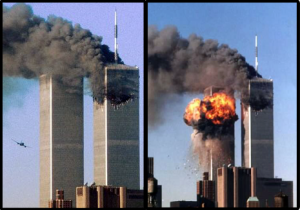
Looking through my newspaper’s weekly movie guide a day or so later, however, I noticed how many of our movies are rated “R” due to violence. Is the violence we choose to call entertainment related to the increasing number of people, whether mentally ill or not, who use a gun to work out whatever is bothering them? We seem to be as addicted to violence as we are to drugs.


Seattle Seahawks and Togo, Africa

Pete Carroll, the Seattle Seahawks coach whose team won the super bowl in 2014, spoke to a reporter about, of all things, Iraq. Caroll, according to the reporter, is passionate about bringing out the best in people, including his players.

The reporter quotes Carroll as supposing that “we sent 10,000 people to Iraq as peacefully as we could go. And we walked wherever they would let us go, and we just talked to people and listened to what their issues were. And then we tried to figure out the best way we could to support them and change things . . .”

The idea is to listen to people and answer their call, not “tell them what to do,” Carroll said.

Recently I read an article in State Magazine about seven tiny programs in a small African country off the beaten path. Few Americans have heard of the country, Togo. It has few agencies of the U.S. government working there, just the State Department and the Peace Corps. Recently, however, the American embassy partnered with the U.S. Department of Defense and with local communities to use a small amount of money available for humanitarian assistance.

Projects were suggested by the community, a grassroots kind of process. Completed projects included school construction, clinics, and a waste transfer station. They were well-received by the Togolese. They were, after all, what the communities identified as needed.

Amazing what happens when you stop talking long enough to listen to people.


Those Who Don’t Know History . . .

Leonard Pitts, a syndicated columnist who writes in the Miami Herald, asks: What if different directions were taken in our policies toward the Middle East in the past? Would we now be planning campaigns against the ISIS forces in Iraq and Syria?

One “what if” question concerned, not officials, but the American people. What if, Pitts asked, the American people in 2003 had asked for better proof that weapons of mass destruction actually existed in Iraq? That was the reason given us for that war. As it turned out, the “intelligence” for those weapons turned out to be flimsy at best, if not actually a calculated falsehood.

The mistake not only cost us lives and wealth. Our entry into Iraq caused the sudden fall of Saddam Hussein without any clear understanding of the ethnic cleavages that would result. His removal without adequate planning for the aftermath allowed ISIS to develop.

So we are back again. Perhaps if we had not gone that first time, had asked more questions . . .


Digital Gutenberg

The world was never the same after Johannes Gutenberg rolled off the first printed books in Europe in the 1450’s.

Cheap books, pamphlets, and tracts spread ideas that torched whole societies. Religious reforms followed in their path but also wars and revolutions. Religious persecution reached new heights. Sometimes lunatics raised large followings.

The power brokers, the political and religious leaders, no longer controlled ideas. More people learned to read. Ordinary folks read the Bible in their own tongue, not in the Latin of the elite. Cherished beliefs crumbled. Power struggles ripped apart kingdoms across Europe, creating hordes of refugees.

Yet, when greater stability took hold by the 1700’s, religious tolerance had increased. Though established religions lost influence, many faith-based religious groups gained. They led movements to block the slave trade, set up educational programs for the less well off, and send missionaries to serve native peoples harmed by Europe’s desire for conquest and wealth.

Fast forward to the 1990’s and the 2000’s. The internet and the computer power of tablets and phones have unleashed as much chaos as Gutenberg’s typesets.

But the promise is there, too, as it was in the early modern age for those who accept the changes and work with rather than against them. The world waits for those with enough compassion and self-discipline and courage to lead the way. The potential is there, gleaming among the raw newness that obliterates old ways of doing things.


Two Funerals and an Obituary

The funeral service for my brother last January was in the Southern tradition: service in the church a few days after his death, followed by another in the cemetery before burial. The one I attended recently for a church member here was technically not a funeral. In the Pacific Northwest manner, it was a memorial service weeks after his death. People were asked to share their experiences about the one whose passing we remembered. Both services were emotionally satisfying.

End of life occasions remind us of our responsibility for a time on earth that is, in the scope of things, terribly short and precious. We recognize an end point, a conclusion toward which to work.

By chance, my husband and I meet regularly with a group of friends, and the next meeting was scheduled the afternoon after the memorial service. Our topic: we each brought ideas for our own obituary and end of life wishes.

I would like my service to be a celebration, mostly singing, with a few poems and Bible passages. “How Firm a Foundation” and Kris Kristofferson’s “Why Me, Lord?” and Liam Lawton’s “The Clouds’ Veil.” Maybe even all the verses of “O Holy Night,” my favorite Christmas carol.

A couple of readings: “Go Down Death” by James Weldon Johnson and “Death Be Not Proud” by John Donne. Favorite Bible passages as from Psalm 30: “Weeping may linger for the night, but joy comes with the morning.” Somebody to play Pachelbel’s “Canon in D.”

All the verses of the songs, with shouts and gladness. Raise the roof for my home going. It’s a celebration!


A Little Fiction: Why Democracy Is Hard to Sell

Joe Harlan, a character in my novel Tender Shadows, is a middle-aged political officer at the U.S. embassy in a Middle Eastern country. He tries to adjust to changes in his career world. He struggles with the technical challenges that his younger officers take for granted. Problems with his daughter, also serving at the embassy, bother him more.

He finds a kindred spirit in a man his age of a different culture, the middle-aged uncle of the country’s ruler. They talk one day in the villa of his Arab friend. One of Joe’s duties as an American diplomat is to encourage democracy. He finds it a hard task.

The uncle comments about his fellow citizens: “They have television and many have computers and the internet. Certainly, if they have businesses, they know what goes on in your world. The movies, the divorces, the living together without marriage, the children born to unmarried mothers. Do you think they want this for their daughters?”

The passage is, of course, fictitious. But it is based on my experiences in an area of the world that has imploded in a dozen different ways since the Cold War ended, including the most recent threat: ISIS.

Instant communication tosses our violence, our quest for personal pleasure, and our polarized government into everyone’s front room. As we rightly speak out against brutality and injustice, the way we live sometimes obscures the message.


An Absentee Ballot from Georgia

He asked to look at my absentee ballot when it came to me in the mail from Georgia, my home state at the time. He fingered it as one might some sacred manuscript. A native of an Asian nation, he worked for me in a U.S. consulate in a Middle Eastern country several years ago. His reverence for my opportunity to vote taught me its value.

That memory overcomes cynicism over the neutral gears that our government often seems stuck in. Cynicism as well over the amount of money spent on elections. Yet, in times past, we have overcome similar problems and voted in better governments and laws. We can change, and voting is one way we do it.

Yes, I’m going to vote this year. I owe it to all those in the world who, like my employee, have no such privilege or vote only in elections so corrupted that they aren’t worthy of the name.

I owe it as well to men and women who have sacrificed far more for my privilege than the time it takes for me to mark my ballot.


Men’s Liberation

Society was challenged in the 1960’s by a new movement, known as women’s liberation, to eliminate discrimination against women. The women’s liberation movement, in tandem with new methods of birth control, changed the status quo in less than a generation.

Unfortunately, the movement took on an “us/them” focus when a “we” focus would have better served it. The men needed liberating, too.

Women would win by assuming the career-centered lifestyles of their male counterparts. In fact, the men’s lives weren’t all that healthy or affirming. Women sometimes exchanged drudgery for drudgery.

Even when men take on their share of housework and childcare, many couples face a chaotic race to fulfill their obligations—to family and community but also to inner selves. The necessity for all adults to work forty hours or so each week in a usually distant work place results in unintended consequences. It robs us of the ability to carry on other pursuits. Previously, women tended to be the ones who kept lives on an even keel. When women entered the work force in large numbers, a necessary function went missing.

During the pre-recession period of full employment and a booming economy, it’s too bad we didn’t consider shorter work weeks while liberating women and men. Too bad we didn’t give them a shared chance at both jobs and a life beyond the rat race.


What Do We Do With Our Soul Issues?

When I worked as an American consular officer in other countries, our most difficult cases dealt with child custody issues, that is, with the children of divorced American/non-American marriages. In one case, the father, divorced from the American mother, refused to let her visit their child. He told me that the mother’s influence could result in his child’s spending eternity in hell.

Faith issues can cause conflict because they often deal with what are regarded as life or death issues—including eternal life and death. Extremist organizations like ISIS believe it is their duty to force their perception of religion on all in order to, in their minds, save society.

Reactions to such attitudes can lead some to an opposite extreme: disavowal of all religion. Religion is bad, they say, and results in fighting and warped views. Yet, faith also leads some individuals to dedicate their lives to helping others—to fight inhumane prison systems, for example, or to work with Ebola victims, or to advocate decent working conditions for laborers.

If we truly believe in God, it is rather foolish to take on the role of God ourselves. If we believe in a God of power, we witness to our beliefs, but trust God to handle the results.


Enjoying the Good Times, a Faith Thing

 “I fancy I still hear the call to prayer from the mosque beside the U.S. embassy compound, though I’m a grown woman now.”

So begins the week that will change the life of nine-year-old Kaitlin Sadler in A Sense of Mission. So far, it is the only novel I have written that came to me in first person.

Kaitlin was not me. I did not experience her type of childhood. I certainly didn’t lose my parents at the age of nine in a terrorist attack.

I think her story came to me while I tried to deal with the realization that good times, like all times in this life, will end. We are, so they say, the only creatures who know we will die.

Joshua, a family friend, asks the teenage Kaitlin, “Is it because of your parents that you always expect bad news?”

“Good times never last,” Kaitlin says.

The friend replies, “True. Neither do bad times.”

Kaitlin explains that enjoying the good times is like feasting at a banquet when some monster from Lord of the Rings stares at you through a half open door.” She asks, “You think it takes faith to enjoy good times?”

Joshua considers and replies in the affirmative “especially for those who’ve gone through suffering.”

When we suffer, we decide which road to take. If we decide to enter life again, to open ourselves to the possibility of joy, it remains a faith thing until we find our way in better times.


Age of the Het Up

To be het up over something is an old-fashioned phrase, similar to getting bent out of shape. Something angers us. A lot of us are het up these days. Politics, perhaps, or the NFL, or religious issues.

Being het up may lead us to organize for righting wrongs. Some activities, like human trafficking, should make us het up.

Serious forms of het up include the recent Scottish movement for separation from Great Britain. Extremely lethal forms include al-Qaeda and ISIS.

Reaction is a natural response to times and processes that affect us. Liberalism sparks a conservative reaction and conservatism a liberal reaction. Religious emphasis on grace may change to an emphasis on works and vice versa. Trends toward strict parenting and permissive parenting swap places through the decades.

In areas of the world thrust suddenly into modern times in the past century or so, reaction to change is understandable. Encouraging the survival of a culture that offers identity is acceptable. Murdering innocents is not.

A wise society allows challenges to the status quo. Those challenging it have the obligation to challenge it within civilized bounds. Allowing differences that don’t destroy community means finding a balance. The rules include respect for the one who may not agree with you.


What The Tooth Fairy Doesn’t Pay For

 Returning from a shopping trip over a year ago, our car was hit by a motorist coming from a side street. Within a few minutes of the accident, an emergency vehicle appeared. Fortunately, no one was seriously injured, but they did treat my husband’s bruised leg. The county police arrived to direct traffic, take testimony from witnesses, and write an accident report. The report became part of the public record. The police stayed until a friend came to take us home.

We live thirty miles from a U.S. naval base. It’s part of the nation’s defense system.

Further down Puget Sound is the Port of Seattle. Federal inspectors monitor the cargos of ships arriving from diverse countries. Do any contain contaminated food? Toys painted with toxic chemicals?

Over on the Olympic Peninsula a few years ago, a U.S. customs inspector noticed that an Algerian entering on a ferry from Canada appeared nervous. An investigation revealed that Ahmed Ressam’s car trunk contained explosives. Ressam said they were to be used to bomb the Los Angeles International Airport. The U.S. agent’s alertness prevented a terrorist tragedy.

Criticism is part of the democratic process. We complain and disagree about what our governments do and don’t do as well as what they should and should not do. Accountability must be part of any system if it is to do its job. After all, our services are paid for by our taxes. We have every right to require that they be spent wisely and honestly.

I temporarily mute my criticism, however, when I read of the toll that the Ebola virus is taking on underdeveloped health and medical systems in Liberia and other countries. The disease, though horrible, can be contained with proper public health measures. Unfortunately, the countries do not have a Centers for Disease Control as exists in the United States to monitor and cut the spread of Ebola.

We have every right to debate and examine our government programs. If we wish to continue the many good things our government does provide for us, however, we must pay for them with our taxes.


Income Redistribution or a Year of Jubilee?

 Income redistribution is a hot button issue. Is it communist? Something that would destroy capitalism? Or is it like those taxes we pay for public schools, paid even by those who have no children?

What about an updated Year of Jubilee? The Biblical passage of Leviticus 25 called for a “Year of Jubilee” every fiftieth year in the ancient Hebrew nation. Simply stated, land bought from others (and presumably used to increase the wealth of the buyer) would be returned to the original owner that year.

Obviously, such a practice would be difficult to carry out in modern society. What it suggests is the principle of sharing the means of producing wealth with those who have lost out in society’s economic scramble. They get another chance to compete.

The Year of Jubilee didn’t condemn wealth, nor the creation of wealth. But the chance to produce wealth is to be shared with the less fortunate for the good of all. Rather than direct payment, it meant giving them the means to make their own wealth. Today, it could mean investment in a superior education for every child or an economic system which rewards honest labor with honest wages It’s one solution for the tendency of money to accumulate more and more in the hands of a few. Pay it ahead.


No Shock and Awe This Time

 I finished a late night visit to a morgue in Dhahran, Saudi Arabia, in March, 2003, where I was working at the U.S. consulate. For months, the U.S. and its allies had prepared for a war with Iraq, two countries to the north of us. Meanwhile, a lone terrorist had killed an American working in Dhahran, and his identity must be verified to notify next of kin. After my return to the consulate, I phoned the victim’s boss to brief him. He informed me that the air war with Iraq had begun with the bombing of Baghdad. Utterly exhausted, I stood in the desert breeze and hoped the campaign was going to be over with as quickly as the first Gulf war over a decade before.

This one was to be, so we were told, a brief campaign of shock and awe, after which we would conquer Iraq and be greeted as liberators. The war lasted over eight years, and by then, Americans had become increasingly unpopular in Iraq and most of the Middle East.

The current proposal to destroy ISIS appears more realistic. No optimistic blitz. It is anticipated to last beyond the tenure of our current president. Ground fighting will be left to local armies, not U.S. combat forces. Syria, where the conflict began, will be included in the campaign.

Kenneth M. Pollack, at the Brookings Institution, also presented a more sober assessment of any conflict which intends to ultimately defeat Bashar al-Assad. The Syrian dictator’s brutal tactics led to the current situation. Pollack’s observations are found in the September/October 2014 issue of Foreign Affairs. He proposes American support of a new Syrian army and political structure. It not only would defeat Assad but support the aftermath with the establishment of “a functional, egalitarian system of government.”

If carried out, a big “if” as Pollack realizes, it would overcome the peace that so defeats us in these wars: “a victory by one side, followed by a horrific slaughter of its adversaries . . .”

Do we have enough patience to act as midwife to such a slow birthing?


Where Is Our Man or Woman in Dublin? Or Lima? Or Cairo? Or . . .

 The Irish wonder if they are no longer important to the United States. The U.S. has neglected to send them an ambassador for over a year and a half. Our Central American neighbor Costa Rica frets over the length of time for a U.S. ambassador to take up residence. The media in Jamaica, Russia, Egypt, and Romania wonder why noncontroversial career ambassadors take so long to be confirmed by the Senate.

Brian A. Nichols, appointed as ambassador to Peru after waiting 360 days for confirmation, mentions the toll it took on U.S. foreign relations with that country, as well as on his family. He says he is honored and humbled to finally serve his country. Why must those who want to serve wait so long? What if our military appointments were delayed in this fashion?

News reports focus on why we can’t pay our bills without a political donnybrook. Other casualties result from our stalled systems. It appears we can’t be bothered to fully staff our embassies, despite the multiplying world crises.

The cover of the September/October 2014 issue of Foreign Affairs, depicts how some observers view our current domestic problems:”See America, Land of Decay & Dysfunction.” Articles include: “Dysfunction Junction,” America in Decay,” and “Pitchfork Politics.”

Agree or disagree, the ideas are food for thought when our country has difficulty even appointing an ambassador to represent our interests.


America and ISIS: Guns Blazing or Sergeant Alvin York

 Alvin York was an east Tennessee hillbilly who received the Congressional Medal of Honor in World War I. He led nine American soldiers in capturing 132 German combatants after half his original group of Americans had been killed.

York was an uneducated religious man who hated war and fought in World War I only because his request for conscientious objector status was denied. He reluctantly came to believe that the war to defeat Germany was justified. He followed a similar path before World War II, convinced by the actions of Hitler’s Nazis that his country should enter battle to defeat them.

York, however, spent most of his adult life working to bring education to the disadvantaged poor of Tennessee. The fact that he is remembered mostly as a war hero and not for his other pursuits indicates our tendency toward misplaced values.

The U.S. savors the myth of the individual: the war hero who blasts his way to victory. York is sometimes pictured through that myth—the lone hero. York, however, had the help of the others in his unit. And he fought reluctantly. York’s other activities remind us of ideals that shape a country worth defending.

The confrontation with ISIS must be taken with the understanding that military involvement should be reluctant and in consultation with allies. We should acknowledge that other values, like inclusive government, are of more consequence.


Your Friendly Neighborhood ISIS or the Law of Unintended Consequences

 Why has this new group, the Islamic State of Iraq and Syria (ISIS or just IS), which outstrips even al-Qaida in brutality, suddenly thrust its acts of horror into our living rooms?

In 1991, the United States led an international force that routed Iraqi forces who had invaded Kuwait. We fought that war to maintain world oil supplies. Saddam was threatening two major oil suppliers, Kuwait and Saudi Arabia.

Some cautioned that oil should not pull us into a shooting war in the Middle East and that a war fought for oil companies was immoral. At least the U.S. was wise enough not to advance into Iraq but stopped with the liberation of Kuwait, a country that asked for our help.

We should at least have understood the consequences. Middle Eastern violence would not stop with our defeat of Saddam, either in that war or the later one. Extremist factions in the Middle East resented interference by Western powers. They wanted Saddam defeated by Islamists and the restoration of Islamist empires of the past.

All are related to the humiliation of Islamist nations since the nineteenth century and the carving of spheres of influence in the Middle East by Western powers. Forces of secularization are clashing with centuries-old cultures. The accumulation of wealth by corrupt leaders also plays a part.

These issues were behind later terrorist incidents, including the attacks on our own country in 2001. They are a chief reason for the IS faction now.


My Life as a Peeping Tom

 I check world happenings on my electronic screen. Stories slide by. I can choose morsels all the way from the Ebola virus to the “sweet and sexy” moments of a celebrity. Blurbs for all are juxtaposed on the same screen, allowing the viewer to flip from agonizing last moments to the latest refugee crisis, a kind of digital gladiatorial amphitheater.

“Last Moments of a Teen” or “Skydiver Falls to Death” can give meaning to my waking hours if I choose. It’s a smorgasbord for my delight, tempting me to forego not only my usual work routines but also articles that might impart useful analyses of real problems. The latter occupies a lower level on the fun scale.

People’s deaths have become entertainment, their tragedies something for passing the time.

We can, of course, avoid such pieces and take advantage of the internet’s capabilities to search for useful insights. Romans could choose whether or not to see the latest struggles to the death. The victims of the games, however, had no such choice.


What the Empty Crib Means to Us

 In P.D. James’ novel, The Children of Men, couples are no longer able to conceive children. The novel introduces us to a society that lost the ability to produce offspring after the current generation of young adults. A wistful, lonely, alienated people remain in this childless world.

Though it is doubtful we will ever reach the circumstances portrayed in this book, some developed nations (Japan and Italy, for example) are seriously concerned about enough children not only to support the elderly but also to supply enough citizens to assure a vibrant society.

Parenthood is the unsupported career. Though an emotionally involved parent is in a sense always attached to a child, the most physically taxing part of the career is over with by the time the child is five or six. By the time the child reaches ten or so, the parents have shaped most of his or her character.

Back when families had five or ten or more children, parents spent the majority of their lives at the job of parenthood. Nowadays, birth control allows most adults to have children only if they’ve chosen to—at least, if they recognize the responsibility procreation requires.

We don’t support parenthood like we used to, for various reasons. Many choose not to be parents, a responsible decision. However, for those who do choose or who want to be parents, society is geared toward discouraging them at every turn.

Since most young adults require full-time jobs to meet financial needs, adding children to the picture is challenging to say the least. And in an age when money assumes the most important means to the good life, raising a child bites a chunk out of that.

Cheers to the last person in America in hopes they will have fun with their selfies.


Words Don’t Pay for Lives; Count the Cost Before Acting

 We could pay off the national debt if we had a dollar for every word uttered on how to handle the Middle Eastern crises (multiple). Words that detail the possible consequences of suggested actions probably couldn’t pay off one small underwater mortgage.

Today, I’m simply going to link to an article by Thomas Friedman in The New York Times, which does explore consequences.