

College Dorms, Nunneries, and Monasteries

In my senior year in college, I became engaged to be married. My friends in the women’s dorm celebrated by throwing me in the shower. The ritual was practiced every time one of us in the dorm became engaged.

We spent a lot of gab time, too, into the late hours or on weekends. We developed friendships and shared our hopes.

I remember those days when I think about women and men who miss some of that non-romantic, same sex friendship by pairing off into couples too early.

I didn’t grow up in a Christian tradition that called some into “vocations” as lifetime disciples of the church, practicing celibacy. Still, those ancient traditions might offer ideas for young and new adults.

Young women and men could be guided into adulthood within a community of their own sex for a few years, perhaps overseen by caring adults. A kind of community to practice discernment, if you will.

The calling would not be permanent for most, though a few might remain in the community. It could provide a place for those singles who choose less than lucrative careers to serve others, who want encouragement to lead a life less devoted to consumerism. It could also offer a refuge for those attempting to find their place after a divorce or other loss.

The trail from childhood to adulthood winds longer in our developed societies. Perhaps an intermediate community after the family could aid some to better negotiate the transition.


Two-Parent Families Stage a Comeback—in Seattle?

Seattle familySeattle is a hip city, known for the nation’s highest minimum wage, recycling, and the number of young educated elites moving in. Odd that recent census data shows Seattle with the highest percentage of children in married-couple households in the fifty largest cities in the U.S. (Seattle Times, December 28, 2014)
Seattle edged out more conservative urban areas like Salt Lake City and Colorado Springs. Seattle is one of only three cities that has increased the percentage of married households since 2000. (Washington, D.C. and Atlanta, Georgia, cities with a large percentage of urban professionals, also showed increases.)

One reason, observers say, is that couples in Seattle tend to be highly educated with well-paying jobs. This would suggest that if we want to encourage family stability, we should provide quality education for all our children and jobs with adequate wages for their parents.


American Prosperity Through the Family Photo Album

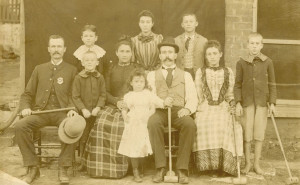
Wilhite Family 1An ancient photograph inherited from my mother shows her mother’s family gathered for a family photo on their farm in Tennessee. One child is barefoot. Grim faces stare at the viewer.
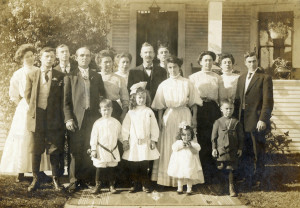
Wilhite Family 2Also passed down is another photo portraying most of the same family members grown older, with spouses and children. They are now nicely dressed like any middle-class family of the time would be. All, including the children, wear shoes. Their greater prosperity is apparent.

That progression of pictures depicts the journey of many Americans from the late 1800’s through most of the twentieth century. The story is of whole generations lifted from a subsistence lifestyle.

Today, figures indicate not just a halt to that growth but a reversal. Inequality has also increased between the wealthy and the rest of Americans. These trends were in place before the recession that began in 2008.

As the employment rate picks up, we need to insure that the wages of working Americans support a decent standard of living.


How I Found My Way Back to Christmas in an Islamic Country

I don’t remember the details of the Christmas after I turned thirteen. Probably the season passed as it always had. Trimming the tree, star on top. Presents secretly wrapped and joining others under the tree. Reading the Christmas story from the book of Luke under the mantel lights in the living room. Our traditional foods, including boiled custard.

No doubt I would have remembered more if I’d known that my father would die before the winter was over.

The next Christmas, my mother and my brother and I didn’t celebrate Christmas at home. We feared it would be too reminiscent of the last one with my father. We traveled to St. Augustine, Florida, and stayed in a motel. No Christmas tree. No boiled custard. Probably we exchanged presents, but I don’t remember them. We took a walk along the beach, but we couldn’t swim because the weather turned too cold. That’s the way it was. Cold and dreary.

Eventually, we would adjust and celebrate Christmas at home. Nevertheless, for me, the magic was gone.

Years later I spent several Christmas seasons in Muslim majority countries where the Santa Claus kind of Christmas did not exist. Instead, I gathered with a few expatriate Christians for small celebrations. We had an amateur concert of Christmas carols one year, I remember.

I began to see that Christmas had nothing to do with Christmas trees or presents or boiled custard. I’m not against a Christmas that includes these things. I enjoy the story of Scrooge and movies like “It’s a Wonderful Life.” But they’re not Christmas.

Christmas is just one day of the Christian calendar. It’s the beginning. Ultimately, it leads to the Crucifixion. Joy in Christmas is always mixed with a little sadness.

Christmas is not a joyous time for all, but that’s okay. Christmas is Emmanuel, God with us for all times.


Blessed Are the Debonair

“Blessed are the meek,” the New Testament book of Matthew states. Who in the world wants to be meek? The word has connotations of a doormat type of submissiveness. Where’s the blessedness in a person like that?

During my days of studying French, I bought a Bible in the French language. To aid the learning process, I compared well-known verses in English and French. In the French version, “meek” is translated “debonair.” Now that’s a bright, cheerful word, lacking the usual connotations associated with meek.

According to my French dictionary, debonair means good natured or kindly. According to my English dictionary (OED), debonair means “confident, stylish, and charming.”

My guess is that when Jesus suggested a meek person, he meant someone who is confident enough to focus on others rather than oneself, to put them at ease, and to know concern for their interests.


Golden Rule Applied to Captives

One of my duties when I worked for U.S. embassies and consulates in foreign countries was visiting American citizens in foreign jails. We wanted assurances that they weren’t tortured or otherwise ill treated.

The humane treatment of prisoners , especially political prisoners, has a been a bedrock of U.S. foreign policy. I was proud to speak out for our imprisoned Americans, aware of our tradition of opposing torture.

What would I say today?

Any treatment of our prisoners, including enemy combatants, may be the measure meted out to our captive citizens by other countries. Treat our prisoners as we would want our own citizens, including our soldiers, to be treated in foreign jails.


The Flap Over Vladimir

Vladimir PutinThe Russian currency has tumbled in the world money markets. A combination of circumstances contributed. Russian President Vladimir Putin’s actions in the Ukraine led to sanctions by Europe and the U.S. In addition, it’s not a happy time for oil producers like Russia, as oil prices have reached historic lows.

Due to what is called “crony capitalism,” Russia missed opportunities to evolve into a responsible actor on the world stage when the Soviet Union collapsed in the early 1990’s. Too much money has gone to Kremlin business favorites, and corruption has harmed ordinary Russians. At the same time, the West overplayed its triumph.

The desire for respect and security gave Putin the chance to play on the historic Russian fear of domination by outside powers. Unlike the United States, Russia historically has suffered from invasion, including Mongols in the thirteenth century, Napoleon in the nineteenth, and Germany in the twentieth.

Alexander J. Motyl, in a recent article in Foreign Affairs, says we should take a page from U.S. Cold War diplomat George Kennan. Contain Putin by sanctions and economic means so that he does not overpower the countries around him.

At the same time, recognize that Russia has legitimate fears due to its past history. Wait until the opportunity to establish friendlier relations. Never humiliate. Hubris does not make for partnership.

Why We Enjoy Stories Set in Small Communities

The village is an ideal setting for character development, especially a mystery. Even some of the detectives in the hard boiled genre chase their suspects in locales far from New York or London. The Simon Serrailler series by Susan Hill is set in the cathedral town of Lafferton, England, an idyllic seeming town. Yet crimes happen there, and the small town setting emphasizes them.

Character-driven mysteries (my favorites) typically involve a small number of characters. Time is required to develop each character, including, of course, suspects. Thus, small communities are ideal, since the inhabitants are more likely to be known to each other (supposedly). Characters can easily be introduced through other characters.

Quiet DeceptionOne of my novels (Quiet Deception) is set in a small college town and is my only straight mystery. The others contain a twist of mystery, but I’m more interested in how the characters evolve and the moral dilemmas they face.

Several of my novels are set in diplomatic communities. Having experienced these, I know how ideal this setting is for character development. A few Americans are assigned to work together and live in a foreign country for the common purpose of representing the United States through various tasks. Normally, they will include ambitious, work driven types as well as those highly motivated to serve their country. Sprinkle in a few significant others in close proximity and add a complex character with an enigmatic past. Then mix in problems from the foreign surroundings, such as hostility toward Americans. You have a ready-made setting for conflict.


Heroes and the Rest of Us

I had never heard of a small group of resisters to Nazism called the White Rose until I read about them in an article in Plough Quarterly (Autumn, 2014). The White Rose passed out leaflets calling for subversive activities against Nazi war efforts in early 1940’s Germany. Eventually, the resisters were caught, tried, and executed.

The article was written by Maximilian Probst, grandson of one of the resisters. “Heroism,” he wrote, “will always start when people turn away from their own persons and place themselves in the service of a cause, a cause that may often only affect them indirectly, a cause in the service of others, of the disadvantaged, the persecuted, the oppressed, the tortured, the murdered.”

Not all of us, Probst said, are called to be heroes, but we can remember them by taking up “our mundane and daily task of living an upright life.”

To me, this means practicing quiet subversion against the dominant culture of the day, which reckons pleasure and the amassing of wealth as the chief ends of life. Christians in the West are, as theologian Walter Brueggemann expressed it, exiles, an inconvenience to “consumer oriented capitalism.” (Deep Memory, Exuberant Hope, Walter Brueggemann.)


December 7, 1941, and September 11, 2001

Pearl Harbor AttackDecember 7, my calendar notes, is Pearl Harbor Day. The day commemorates lives lost in the attack on the U.S. naval base in Hawaii by Japanese forces in 1941. It led immediately to our entry into World II.

I understand the clutch in the gut Americans felt when they turned on their radios early on that Sunday morning. I felt the same when I walked into a room at the U.S. consulate in Dhahran, Saudi Arabia, on September 11, 2001, and saw the television tuned to CNN. In living color, we watched over and over the replays of the attacks on New York and other places “out of a clear blue sky.”

Attack on the Twin TowersIn an article in the Foreign Service Journal (January, 2012), Margaret Sullivan recounted her early years in China as the daughter of an American missionary teacher when Japanese forces took over China. Ms. Sullivan remembers a Japanese soldier smiling at her family as they went through a checkpoint.

Now, she said, she has trouble accepting the wartime evaluation of Japanese people.

We tend to demonize any who are related to those who harm our country. We have difficulty seeing “the enemy” as individuals, some choosing to do harm, others simply caught up in an evil they did not condone.

Ms. Sullivan wrote: “I still grapple with the critical distinction between abhorring evil acts and casually lumping together all of a particular group of people as embodying that evil. And I am profoundly troubled for my own country when some among us incite hatred against the spectrum of other individuals and their widely differing communities and beliefs, as a single ‘bad guy’ entity.”


Falling Out of a Canoe: Learning to Live in Disorderly Times

Attending a canoe school years ago, I fell out of the canoe the first day. The second day, I and my teammate managed to overcome a series of rapids, including unsticking ourselves from a rock without capsizing.

Unlike canoeing, which we don’t have to attempt, we have no choice in negotiating the currents of a disorderly world. And according to a U.S. diplomat retiring after a 38-year career, the world isn’t going to improve in the near future:

“If you look at the world, you have to conclude that in the coming generation, the forces of disorder are going to be as challenging as we’ve seen them over the last 10 or 15 years . . . . learning to navigate effectively in that kind of a world is extremely important.” (William J Burns, The Foreign Service Journal, November 2014,)

Burns, encouraged U.S. diplomats to “conduct diplomacy amidst disorder.” The advice could serve any of us attempting to live rightly amidst the disorder of the day. Religious, political, and cultural institutions all swim in a turbulent current.

We choose our direction and steer as best we can. If we fall out, we get back in and use what we’ve learned. What we don’t do is allow the rapids to freeze us. We keep propelling our chosen boat despite the disorder.


Ferguson Library Lights a Candle

Library OpenIn the midst of school and other closings during the unrest in Ferguson, Missouri, that began in August, the Ferguson Municipal Library has chosen to remain open.

Library officials decided that the community needed a safe space for children and others. Retired teachers and volunteers even teach classes.

Mary Elizabeth Williams wrote about the Ferguson library in Salon.com and commented: What libraries do “is to create a safe and welcoming space, where everyone is welcome to come and meet, to learn, to explore.”

Remember the proverb: “It’s better to light one candle than to curse the darkness.”

This Thanksgiving season I’m thankful for those who choose to light a candle.


Who Are the Inner Driven People?

The opportunities to harm both others and ourselves are as near as the thoughts in our minds. Suicidal gunman take innocent lives. We can use drugs if we wish. Practice unwise sex. Eat ourselves to corpulence. Shop until we run our credit into the ground.

The authorities who guided us in the past, for good or ill, have grown feeble. Family members may hardly meet, even around a meal. Membership dips in religious institutions.

So what does it take not to harm oneself and others? What does it take to live a purposeful life? Who are the inner directed people? What gives them the ability to rise above present norms?

I once read a study of inner city children who had survived and flourished in less than ideal circumstances. Instead of studying those who failed, the study spotlighted those who succeeded. They found that in most cases, the deciding factor was an adult in the child’s life who valued them. It didn’t have to be a parent. Sometimes it was a teacher or neighbor.

Care for another, especially a child, may be the best guard against wasted lives.


Boycott of Violence?

The drama club at Marysville-Pilchuck High School performed a play, as do many high school drama teams. But this high school is the place where a student recently shot five of his friends during a lunch hour, then killed himself.

The drama group had finished the last rehearsal for the play just before the tragedy occurred. The play contained violence. After the shooting, the group decided the portrayal of violence would remind too many students of the event which tore apart their world.

So they rewrote the script to take out all references to violence. It was voluntary, of course, a recognition that even simulated violence can overwhelm.

Admittedly, the events at the high school are not common. Yet they are becoming more common. And those of us not directly affected by an incident see it in the news and experience it vicariously.

Who knows how far voluntary boycotts of violent entertainment might curtail the current rise in violence itself?


Tiptoing Through Public Speech


Changing MindsIt’s difficult these days to express opinions.

Brendan Eich, the head of the company behind the web browser Mozilla Firefox, resigned in April after boycotts of Mozilla due to Eich’s opposition to gay marriage. Eich’s view were praised/lambasted. Then Eich’s decision to step down was praised/lambasted by the opposite group.

When nonprofit World Vision changed its policies to recognize civil marriage between same sex employees, the organization was praised/lambasted. Sponsors of poverty-stricken children in developing countries quit in droves because of the decision. Apparently, they cared more for their views than for the children. Later, when World Vison chose to rescind this decision, the non-profit was praised/lambasted by the opposite group.

Pretty soon, none of us will risk saying what we really think. The ability to inflict monetary and other harm on those who disagree with us makes honest civil debate an endangered species.


Great Gatsby Déjà Vu?


The Great GatsbyTwo economists in the United States (Emmanuel Saez and Edward Wolff) have delved into wealth accumulation, using historical figures. In the 1920’s, the bottom 90 percent of Americans only held 16 percent of the country’s wealth. By the 1980’s however, the middle class made impressive gains. Their percentage rose to about 36 percent of the country’s wealth.

After that, the percentage for the middle class began to fall and is now approaching the percentage in the 1920’s.

Meanwhile, the very rich (not the 1 percent, but the .01 percent) now control about 11.2 percent of total wealth, back to the 1916 figure.

A return to the era of the Great Gatsby?


Last Bulwark Against the Dark Side

According to reports, buying drugs is easier than ever before because of the Internet. So is prostitution. The same technology that allows you to order a meal from your favorite restaurant allows you to order other things as well. Law enforcement finds it more difficult to track the darker trades because of anonymous software and diverse ways to hide transactions.

At the same time, traditional authority is breaking down. Cartoons used to picture teenagers tying up the family phone for long conversations with friends. Now members of the Zits age engage each other through smart phones and Facebook. Parents find it more difficult to know who their children’s friends are or what meetings they might be arranging or whether their texts deal with bullying, sexual propositions, or simply homework.

Churches and religious institutions have lost credibility. Even in Iran, mosques are losing their power to prohibit. The old authority isn’t in place, in the West or elsewhere.

What’s left? Self-discipline, it would appear, is the only thing that works against the dark side. Parents can teach it to their children in their early years, but only if they themselves practice it.


The Wall Fell, and Then . . .

The Berlin Wall fell twenty-five years ago this month.

The Fall of the Wall 1989Jubilant crowds from East and West Germany began crossing it and hammering off pieces in 1989, as the Communist East collapsed. From the beginning, the Wall symbolized failure. What successful nation must build a wall to force its citizens to remain?

A few years later, my husband and I visited the few chunks of the Wall still standing. Not many were left. A reunited Germany now is a democracy and one of the world’s economic powers.

The lesson of the Wall for me is that we waited out the Soviets. We chose not to waste our lives and national treasure in a major war with them. Instead, we built up our economy and a strong middle class and universities that became the envy of the world. The rest followed.

We might remember that lesson today. We drift toward a nation of the wealthy few and the rest, with a dwindling middle class. How can we expect to win against today’s ISIS and other regimes more brutal than the Soviet if all we can show them is a dysfunctional government too influenced by big money?


Elections American Style

According to CNN, this year’s midterm elections cost about 4 billion dollars. That’s more than enough to pay for kindergarten through 12th grade schooling for 12,000 students, CNN says.

Much comes from “dark money,” that is, donors who don’t have to be listed by the groups they give to.

Too bad we don’t have that money for our schools. Or to repair our roads and bridges. Or to invest in jobs. Or to pay for mental health clinics that might reach a few of those unbalanced people who routinely shoot at students and others. Or to (fill in the blank with your choice.)

Plus, what happens to the people elected with this money, especially the dark variety? Won’t those elected office holders feel beholden to those who spent their money to get them in office? Who are they going to represent? One of those dark donors with the millions or the people who only voted for them?


Bonhoeffer For Today: Discipleship Still Costs

One of my book groups chose to read The Cost of Discipleship by Dietrich Bonhoeffer, the Christian pastor murdered by the Nazi’s toward the end of World War II. Bonhoeffer, a pacifist by inclination, chose to oppose Hitler’s reign of terror and was imprisoned, then executed.

His work with the “confessing church” in Germany before his imprisonment echos in today’s confused times. He ministered during the 1930’s, before World War II, when many Germans, including Christians, were mesmerized by Hitler’s oratory, a balm to humiliation suffered after World War I.

Bonhoeffer wrote when belief in Christendom still existed in Europe and America, a belief that the Christian religion was paramount in Western countries. However, the lack of genuine Christian living, he believed, encouraged the rise of Nazism. It allowed a charlatan, one who could blind multitudes with spell-binding, hate-filled speeches, to lead them toward the creation of the Holocaust.

Christians in Germany, he wrote, “drank of the poison which has killed the life of following Christ.” And in another place: “The prices we are having to pay today in the shape of the collapse of the organized Church is only the inevitable consequence of our policy of making grace available to all at too low a cost.”

If Bonhoeffer wrote today, would he claim that Christians’ lack of discipleship, not political changes or the new atheism or the Internet, has encouraged the moral atmosphere in which we live? Perhaps he would say it is the way we have NOT lived that has led to the abandonment of our faith by so many.