



“There are countless films about war, but so few about making peace.”
—David Holbrooke, speaking of his new film, The Diplomat, about his father, diplomat Richard Holbrooke (The Foreign Service Journal, “ A Love Letter to Diplomacy,” November 2015)
Perhaps war movies serve a purpose in forcing us to understand the horrors of war, but too many such movies, like all violent movies, anesthetize us to the violence they portray.
Study the young soldiers given medals for acts of heroism in war. We, most of us, have not known war. We choose to honor them as a way to show our appreciation. Yet, the honor frequently reminds them of friends they have lost. They survived and must deal with it, the lost years of their friends weighing on them.
Rather than being entertained by war movies, perhaps we should listen to those who have actually fought in war:
“I am sick and tired of war. Its glory is all moonshine. It is only those who have neither fired a shot nor heard the shrieks and groans of the wounded who cry aloud for blood, for vengeance, for desolation. War is hell.”
–From “On Killing” by Lt. Col. Dave Grossman
“Some of you young men think that war is all glamour and glory, but let me tell you, boys, it is all hell!”
–General William T. Sherman, speech, 1880
This holiday season, search for a peace movie—one portraying grace, courage, or forgiveness.
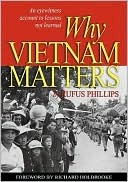 He spent his first diplomatic postings in the 1960’s in that country, taking part in efforts to “win the hearts and minds” of the Vietnamese. He saw those efforts fail, and disillusionment followed as he realized that American power, great as it is, has limits.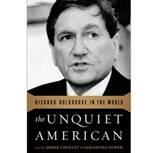
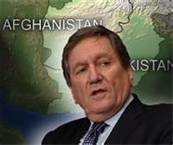 Holbrooke died suddenly in the middle of his diplomatic mission in another war, this one in Afghanistan. He saw differences with Vietnam, including the fact that America had been deliberately attacked by enemies with bases in Afghanistan. However, he also detected similarities with the quagmire that became Vietnam: ” . . . the existence of an indefensible border harboring enemy sanctuaries; American reliance on a corrupt partner government; and, most critically, the embrace of a counterinsurgency doctrine, which he had learned through painful experience was an exceedingly difficult military and civilian strategy to execute.” (The Unquiet American, page 95.)