



The Middle East has embroiled U.S. presidents since the end of World War II. Harry Truman’s administration recognized the establishment of the modern day state of Israel.
Under Dwight Eisenhower, the United States aided in the overthrow of a popular leader in the country of Iran, Mohammed Mossadegh. This action has influenced Iranian sentiment against the U.S. ever since.
John F. Kennedy attempted to mend ties with Arab leaders while maintaining strong relations with Israel.
Lyndon Johnson, though involved with the Vietnamese conflict, pushed Israel to a cease fire agreement following the 1967 war between Israel and Arab nations.
Henry Kissinger worked under Richard Nixon and Gerald Ford to effect agreements to end the Arab/Israeli war of 1973.
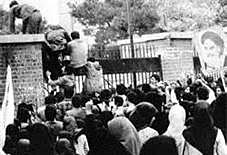
Jimmy Carter’s sponsorship of meetings between Israeli and Egyptian leaders led to the Camp David Accords and eventually to Egypt’s recognition of Israel, the first for an Arab state. In 1979, the takeover of the U.S. embassy in Tehran, Iran, resulted in the hostage taking of American diplomats. This event haunted the rest of Carter’s administration literally to the last day of his stay in office, when they were finally released.
In Ronald Reagan’s administration, a truck bomb killed sixty-three people at the U.S. embassy in Lebanon. Later, the bombing of U.S. Marine barracks in Lebanon killed 241 military personnel. Though promising not to negotiate with terrorists, the Iran-contra affair revealed that negotiations were nevertheless carried on between the Reagan administration and Hezbollah for the release of hostages taken by Hezbollah in Lebanon.
George H. W. Bush led a coalition which pushed Saddam Hussein’s Iraqi forces out of Kuwait.
Bill Clinton’s administration shepherded the Oslo Accords, an agreement between Israeli and Palestinian leaders that promised peace between the two sides. The agreement fell apart in 2000 during failed meetings at Camp David. A terrorist called Osama bin Laden formed groups that began attacking American interests around the world. The Clinton administration responded by raids on Afghan camps of the terrorists.
The attacks of September 11, 2001, on U.S. targets by bin Laden led to U.S. military campaigns in both Afghanistan and Iraq under George W. Bush.
Barack Obama’s administration has struggled to extricate the U.S. from the military campaigns in these countries and has withdrawn troops completely from Iraq. However, the events in Libya and Egypt and especially the horrors in Syria bedevil his administration and promise no easy exit from Middle Eastern problems.

 Today’s revolutions accelerate with the instant communication of Facebook and text messages. Building a new nation requires a quieter courage: a patience to examine complex issues and an ability to find compromise between competing views of a nation’s future.
 The revolutionists in Egypt and Tunisia vanquished corrupt dictators. Now can they survive the hard slogging? Compromise on cherished views to include the views of others? Set up impartial courts and rules of law that discourage the same corruption that bedeviled the old regimes?
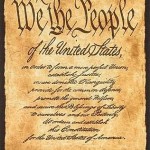 Our country formally gained independence from Great Britain in 1783. But the first structure we accepted for the new country, the Articles of Confederation, failed. After a fierce struggle between competing factions, we began again with the creation of the U.S. Constitution, ratified by Rhode Island, the final former colony to do so, in 1790. It’s an amendable document, meaning that the founders of the nation knew it wasn’t perfect and never would be.
 In those earlier times, the U.S. was accused of supporting dictatorial regimes in certain African and South American countries because the regimes touted themselves as anti-communist. Now the U.S. is accused of propping up former dictators like Ben Ali in Tunisia and Mubarak in Egypt. These men clamped down on the growth of Islamists in their countries, so we supported them even if they employed brutal methods. Egypt, especially, became a huge recipient of U.S. aid.
 In my novel Singing in Babylon, the female protagonist, Kate, moves to Saudi Arabia from her native Tennessee to teach. She travels for her first time outside the United States. On a drive with her friend, Philip, an American journalist on assignment to the Middle East, she notices a veiled and gloved woman pushing a child on a swing in a public park. The woman glances at the unveiled Kate, and Kate wonders how the woman feels about this Western female’s intrusion into her world.
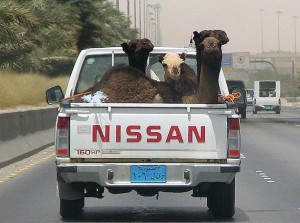 Fast food restaurants, unveiled women, and automobiles bring unprecedented freedom and rapid change to a nation in one or two generations. These changes arrived in a country accustomed to centuries-old merchant towns, Bedouins herding camels and goats, and ancient tribes familiar with the customs of generations.