


Our dysfunctional Congress sometimes moves even the staunchest supporter of democracy toward errant thoughts. This is democracy? This is what we are trying to encourage in the rest of the world? This week an event in my local Island County (state of Washington) commission meeting restored my belief in government by the people.
A packed house at the commission meeting on continuing a conservation futures levy resulted in a 3-0 decision by the commissioners to continue the levy. Two of the commissioners are Republican, and one is a Democrat.
According to the local South Whidbey Record, hundreds of the county’s residents contacted their commissioners in support of the levy. The levy uses taxpayers’ money to buy easements for conservation purposes in the county. Commissioners had considered placing the levy on hold.
The meeting to consider continuation of the levy was packed. One attendee said, “It’s interesting that we have a packed house. There’s bigger value in life than a dollar sign.”
Amen. The other Washington, as the place on the Potomac is known here, might want to take notice.
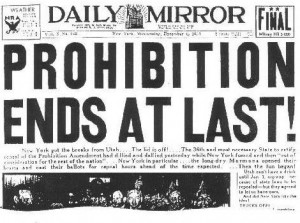 Such was the case with the Eighteenth Amendment to the U.S. Constitution. Ratified in 1919, it prohibited intoxicating beverages. A backlash against it, however, led to its repeal in 1933. Too many people made “bathtub” gin or bought bootleg liquor (leading to an increase in organized crime) for the amendment to work.
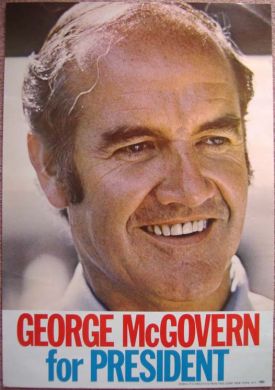 My memory of his brief appearance in American history as the candidate against Richard Nixon mostly concerned his stunning defeat. McGovern took the electoral votes only of Massachusetts and the District of Columbia.
 Richard Nixon became the president remembered for his resignation because of the Watergate scandal. McGovern, the loser, had spoken out against our military involvement in a small nation in Asia because he did not believe the country threatened us. Only later did so many others agree with him that Vietnam became a code word for failure.
 The literature wasn’t an intelligent discussion of a point of view, but epithet hurling diatribes.
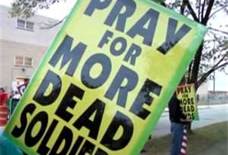 Their message is offensive to those who mourn loved ones. Courts in the U.S. have judged that the picketers have the right to protest even if their actions are scorned by the majority of Americans.
 Best to mute the TV adds, too. Avoid contamination from, at best hyped up hyperbole and at worst outright lies.
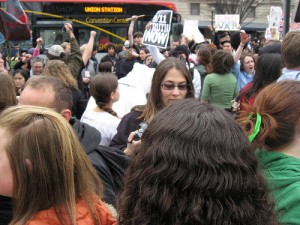 Protests suggest an us-against-them confrontation that risks the protest turning into a riot or, at best, toward hardening of hearts on both sides.
 I prefer writing: opinion pieces, articles, and blogs, for example, print or digital, to protesting. Even more, I like personal conversation between two or a few people. Talking together can be risky, too, of course. People may end up shouting at each other and walking away in anger.